AI production tools are collapsing the budget barrier that separated indie musicians from studio-quality visuals — democratizing cinematic production while raising unsettled questions about authorship, attribution, and what festivals will accept.
AI Music Videos Are Quietly Reshaping Indie Cinema and Live Performance
By Hector Herrera | May 25, 2026 | Creative
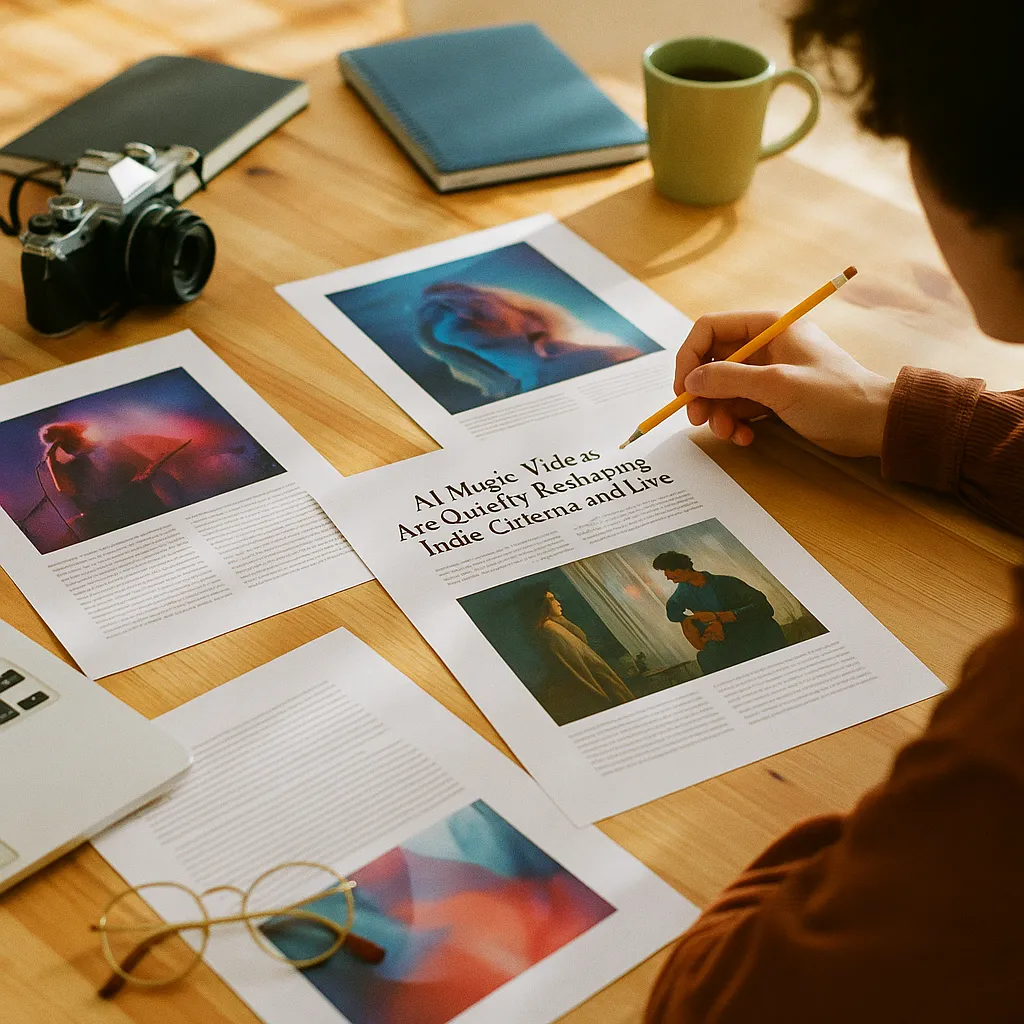
A new generation of AI-driven production tools is collapsing the pipeline that once required studios, large crews, and significant budgets to turn music into high-quality visuals — and independent musicians, filmmakers, and stage directors are testing the new reality faster than the industry's rules frameworks can accommodate them. Stage and Cinema's 2026 analysis documents how AI is democratizing access to cinematic production while raising sharp questions about authorship, attribution, and what festivals and labels will actually accept.
The shift isn't about AI replacing directors or musicians. It's about what's now possible when a single creator with taste and vision has access to tools that would previously have required a team.
The Production Gap That AI Is Closing
Until recently, the distance between an independent artist's creative vision and its visual realization was largely a budget problem. A major label act could commission a high-production-value music video. An independent musician could not. The gap wasn't artistic — it was resource-based.
AI image and video generation tools — platforms including Runway, Kling, Pika, Sora, and several others — are making that gap closeable in 2026. Not by producing generic content automatically, but by allowing a creator who knows what they want to iterate toward it without needing to hire and coordinate a crew at every step.
What Stage and Cinema's reporting describes is a cohort of indie artists and directors proving in practice what the tools make possible: music videos that carry the visual complexity and production coherence that, two years ago, would have signaled a major label budget.
What Indie Creators Are Actually Doing
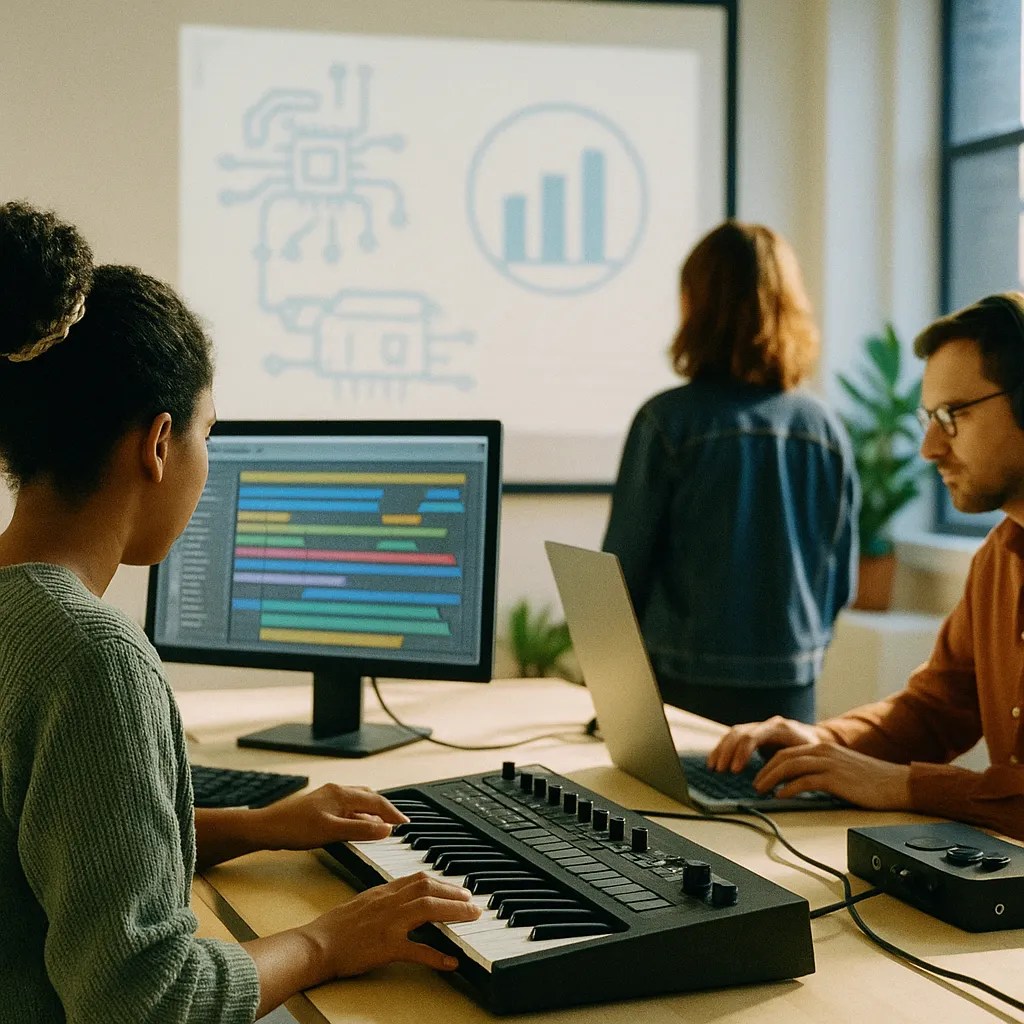
The applications Stage and Cinema documents go beyond generating a few images for a lyric video. Independent musicians and directors are using AI tools across the full production workflow:
Concept development and visual iteration: Where pre-production once required commissioning storyboards from an illustrator, artists can now generate dozens of visual directions in a single session — testing aesthetic choices, color palettes, and compositional approaches before committing to a direction.
Consistent visual world-building: One of the hardest production challenges for low-budget music videos is visual consistency — maintaining the same look and feel across a three-to-five minute video without a production designer and color grader. AI generation tools, particularly when prompted with consistent style references, are making visual consistency achievable for solo creators.
Get this in your inbox.
Daily AI intelligence. Free. No spam.
Live performance visuals: Stage directors are using generative AI tools to create immersive visual environments for live performance that would previously have required significant technical staff and projection hardware. AI-generated visuals that respond dynamically to audio input — shifting in real time with the music — are appearing in independent venue performances at a level of visual sophistication that previously required large crews and six-figure production budgets.
Post-production and finishing: AI-powered video editing and color grading tools are compressing the post-production phase, allowing creators to finish work faster and to a higher standard than manual workflows would permit with small teams.
The Authorship Problem Nobody Has Solved
The democratization is real. The governance is not keeping pace.
Festival submission guidelines, label contracts, and collecting society rules were written for human creative authorship. When an independent filmmaker submits an AI-assisted music film to a festival, several questions currently have no standardized answer: Is AI-assisted work eligible for categories that imply human direction? Who holds the copyright — the person who designed the prompts, the person who directed the resulting visual, the model's developer? Does AI-generated content qualify for the synchronization rights and royalty structures that apply to human-created visuals?
Festival responses vary widely. Some major festivals have moved to require AI disclosure in submissions — a reasonable step that doesn't answer the eligibility question but at least creates a record. Others have developed their own internal criteria for evaluating what "AI-generated" versus "AI-assisted" means, with results that differ festival to festival. Labels and collecting societies are largely still developing formal positions.
The practical result is that independent creators using AI tools navigate a patchwork of disclosure requirements, eligibility ambiguities, and licensing uncertainty — which adds friction to a workflow the tools themselves were designed to make frictionless.
What the Broader Industry Faces
The volume of AI-assisted content entering the creative pipeline is growing faster than the infrastructure for evaluating it. For festivals:
- Submission volume is rising: AI tools lower the production barrier, which means more work being submitted. Selection committees are processing more content with the same resources.
- Evaluation criteria are unsettled: Without consistent standards for what constitutes "AI-generated," individual festival programmers are making judgment calls that vary.
- Attribution disputes are emerging: When an AI-assisted work wins an award or generates licensing revenue, questions about who the creative principals were — and who is owed what — are increasingly contentious.
For labels, the question is primarily one of catalog value: if AI can generate new music-visual pairings at low cost, what happens to the licensing value of premium music videos in the existing catalog?
What This Means for Independent Artists
For the individual independent musician or filmmaker, the current moment is genuinely expansive. The production bottleneck — not talent, not ideas, but resources — is shrinking. A solo artist with a clear creative vision and fluency with AI tools can produce work that competes visually with content that previously required a production company.
What that shift does to the competitive landscape is less clear. If the access barrier falls for everyone simultaneously, the differentiation that matters shifts from production quality (which was previously scarce) to taste, curation, and the directorial intelligence applied to AI tools. The question isn't "can this artist make a high-quality video?" — many can now. It becomes "does this work have a point of view?"
What to Watch
The clearest signal of genuine acceptance will come from the festival circuit. The first major festival that features an AI-primary music film as a programmed selection — not a sidebar experiment or a "future of film" panel — will mark a real shift in the industry's posture.
Watch also for label policy announcements on AI-assisted work. Several major labels are developing internal frameworks for evaluating and contracting AI-co-created visuals; when those policies become public, they'll set precedents that indie artists will need to navigate.
Hector Herrera covers AI, creative industries, and the tools reshaping how culture is made. Follow NexChron for daily AI intelligence.
Did this help you understand AI better?
Your feedback helps us write more useful content.
Get tomorrow's AI briefing
Join readers who start their day with NexChron. Free, daily, no spam.