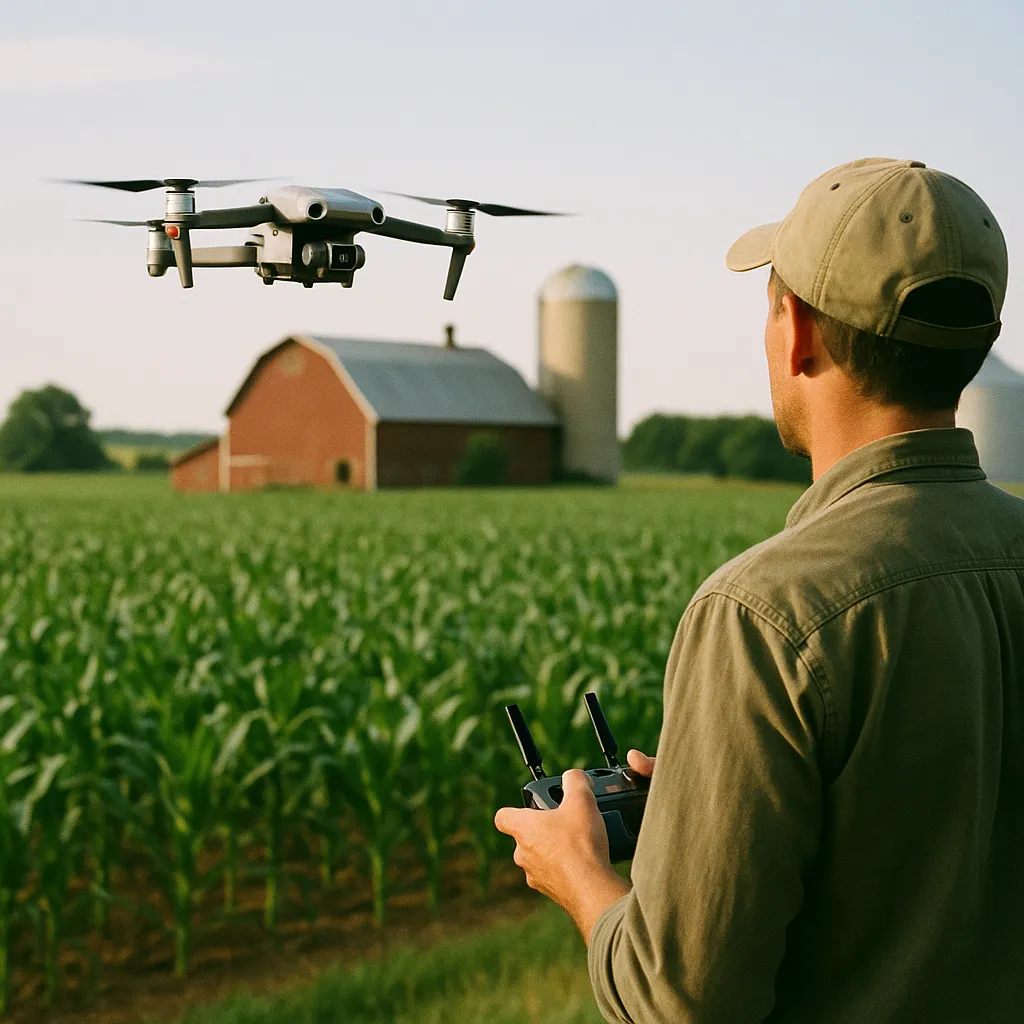
AI-powered drone systems for crop analysis have dropped below $15,000 all-in for small farm operators, crossing a cost threshold that previously confined precision agriculture to large commercial operations.
The cost barrier that confined AI-powered precision agriculture to large commercial operations has broken. Drone-based vision-AI systems — hardware, software, and analytics bundled — are now available under $15,000 all-in for small farm operators, with platforms from Taranis, Sentera, and AgEagle delivering weed-pressure maps and crop health data within days of a flight. The economics of AI farming have shifted enough that the question is no longer whether small farms can afford it — it's whether they can afford to skip it.
Precision agriculture tools — GPS-guided equipment, satellite imagery, soil sensors — have existed for over a decade. Their economics have always favored large commercial operations running thousands of acres, where the ROI math is straightforward and the technology investment is a rounding error against operating budgets. The 2026 cost drop changes that calculus for farms in the 50-500 hectare range.
What ,000 Buys in 2026
The all-in cost figure covers drone hardware with AI vision payloads, subscription access to cloud-based analysis software, and the analytics pipeline that converts thousands of aerial images into actionable field maps. According to Ascero AI News, the platforms from Taranis, Sentera, and AgEagle are the current leaders in the accessible tier.
What the system delivers:
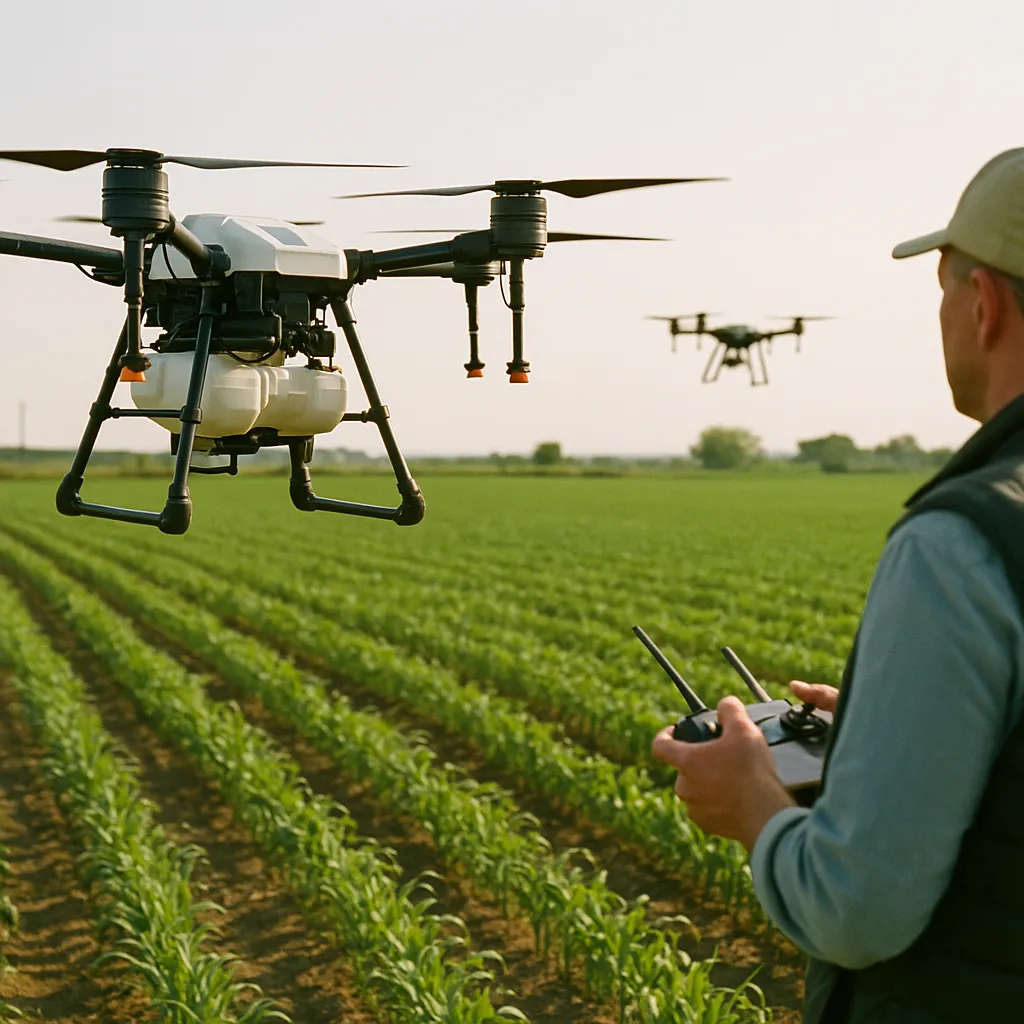
- Weed-pressure maps: Aerial imagery processed by computer vision identifies weed density and species distribution across fields, allowing targeted herbicide application rather than blanket spraying
- Crop health analysis: Multispectral imaging detects stress, disease, and nutrient deficiency before they're visible to the human eye, enabling intervention before yield loss occurs
- Turnaround time: Analysis delivered within days of flight — fast enough to act on before field conditions change
The practical benefit: selective herbicide application based on weed maps can reduce chemical costs by 20-40% compared to uniform treatment. Catching disease stress early can prevent losses that would otherwise exceed the system's annual cost.
The LLM Layer: Advice in Plain Language
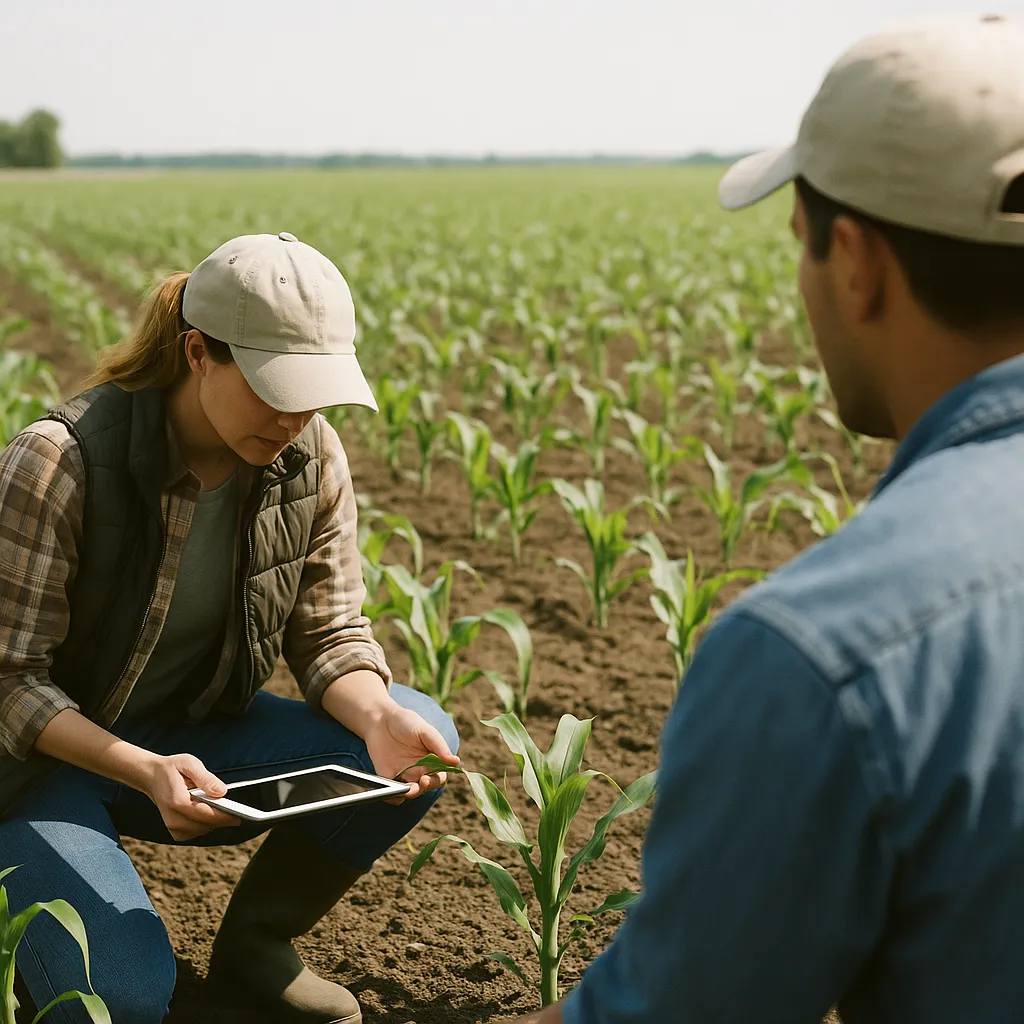
The next development layer matters as much as the drone hardware for adoption at scale. LLMs (large language models — the AI systems behind tools like ChatGPT) fine-tuned on agronomy datasets are being deployed as voice-accessible farm advisors, according to Ascero AI News. A farmer can describe what they're seeing in a field, speak in their local language, and receive recommendations grounded in crop science rather than having to interpret raw data outputs.
Get this in your inbox.
Daily AI intelligence. Free. No spam.
This matters for farms outside the high-tech agricultural belt. Regions where literacy barriers, limited internet infrastructure, or non-English languages previously blocked precision agriculture adoption now have an accessible interface layer. The technology doesn't require a data scientist. It requires a smartphone and a question.
The ROI Math
Analysts cited by Ascero AI News estimate $140 per hectare per year in net improvement from current precision agriculture technology for farms that adopt it. On a 200-hectare operation, that's $28,000 annually — meaning the system pays for itself in approximately seven months at the low end of efficiency gains.
The $140/hectare figure likely understates the benefit for farms with significant weed pressure or disease history, where early detection and targeted intervention produce outsized returns. It also doesn't capture the compounding value of multi-year yield improvement from better field management practices.
What Still Limits Adoption
Cost is no longer the primary barrier, but it's not the only one. Three friction points remain:
Technical confidence. Small farm operators who have managed fields by observation and experience for decades may be skeptical of AI-generated maps that contradict their ground-level assessment. Building trust in AI recommendations takes time and verified outcomes.
Connectivity. Cloud-based analysis platforms require sufficient internet connectivity to upload flight data and retrieve processed outputs. Rural connectivity gaps still affect some of the regions where this technology would provide the most value.
Lender and insurer integration. AI-derived field data has value beyond operational decisions — it's potentially useful for crop insurance underwriting and agricultural lending. Until lenders and insurers incorporate this data into their processes, farms don't capture the full value of their investment.
What to Watch
Whether agricultural extension services, USDA programs, and crop lenders begin formally recognizing AI-derived field data in their processes — which would accelerate adoption by creating additional financial incentives beyond direct operational savings. Also watch for the LLM advisory layer to expand to more languages and crop types, which represents the largest unlock for smallholder adoption in emerging markets.
Sources: Ascero AI News
Did this help you understand AI better?
Your feedback helps us write more useful content.
Get tomorrow's AI briefing
Join readers who start their day with NexChron. Free, daily, no spam.