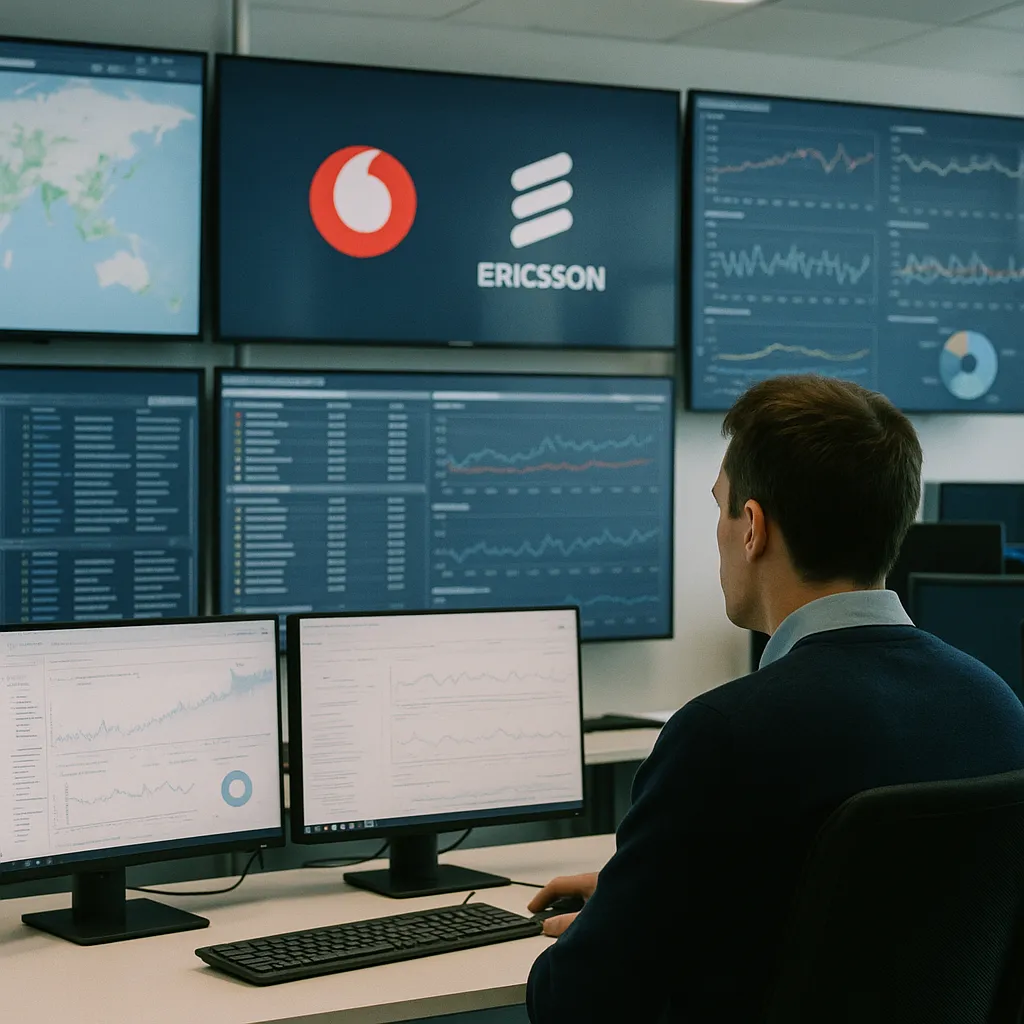
Vodafone and Ericsson validated real-time AI translation of network management commands across mixed-vendor commercial infrastructure on September 23, a step toward AI as an active operator of live telecom networks.
Vodafone and Ericsson Complete First Live AI Network Translation Test on Commercial Infrastructure
By Hector Herrera | September 30, 2026 | Telecom
Vodafone and Ericsson completed a live AI network translation test on September 23, validating that AI can translate and execute network management commands in real time across heterogeneous commercial infrastructure. The test marks a meaningful step toward AI functioning as an active operator of live telecom networks — not just a planning and monitoring tool.
The distinction matters. AI-assisted network planning is already widespread across major carriers. AI actively running a commercial network — translating management commands across equipment from multiple vendors without human interpretation at each step — is a different capability level, one the industry has been working toward for the better part of three years.
What the Test Demonstrated
The test, conducted on Vodafone's commercial network infrastructure, validated AI-driven translation of network management commands across heterogeneous infrastructure — meaning equipment from different vendors, running different management protocols.
Large carrier networks are built from equipment sourced from multiple suppliers. Managing that infrastructure requires constant translation overhead every time a command crosses from one vendor's system to another. Network engineers currently manage compatibility layers manually, which introduces latency, human error, and significant labor cost. AI handling that translation in real time removes that bottleneck.
Separately, Nokia confirmed a 20% spectral efficiency gain from AI-RAN (AI Radio Access Network) trials across its global carrier deployments in the same reporting period. Spectral efficiency — how much data a network transmits per unit of frequency bandwidth — is one of the most constrained resources in mobile networks. A 20% gain without adding new infrastructure or spectrum is a significant operating leverage improvement for carriers facing flat capacity growth while data demand rises.
Context: Two Vectors of AI Progress in Telecom
These results arrive as the telecom industry navigates a structural transition in how AI is applied to network operations.
Get this in your inbox.
Daily AI intelligence. Free. No spam.
The traditional model is AI as an advisory tool: machine learning systems analyze network traffic patterns, predict equipment failures, and recommend configuration changes that human engineers review and implement. This model is already widely deployed.
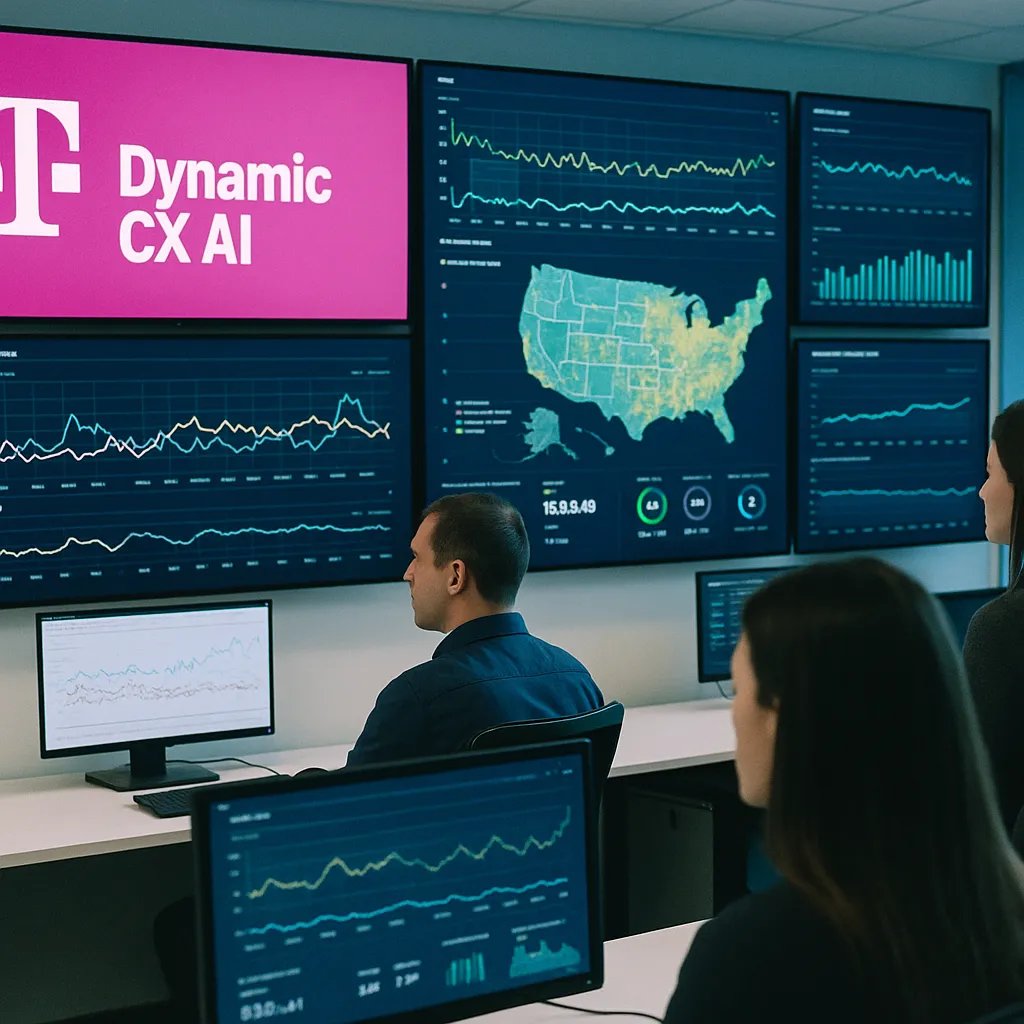
The emerging model is AI as an active network controller, dynamically managing spectrum allocation, traffic routing, and equipment configuration in real time — without a human in the approval loop for each decision.
This month, NexChron reported that Nokia's AI-RAN platform is now running in trials across eight global operators, with U.S. carriers diverging in their deployment timelines. The Vodafone-Ericsson translation test adds a different dimension: interoperability AI that works across multiple vendors' equipment, not just within a single equipment provider's ecosystem.
Together, the Nokia AI-RAN results and the Vodafone-Ericsson translation test establish two distinct vectors of AI progress in telecom:
- Single-vendor efficiency gains: AI optimizing performance within one manufacturer's equipment ecosystem (Nokia AI-RAN's 20% spectral efficiency improvement)
- Multi-vendor interoperability: AI translating commands and managing operations across mixed-vendor networks (Vodafone-Ericsson's live translation test)
Both matter. Most carrier networks are hybrid environments. A solution that only works within one vendor's equipment covers only part of the operational challenge.
What This Means for Carriers
For network operators, the immediate implication is reduced engineering labor for multi-vendor infrastructure management. If AI translation can handle the compatibility layer reliably at scale, it compresses the operational case for expensive single-vendor network standardization — a procurement consideration that carries significant capital implications for carriers currently running multi-vendor refresh cycles.
For equipment vendors, the Vodafone-Ericsson result is a competitive signal in ongoing procurement cycles. Ericsson's ability to demonstrate live AI translation on a commercial Vodafone network is a differentiation play as carriers evaluate platform choices for their next infrastructure generation. It raises the stakes for Nokia and Huawei to demonstrate comparable cross-vendor capabilities on competitive accounts.
For enterprise customers of these carriers — particularly those running latency-sensitive applications over mobile infrastructure — the downstream benefit is more reliable and efficiently managed networks. The operational improvements from AI network management are largely invisible to end users when they work; they become visible as better uptime and reduced degradation during high-traffic periods.
What to Watch
The critical next question is whether AI network translation performs at the same level on larger, more complex network segments at full commercial scale. Test environments and limited commercial trials are not always predictive of production-scale behavior across a full carrier network. Vodafone has not yet announced a timeline for broader AI network management deployment.
Nokia's next milestone following its eight-operator AI-RAN trial expansion will be a production commercial network deployment announcement. Watch for that in Q1 2027 as a signal that AI-RAN has crossed from trial to operational standard. If Ericsson announces a similar production deployment with Vodafone in that same window, the transition from AI-as-planner to AI-as-operator in commercial telecom will be effectively confirmed.
Did this help you understand AI better?
Your feedback helps us write more useful content.
Get tomorrow's AI briefing
Join readers who start their day with NexChron. Free, daily, no spam.