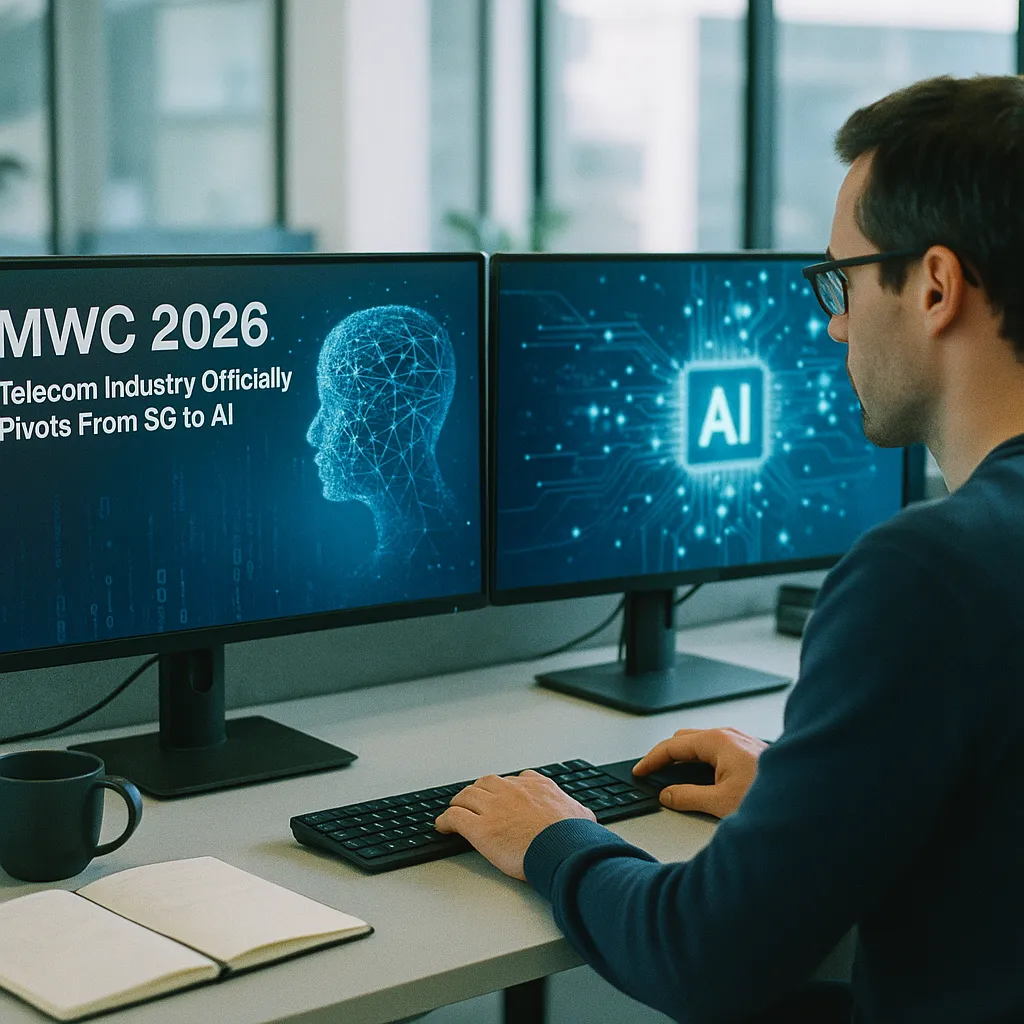
Mobile World Congress 2026 marked a decisive shift: telecom operators are done extracting value from 5G and are pivoting to AI-native networks and 6G as their primary long-term investment thesis.
MWC 2026: Telecom Industry Officially Pivots From 5G to AI-Powered 6G as Strategic Priority
By Hector Herrera | May 4, 2026 | Vertical: Telecom | Type: Vertical Article
Mobile World Congress 2026 marked a clean break in the telecom industry's strategic narrative: operators and vendors are done squeezing value from 5G. The conversation has shifted decisively to 6G and AI-native networks, with demonstrations showing AI moving from experimental deployments into live operational tools already running inside carrier infrastructure. For a sector that spent a decade building 5G business cases, this is a significant reorientation — and it's happening before 5G has fully paid off.
TechSpot's MWC 2026 coverage describes the shift as definitive: AI and 6G are the primary long-term investment thesis, not continued 5G monetization.
What Changed at MWC 2026
The headline technology on the floor was Giga-MIMO — massive antenna arrays that use AI to manage signal processing at a scale conventional systems can't achieve. Vendors are already describing these as pre-6G infrastructure being deployed commercially today, meaning the 6G transition isn't a future project — it's starting now, under a different name.
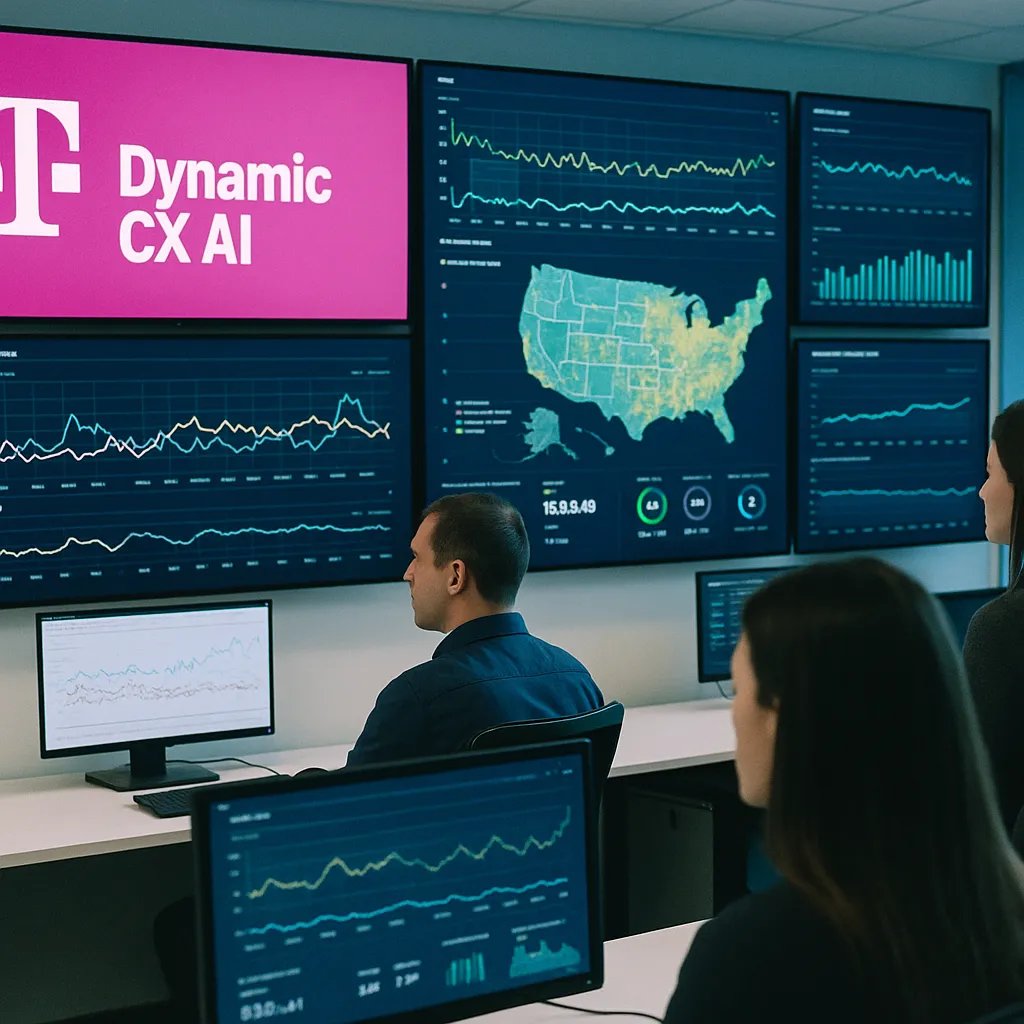
AI's role in the carrier network is also moving from back-office analytics to real-time operational control. At MWC 2026, demonstrations included:
Get this in your inbox.
Daily AI intelligence. Free. No spam.
- AI-enabled traffic management that adjusts network resources dynamically based on predicted demand
- Autonomous fault detection and resolution that identifies and reroutes around network failures without human intervention
- AI-powered radio access network (RAN) optimization that improves spectral efficiency and reduces energy consumption simultaneously
These are production deployments, not pilots. The shift from "we're testing AI in the network" to "AI is running our network" is one of the more significant capability transitions in telecom in a decade.
Why Operators Are Jumping to 6G Now
The honest answer is that 5G's business model hasn't fully materialized. Consumer 5G has largely delivered faster speeds on premium plans — but the industrial 5G use cases that justified the investment (autonomous factories, connected logistics, private enterprise networks) have been slower to develop than the industry projected in 2020.
6G and AI-native networks offer a different value proposition: instead of selling network capacity, operators sell network intelligence. An AI-native network can dynamically allocate resources, guarantee service-level agreements for specific applications, and offer businesses the kind of programmable infrastructure that cloud providers have trained enterprises to expect.
That's a better business model pitch than "5G but faster." It's also genuinely different technology, not just a marketing refresh.
The AI-Native Network Model
AI-native means AI is embedded in the network's design from the ground up — not added as a layer on top. In a conventional network, engineers configure the network and software monitors its performance. In an AI-native network, the AI is the configuration layer, continuously optimizing based on real-time conditions.
This has meaningful operational implications:
- Energy efficiency: AI-optimized networks can reduce energy use per bit by routing and scaling more precisely than static configurations
- Autonomous operations: fewer network engineers required for routine management as AI handles optimization and fault response
- New service classes: dynamic service guarantees become feasible — a network that can promise 1ms latency for a surgical robot but deprioritize a background file sync
For enterprise customers, this means telecom infrastructure starts to look more like cloud infrastructure: programmable, metered, and responsive to workload.
What to Watch
The critical question for the next 18 months is whether operators actually deploy AI-native capabilities at scale or use "6G" and "AI-native" as marketing framing for incremental upgrades. Watch Ericsson, Nokia, and Huawei's actual deployment contracts — the companies placing purchase orders for AI RAN infrastructure right now are the leading indicators of whether MWC 2026 was a genuine inflection or another cycle of telecom industry overpromising.
Did this help you understand AI better?
Your feedback helps us write more useful content.
Get tomorrow's AI briefing
Join readers who start their day with NexChron. Free, daily, no spam.