EU Publishes AI Content Labelling Playbook Ahead of August Deadline
The EU AI Act's mandatory content labelling rules take effect August 2, 2026. Here's what businesses must do in the next six weeks.
Top Stories
All Sections
Finance
About
20 results for "business"
The EU AI Act's mandatory content labelling rules take effect August 2, 2026. Here's what businesses must do in the next six weeks.
OpenAI committed $150 million to its first official partner program, targeting 300,000 certified consultants by end of 2026 — a direct push to compete with Google, Microsoft, and Anthropic in enterprise AI delivery.
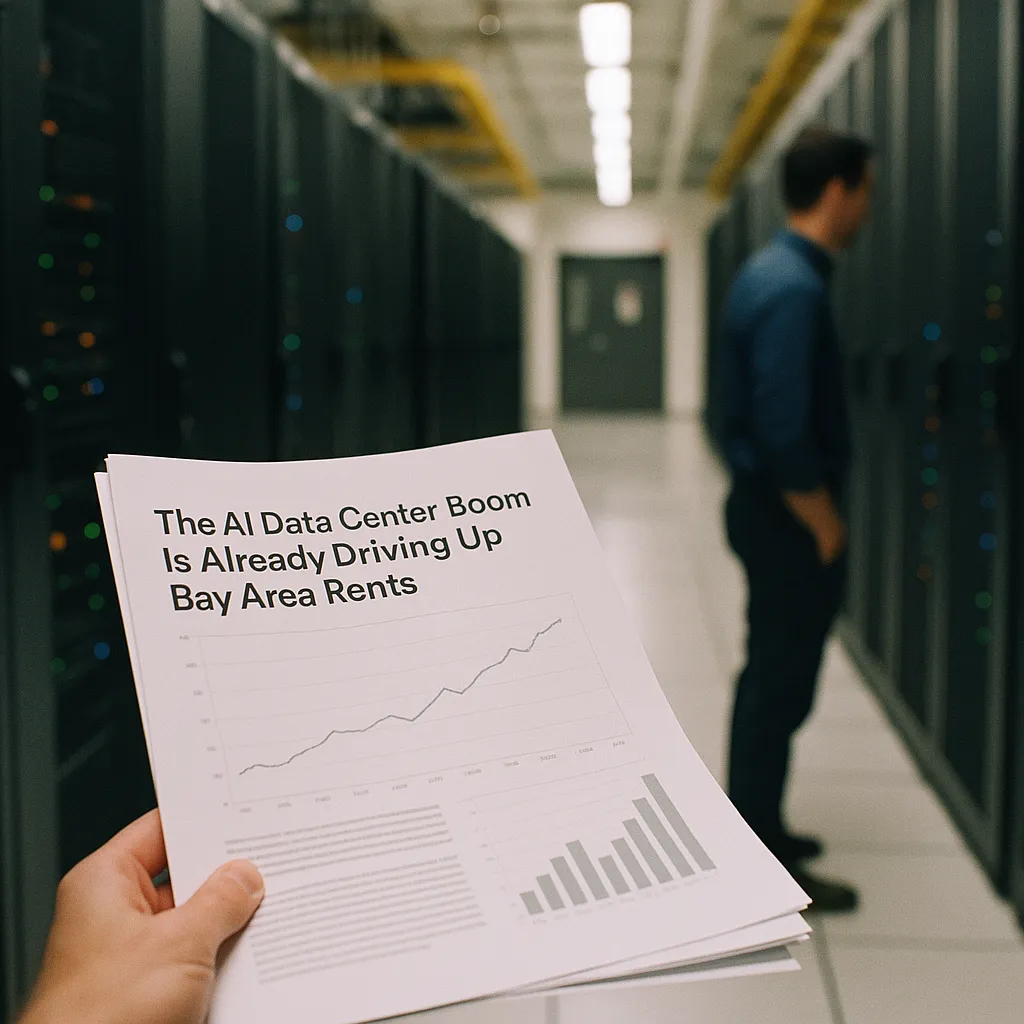
An Oaklandside investigation documents how AI firm expansion is driving rent increases and displacing small businesses, with AI companies already occupying 17 million square feet across the Bay Area.
Amazon MGM Studios has greenlit three Prime Video animated series using its GenAI Creators' Fund — including projects from Jorge R. Gutierrez and BuzzFeed Studios — marking the clearest signal yet that AI-assisted animation production is now a core studio business model.
SoftBank pledges €75 billion for 5 gigawatts of AI data center capacity in France—Europe's largest AI infrastructure commitment—brokered directly between Masayoshi Son and President Macron.
Anthropic filed a confidential IPO prospectus with the SEC on June 1, becoming the first major frontier AI lab to formally begin the public markets process — and leaping ahead of rival OpenAI.
DeepSeek is permanently locking in a 75% discount on its V4-Pro API, setting new prices well below U.S. competitors and putting lasting pressure on the AI inference market.
Anthropic projects $10.9 billion in Q2 2026 revenue and its first operating profit of ~$559 million — arriving roughly two years ahead of internal projections.
Jeff Bezos publicly dismissed AI bubble concerns on CNBC, arguing that even a bubble-driven buildout creates lasting infrastructure value — while revealing he is backing a $6.2 billion physical-world AI startup.
Harvard, Wharton, and MIT Sloan are restructuring executive education around intensive 2-to-5-day AI programs as employer demand for verifiable AI literacy drives enrollment surges.
37% of business leaders plan to replace human employees with AI by end of 2026, largely by not replacing departing workers — a silent downsizing that labor statistics are not yet capturing.
The Stanford HAI AI Index 2026 is the year's most rigorous benchmark of where AI actually stands. Here are the 12 findings that matter most for businesses, policymakers, and anyone making decisions about AI.
Generative AI is powering a new fraud: fake small business storefronts with AI-generated founder personas charging artisan premiums for factory goods.
More than half of financial services firms are actively running agentic AI, according to Cambridge Judge Business School's 2026 global report co-produced with the BIS, IMF, and WEF.
Anthropic and OpenAI are simultaneously launching $1.5B enterprise AI services ventures backed by Wall Street heavyweights, racing to embed engineers inside mid-sized businesses.
Businesses are deploying AI agents to negotiate and execute contracts autonomously, but no court has definitively settled who is liable when those agents make damaging deals.
Thirty-eight states have enacted AI legislation in 2026, creating a compliance patchwork that is raising costs for national businesses and building its own case for federal preemption.
Venti Technologies won the 2026 FedEx Small Business Grant in Asia Pacific, validating AI-powered autonomous vehicles that cut port logistics costs by 65% versus human-driven operations.
Twenty-five U.S. states have enacted AI laws in 2026, with Colorado's Act taking effect in June — creating the most fragmented AI compliance landscape businesses have ever faced.
An A3 survey finds 86% of manufacturers view AI as the dominant driver of business transformation through 2030. LLM adoption in industrial settings doubled to 35% in a single year.