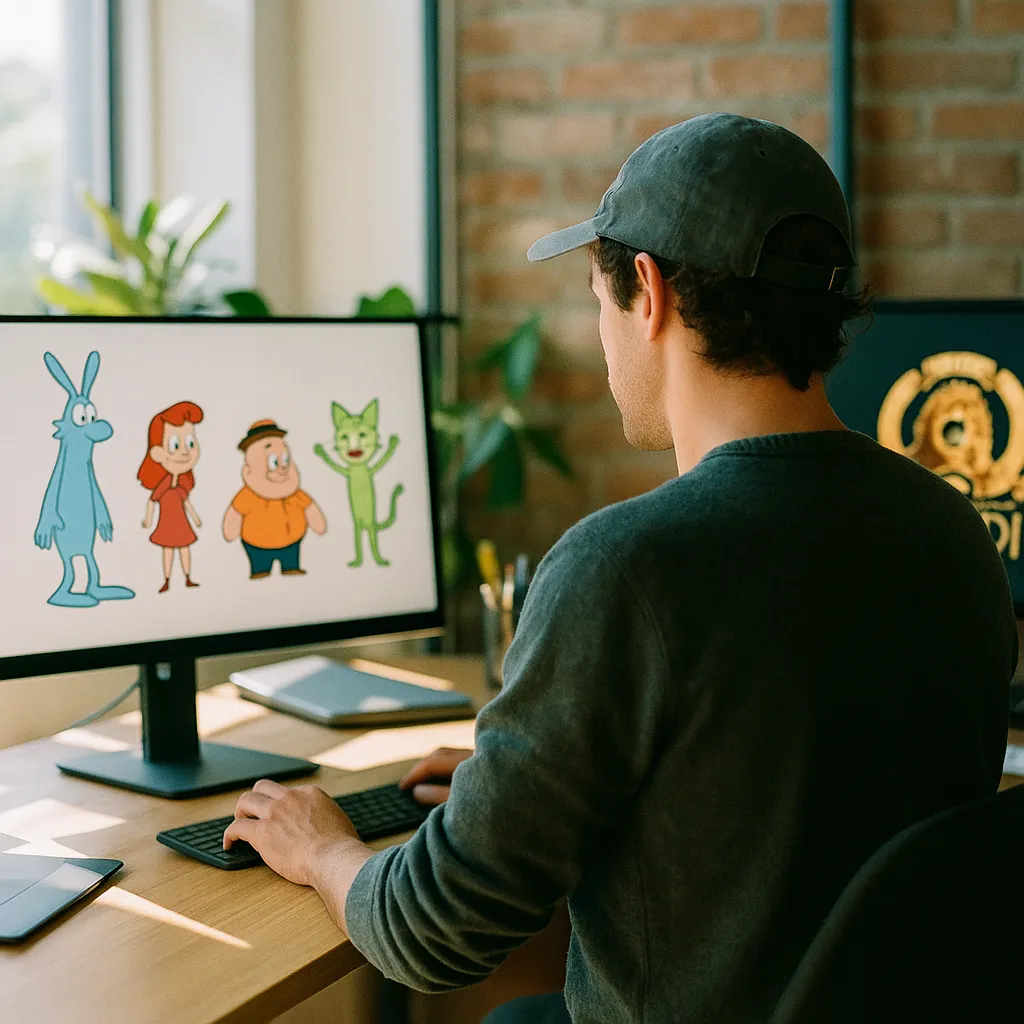
Amazon MGM Studios has greenlit three Prime Video animated series using its GenAI Creators' Fund — including projects from Jorge R. Gutierrez and BuzzFeed Studios — marking the clearest signal yet that AI-assisted animation production is now a core studio business model.
Amazon MGM Just Greenlit Three AI-Assisted Animated Series. This Is No Longer a Test.
Amazon MGM Studios has greenlit three animated series for Prime Video produced under its GenAI Creators' Fund — a program where AI tools handle scene generation, animation pipeline acceleration, and production cost reduction under Amazon's internal Project Nara initiative. This is the most direct signal yet from a major studio that AI-assisted production has moved from experiment to operating model.
The announcements, reported by Variety, include projects from established creators: filmmaker Jorge R. Gutierrez, known for The Book of Life, and BuzzFeed Studios. The involvement of creators with existing industry profiles is not incidental — Amazon is demonstrating that the GenAI Creators' Fund is a tool for amplifying established creative voices, not replacing them. That framing matters because it directly addresses the critique that AI animation tools destroy creative work.
What Project Nara Actually Does
Amazon's Project Nara is not a public-facing product; it is an internal AI infrastructure initiative embedded in the studio's production pipeline. Based on available reporting, it encompasses several discrete AI functions:
- Scene generation: AI systems that can produce animated visuals from text descriptions or reference images, reducing the time and cost of storyboard-to-animation conversion
- Pipeline acceleration: AI tools that automate technically repetitive but artistically defined tasks — in-betweening (generating the frames between key animation poses), lip sync, background rendering, and texture application
- Production cost modeling: AI optimization of production schedules and resource allocation across animation production stages
The practical effect is that a production that would historically require a large team of animators over multiple years can be completed with a smaller team over a shorter timeline. This is the economic proposition behind the GenAI Creators' Fund: by reducing production costs through AI, Amazon can greenlight more projects with smaller budgets — theoretically expanding the space for creators who couldn't previously meet traditional studio budget thresholds.
The Jorge R. Gutierrez Dimension
The inclusion of Jorge R. Gutierrez is the most substantive creative signal in the announcement. Gutierrez is not an emerging creator — his directorial credits include The Book of Life (2014, Fox) and Maya and the Three (2021, Netflix). His involvement in the GenAI Creators' Fund is a statement that AI production tools are now considered acceptable — even attractive — by established creators who have options.
This matters because the creative industry's resistance to AI tools has been led partly by prominent creative figures who argued that AI use was incompatible with authentic creative work. When those same prominent figures begin using the tools, the argument shifts from principle to terms: not whether to use AI, but under what conditions, with what disclosure, and with what compensation.
Get this in your inbox.
Daily AI intelligence. Free. No spam.
The Labor Question the Announcement Doesn't Answer
Amazon's announcement carefully emphasizes creator involvement and does not specify what happens to the animation workforce in a Nara-assisted production relative to a traditional production. This is the central unanswered question.
Traditional animation production is labor-intensive at every stage. A 2D animated series might require hundreds of animators, background artists, cleanup artists, colorists, and compositors across multiple seasons. The specific labor impact of AI tools depends on which stages they automate, to what degree, and whether the cost savings are reinvested in more production or extracted as margin.
The Animation Guild, which represents animation workers under IATSE (International Alliance of Theatrical Stage Employees), has been in active negotiations with studios over AI use for more than a year. Amazon's public greenlighting of AI-assisted productions without specific labor disclosure puts pressure on those negotiations — studios now have demonstrated commercial precedent to point to.
The industry has been here before with digital tools. The shift from hand-drawn to digital animation in the 1990s and 2000s dramatically changed animation workflows and reduced some job categories while creating others. AI represents a similar inflection, but potentially moving faster than previous transitions.
The Broader Studio Context
Amazon is not acting in isolation. The GenAI Creators' Fund greenlights land in a studio landscape where:
- Netflix has disclosed AI use in thumbnail generation, dubbing, and production optimization
- Disney has been using AI for de-aging and visual effects work and is evaluating broader pipeline applications
- Sony Pictures has filed multiple AI-related patents covering animation and visual effects automation
- Several streaming-native studios have been built on AI-heavy production models from the start, though at smaller scale
The difference with the Amazon announcement is specificity and scale. Three greenlit series, named creators, a named internal program, and a stated business model. This is Amazon putting a stake in the ground: AI-assisted animation is happening on Prime Video, and it is being presented as a feature rather than an apology.
What to Watch
Watch for how the three greenlit series are received critically and commercially — audience response to AI-assisted animation will provide the industry's clearest signal about whether viewers notice or care about the production method. Also watch for guild responses: if the Animation Guild or IATSE files grievances over the Nara productions, it will accelerate formal negotiations over AI production standards in the studio system. The outcome of those negotiations will shape how every major studio handles AI in animation over the next decade.
By Hector Herrera | NexChron | June 5, 2026
Did this help you understand AI better?
Your feedback helps us write more useful content.
Get tomorrow's AI briefing
Join readers who start their day with NexChron. Free, daily, no spam.