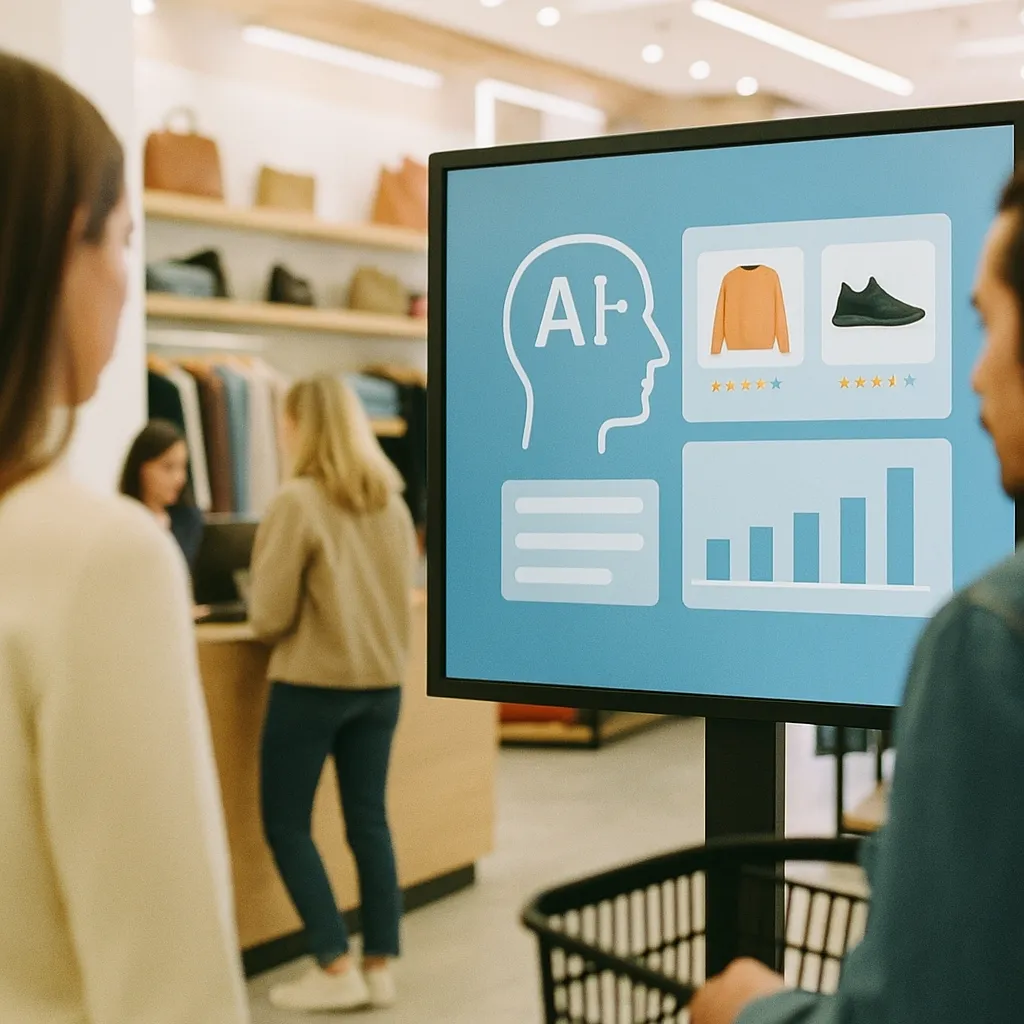
Stord's State of AI in E-Commerce 2026 finds 95% of retailers reporting measurable cost reductions and a 30% customer lifetime value lift for brands running full-stack AI.
95% of Retailers Are Now Cutting Operating Costs With AI — Stord's 2026 Report Puts Hard Numbers on the Shift
By Hector Herrera | June 9, 2026 | Retail
The retail industry has crossed from AI experimentation into AI execution — and Stord's State of AI in E-Commerce 2026 report has the numbers to prove it. Ninety-five percent of retailers surveyed report measurable operating cost reductions from AI deployments. Brands that have woven AI through their entire value chain — from demand forecasting to last-mile delivery — are seeing a 30% increase in customer lifetime value. These are the first large-scale, cross-sector figures to put hard returns on agentic commerce.
The Experiment Phase Is Over
For several years, "AI in retail" meant recommendation engines that suggested socks after you bought socks, and chatbots that mostly frustrated customers before routing them to a human. In 2026, that era is over. According to Stord's report, AI is now embedded across inventory management, dynamic pricing, demand forecasting, and last-mile logistics — not as innovation projects, but as operational infrastructure.
The 95% cost-reduction figure stands out because it cuts across retailer sizes. This isn't exclusively Amazon or Walmart wringing out margins through cloud-scale infrastructure. Mid-market and regional retailers are reporting measurable savings too, driven by accessible SaaS deployments of AI inventory optimization and carrier routing tools.
What the 30% CLV Number Actually Means
Customer lifetime value (CLV) is the total revenue a business can expect from a single customer relationship over time. A 30% increase in CLV is a significant return — it means customers of AI-forward retailers are buying more frequently, returning fewer products, and churning at lower rates.
The mechanism is multivariate. AI-powered personalization drives more relevant product recommendations. Predictive reorder tools reduce stock-out friction that quietly kills repeat purchases. AI-assisted customer service resolves problems faster and at lower cost. The Stord analysis frames the 30% lift as the compounding gap between retailers using AI in isolated pockets versus those threading it through the entire customer journey — from acquisition through fulfillment to post-purchase support.
Get this in your inbox.
Daily AI intelligence. Free. No spam.
A retailer running AI only at checkout misses the upstream wins: smarter inventory decisions reduce backorders, which reduces the customer disappointment events that silently erode CLV. The full-stack integration effect compounds.
Where the Cost Savings Are Coming From
The biggest cost reduction categories in the report:
- Inventory optimization — AI demand forecasting reduces both overstock (carrying costs) and stockouts (lost sales) by tightening replenishment cycles to observed buying patterns rather than historical averages.
- Pricing automation — Dynamic AI pricing responds to real-time competitor data, demand signals, and margin thresholds without the analyst hours that traditional yield management requires.
- Last-mile logistics — AI routing tools are reducing carrier costs and delivery exceptions for retailers running their own fulfillment or working with 3PLs (third-party logistics providers).
- Returns processing — Predictive return analysis and automated return routing are cutting reverse logistics overhead, one of the highest-cost line items in e-commerce.
These aren't theoretical savings from vendor slide decks. A 95% adoption rate of measurable results implies these tools have cleared the bar of finance department scrutiny — the hardest audience in any enterprise.
The Platform Consolidation Signal
Inside Stord's data is a structural finding that deserves attention: retailers seeing the best results are running unified AI across their operations, not stitching together point solutions. That accelerates consolidation pressure on the fragmented ecosystem of niche inventory apps, siloed pricing tools, and standalone logistics dashboards.
Stord, which provides connected fulfillment and supply chain software, has an obvious business interest in the "full integration beats point solutions" narrative — that caveat is worth noting. But the underlying pattern — that connected AI systems compound returns in ways isolated tools cannot — has been consistent across independent research this year, including Gartner's 2026 supply chain AI tracker and McKinsey's retail AI benchmarking work.
The retail winners of 2026 aren't the ones that deployed the most AI tools. They're the ones that deployed the most connected AI across the right workflows.
What to Watch
The 30% CLV lift number will become a benchmark — expect to hear it cited in board-level AI investment presentations across the retail sector over the next 12 months. More telling will be Stord's 2027 update: if the gap between the 95% cohort and the laggard 5% widens further, it validates the accelerating consolidation thesis that AI-forward retailers are compounding operational advantages their competitors can't quickly replicate.
The near-term question is whether AI retail tools hold their savings promises as adoption saturates. When everyone is running the same AI pricing and inventory models, the edge narrows. The retailers building proprietary data loops — feeding their own transaction history back into their AI systems — are building the moat that commodity tools can't replicate.
Did this help you understand AI better?
Your feedback helps us write more useful content.
Get tomorrow's AI briefing
Join readers who start their day with NexChron. Free, daily, no spam.