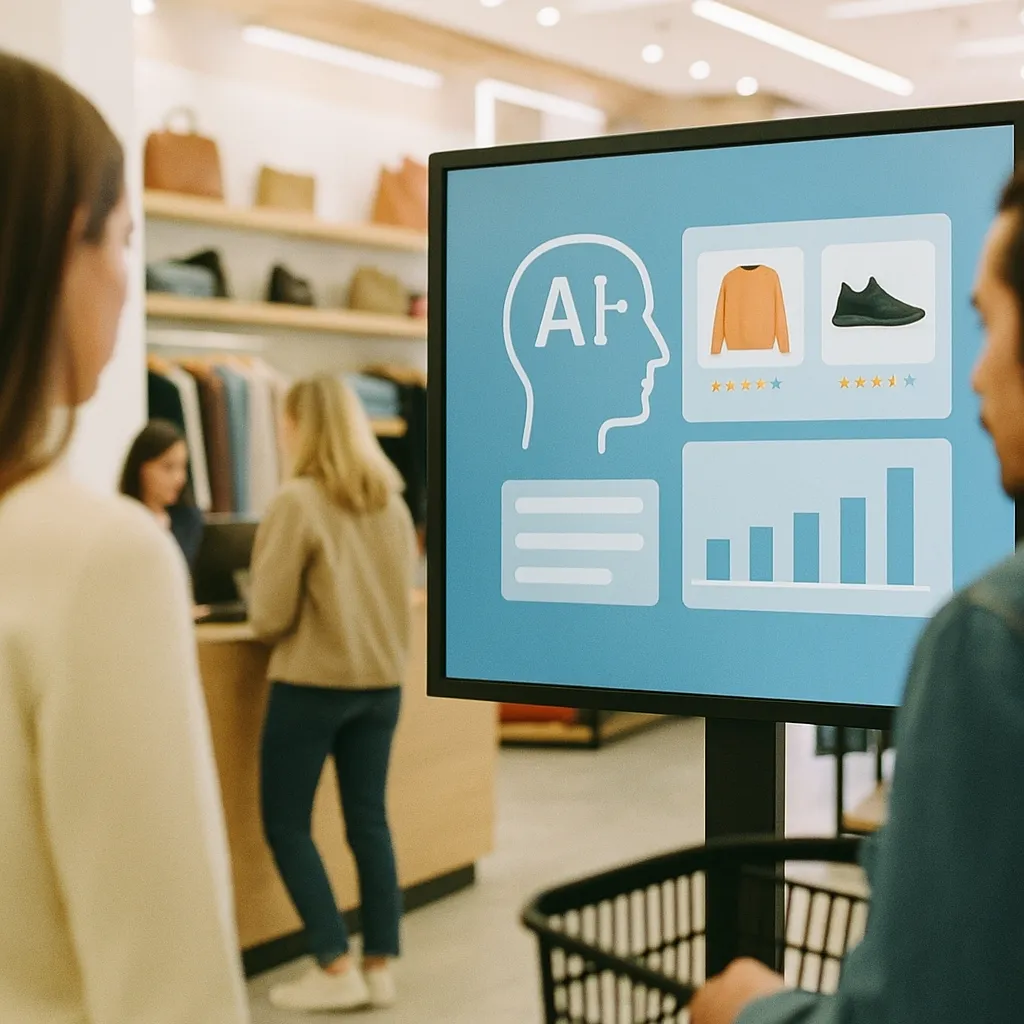
Target is the first mass retailer with AI shopping across Google, Microsoft Copilot, and OpenAI's ChatGPT, and has deployed ChatGPT Enterprise to 18,000 employees at its Minneapolis headquarters.
Target Becomes First Mass Retailer on Three AI Platforms, Deploys ChatGPT Enterprise to 18,000 Staff
By Hector Herrera | September 18, 2026 | Retail
Target and OpenAI confirmed an expanded partnership that makes Target the first mass retailer with AI-powered shopping experiences across Google's AI Mode and Gemini app, Microsoft Copilot, and OpenAI's ChatGPT simultaneously. Inside the company, ChatGPT Enterprise is live at Target's Minneapolis headquarters and deployed to 18,000 employees for supply chain forecasting, store operations, and digital personalization. The partnership was announced directly on OpenAI's site.
The significance is structural: Target is not treating AI as a single-vendor decision or a productivity pilot. The company has made a bet that AI-mediated shopping will happen across multiple platforms — and that being present on all of them matters more than picking a winner.
What the Consumer-Facing Integration Covers
The three-platform consumer rollout is unified by Target Circle, the retailer's loyalty program with over 100 million members.
Google AI Mode and Gemini. Shoppers using Google's AI search experience or the Gemini app can now surface Target products with personalized recommendations, check real-time inventory, and add items to Target Circle carts directly. Google AI Mode — which generates a structured response to shopping queries rather than a list of links — now includes Target as a verified commerce partner.
Microsoft Copilot. Target's product catalog and inventory data are integrated with Microsoft Copilot through its shopping agent capabilities. Users asking Copilot for gift recommendations, back-to-school supplies, or home essentials can receive Target-specific results with pricing and availability.
OpenAI ChatGPT. Target shopping is integrated into ChatGPT's commerce capabilities, with Target Circle loyalty status and cart integration supported. A shopper asking ChatGPT to help plan a dinner party can be routed directly to Target's grocery and kitchen sections with loyalty pricing applied.
Get this in your inbox.
Daily AI intelligence. Free. No spam.
The consumer integrations are powered by Target's product data feeds and inventory APIs, surfaced through each platform's respective commerce infrastructure. Target Circle membership and loyalty benefits carry across all three platforms.
The Internal Deployment
The employee-facing deployment is equally significant. ChatGPT Enterprise is live at Target's Minneapolis headquarters — a rollout covering 18,000 employees across corporate functions including:
- Supply chain forecasting. Demand modeling, inventory optimization, and vendor communication workflows.
- Store operations. Scheduling, incident reporting, and process documentation acceleration.
- Digital personalization. Building and testing targeting logic for Target's e-commerce and app personalization layers.
Enterprise AI deployments at the 18,000-employee scale are still uncommon outside technology companies. Target's rollout puts it alongside Morgan Stanley, Goldman Sachs, and large consulting firms as organizations that have moved past AI pilot programs and into systematic workforce integration.
Why Three Platforms Instead of One
The three-platform consumer strategy reflects a judgment about how AI-mediated commerce will develop. No single AI assistant has dominant market share in retail discovery today. Google AI Mode captures shopping intent from search. Microsoft Copilot reaches enterprise users and Microsoft 365 subscribers. ChatGPT reaches the largest installed base of dedicated AI users. Being present on all three means Target participates in AI-mediated discovery regardless of which assistant a given shopper uses.
This is similar to how major retailers handled the initial proliferation of e-commerce marketplaces in the 2010s: the winning strategy was not to bet on Amazon or Instacart or Google Shopping exclusively, but to be present across all of them with consistent product data and pricing.
The risk in that strategy is margin. Every AI platform that intermediates a transaction takes a cut or imposes operational requirements. Being present on three platforms means negotiating three sets of commercial terms and maintaining three product data integrations. The coordination overhead is real, and the economics of AI-mediated retail transactions are still being established.
What It Signals for the Industry
Target is the first mass retailer to confirm simultaneous presence across all three major AI commerce platforms. That is not a coincidence — it is a deliberate move to establish a reference position before norms are set.
For other retailers, Target's deployment accelerates pressure to make comparable decisions. If Target Circle loyalty data surfaces inside ChatGPT and a competitor's loyalty program does not, that is a competitive disadvantage that compounds with every AI-mediated shopping interaction. Walmart, Costco, and Kroger will now face explicit questions from investors and board members about their multi-platform AI commerce strategies.
For the platforms, Target's participation validates the commercial model. Google, Microsoft, and OpenAI have all invested in commerce capabilities for their AI products. Target's first-mover position — with 100 million loyalty members and one of the largest retail footprints in the US — is the kind of anchor partnership each platform needs to attract the next tier of retailers.
What to Watch
Target has not disclosed the commercial terms of its platform integrations or the metrics it is using to measure success. Watch for the company's Q3 earnings call in November for any data on AI-referred traffic, conversion rates from AI-mediated shopping, or changes in Target Circle enrollment attributable to the platform integrations. Any retailer announcing a comparable multi-platform strategy in the next 90 days would signal that Target's approach is becoming the industry standard rather than an experiment.
Did this help you understand AI better?
Your feedback helps us write more useful content.
Get tomorrow's AI briefing
Join readers who start their day with NexChron. Free, daily, no spam.