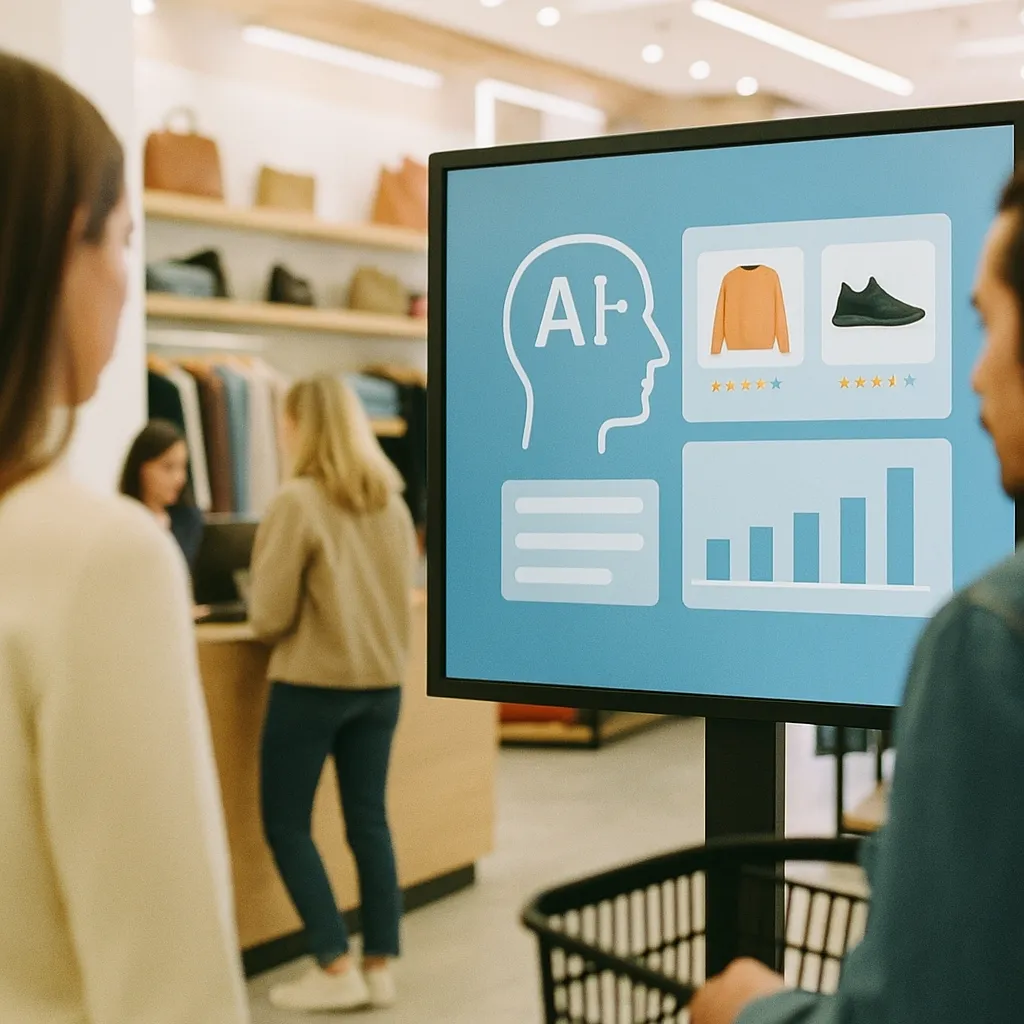
With 20% of consumers interested in AI shopping agents, major retailers are blocking access, leaning into dynamic pricing, and building proprietary tools — all to resist the price transparency that consumer AI shopping tools create.
Retailers Are Pushing Back Against AI Shopping Tools That Give Consumers Pricing Power
By Hector Herrera | June 14, 2026 | NexChron.com
About 20% of consumers now express interest in AI-powered shopping tools that compare prices and surface better deals — and the retailers who would need to cooperate with those tools are resisting, according to eMarketer analysis. The friction is not technical. It is structural: AI shopping tools shift pricing power to buyers, and retailers are not interested in facilitating that shift.
The tension is real and likely to define the next phase of AI's role in e-commerce. Consumers want AI agents that can find the best price, compare product specs across retailers, and complete purchases automatically. Retailers want AI that helps them sell at full margin. These goals are not compatible, and someone will have to give.
What AI Shopping Tools Actually Do
Consumer-facing AI shopping tools — agents embedded in browsers, voice assistants, or dedicated apps — work by accessing product and pricing data across multiple retailers simultaneously, comparing against the user's stated preferences, and surfacing the best match. The most capable versions can complete purchases autonomously: find the item, confirm it meets your criteria, apply any available discount codes, and check out — without the consumer visiting any retailer's site directly.
This is consequential for retailers in two ways:
-
It commoditizes the storefront. If a consumer never visits your site — never sees your homepage, your promoted products, your loyalty program offers — you lose the ability to influence their purchase beyond the price and product data you expose. Retail margins depend heavily on the ability to upsell, cross-sell, and steer consumers toward higher-margin products. AI shopping agents bypass all of that.
-
It creates price transparency at scale. A consumer manually comparing prices across six retailers is a limited check on pricing. An AI agent doing it instantly, across every major retailer, for every price point, at any time, is a structural constraint on pricing power. Retailers cannot sustain price premiums when the tools to find cheaper alternatives are frictionless.
How Retailers Are Resisting
eMarketer's reporting identifies several tactics retailers are using to limit the effectiveness of AI shopping tools:
Blocking agent access. Retailers are updating their robots.txt files and terms of service to prohibit AI agents from crawling product and pricing pages. This works against less sophisticated agents but not against tools that load pages like a browser.
Get this in your inbox.
Daily AI intelligence. Free. No spam.
Dynamic pricing that undermines comparison. If prices change frequently enough, a price comparison captured by an agent may be stale by the time the consumer acts on it. Some retailers are leaning into dynamic pricing partly because it makes AI comparison less reliable.
Loyalty program opacity. True pricing for loyal customers often involves stacked discounts, early access, and personalized promotions — none of which are visible to an external AI agent. A consumer using an AI shopping tool may see a higher price than a returning customer who goes directly to the site.
Platform exclusivity. Several large retailers are investing in their own AI shopping tools (Amazon's Rufus, Walmart's My Assistant) that are designed to keep consumers within their ecosystem rather than enabling cross-retailer comparison.
The Consumer Side of the Equation
The 20% consumer interest figure from eMarketer represents early-adopter demand — likely skewed toward younger, higher-income, more tech-forward shoppers. That 20% punches above its weight in two ways: it is the segment most valuable to retailers (high spending, frequent purchases), and it is the segment most likely to influence broader consumer behavior.
Historically, tools that shift shopping power to consumers — price comparison sites, coupon aggregators, cash-back browser extensions — face retailer resistance at first and then become normalized as consumer demand and competitive pressure force accommodation. Retailers cannot afford to block the tools their best customers want to use indefinitely.
The question is how long the resistance phase lasts, and whether it slows AI shopping tool adoption enough to give retailers time to find a better-margin model.
What This Means for AI Shopping Platforms
The companies building consumer AI shopping tools — startups and Big Tech alike — face a chicken-and-egg problem. Consumer demand is growing but not yet at scale. Retailers are resisting integration at the same time. Without retailer cooperation, the tools are less reliable and less useful. Without reliable and useful tools, consumer adoption stays limited.
The most likely path to resolution involves one of two scenarios:
Scenario A: A major platform breaks ranks. If Amazon or Walmart decides that attracting AI-tool users is worth the margin cost of full price transparency, it could force competitors to follow or risk losing traffic. This is unlikely from Amazon, whose own AI tools are designed to keep consumers in-ecosystem — but possible from a mid-tier retailer that needs to compete differently.
Scenario B: Regulation. The EU's Digital Markets Act already applies some interoperability requirements to large platforms. If AI shopping agents become classified as a consumer protection issue — price transparency as a right rather than a feature — regulatory pressure could force retailer cooperation in ways competitive pressure alone would not.
In the near term, expect AI shopping tools to be most effective in categories with standardized products and easily compared prices: consumer electronics, appliances, commodity groceries, books, media. In categories with significant brand differentiation, personalization, or service components, retailer resistance will be more effective.
What to Watch
Watch what Apple does with AI in its Safari browser and Wallet app. Apple has the installed base, the consumer trust, and the existing payment infrastructure to deploy AI shopping assistance at scale in a way that would be difficult for retailers to block without alienating Apple's 1 billion active device users. If Apple moves aggressively into AI-assisted commerce, the retailer resistance calculus changes significantly.
Sources: eMarketer
Did this help you understand AI better?
Your feedback helps us write more useful content.
Get tomorrow's AI briefing
Join readers who start their day with NexChron. Free, daily, no spam.