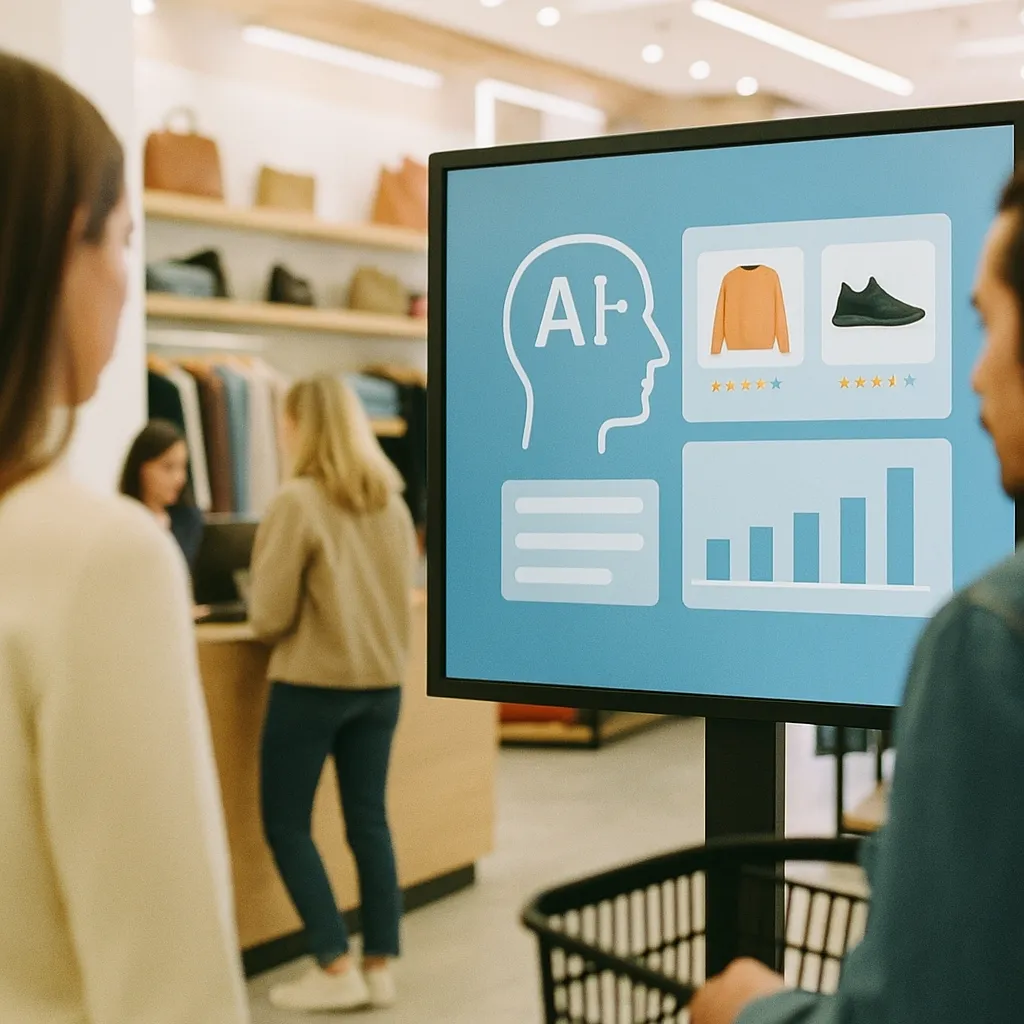
Amazon is licensing Alexa for Shopping technology to competing retailers via a new AWS product, with Kate Spade the first customer using an AI gift concierge built on Anthropic's Claude Haiku.
Amazon Opens Alexa for Shopping AI to Outside Retailers — Kate Spade First
By Hector Herrera | May 29, 2026 | Retail
Amazon is licensing the AI behind Alexa for Shopping to its competitors. That move signals a strategic pivot from proprietary advantage to platform play — and escalates the race to control retail's emerging AI-powered decision layer.
According to CNBC, Amazon is offering the technology through a new AWS product called the Agentic Shopping Assistant, which allows retailers to build conversational AI commerce tools in approximately 60 days. Tapestry's Kate Spade is the first outside customer, launching an AI gift concierge experience built on Anthropic's Claude Haiku.
What Amazon Is Offering
The Agentic Shopping Assistant is a managed service that gives retailers:
- A conversational AI interface capable of answering product questions, surfacing relevant items based on context, and guiding customers through purchase decisions
- Integration with the retailer's existing product catalog and inventory systems
- Personalization capabilities drawing on customer purchase history and expressed preferences
- Backend infrastructure through AWS, requiring no ML engineering from the retailer
The 60-day deployment timeline is the headline number. Building a capable conversational commerce AI from scratch typically takes months and requires dedicated machine learning engineering resources that mid-size retailers don't have. Amazon is compressing that timeline by packaging the model, infrastructure, and integration tooling as a single managed service.
Kate Spade's implementation is framed as an AI gift concierge — a system that helps shoppers find gifts for specific people, occasions, or budgets through natural conversation rather than keyword search. The use case plays to conversational AI's strengths: handling ambiguity ("something for my mom who loves travel but not scarves"), maintaining context across a session, and surfacing relevant options from a catalog that a standard search bar would miss.
The concierge runs on Anthropic's Claude Haiku — a lightweight, fast model optimized for responsive conversational use — reflecting Amazon's investment in Anthropic and its integration into AWS commercial products.
Get this in your inbox.
Daily AI intelligence. Free. No spam.
Why Amazon Is Doing This
Amazon's decision to license Alexa for Shopping to competing retailers appears counterintuitive. Amazon.com competes directly with Kate Spade, Tapestry, and every other retailer that will now use this technology. Why help competitors build better shopping experiences?
The answer is platform economics — the same logic that turned Amazon Web Services into a $100 billion business even though AWS competes with Amazon's own retail infrastructure.
By licensing the Agentic Shopping Assistant, Amazon:
- Converts a proprietary capability into recurring AWS revenue, with margins that scale independently of Amazon.com's retail performance
- Establishes its AI commerce infrastructure as the industry default before Google, Salesforce, or Shopify can
- Gains aggregate data on how AI-assisted commerce performs across different retail verticals, price points, and customer demographics
- Reduces retailer incentive to build competing AI infrastructure on rival cloud platforms
The Anthropic integration compounds the strategic logic. Amazon has invested over $4 billion in Anthropic. Every Claude API call made through the Agentic Shopping Assistant generates revenue for Anthropic and deepens the commercial relationship between the two companies — while keeping the usage within the AWS ecosystem.
What This Means for Retail AI
The retail AI landscape has been fragmented: disconnected point solutions for product recommendations, search ranking, customer service chatbots, and inventory forecasting. What's been missing is an integrated conversational layer that handles the full shopping decision — from initial discovery through product selection to purchase — in a single interaction.
Amazon's Agentic Shopping Assistant is a bid to own that layer across retail, not just on Amazon.com.
For retailers, the offer is genuinely compelling. Building a comparable system independently requires model capability, catalog integration, hallucination guardrails, ongoing model updates, and infrastructure maintenance. The Agentic Shopping Assistant compresses all of that into a service contract and 60 days of integration work.
The risk is dependency. Once Kate Spade's concierge runs on AWS with Amazon's infrastructure and Anthropic's model, switching costs are high. Amazon has a history of using service relationships to learn about customer behavior at scale — a dynamic that the brands licensing this technology should evaluate carefully.
What to Watch
Watch for the roster of retailers that follow Kate Spade. If Amazon signs mid-market brands — retailers without large ML teams who can't build this themselves — it will establish AWS as the default infrastructure for retail AI in the same way it became the default for e-commerce hosting a decade ago.
Also watch for the competitive response. Google has conversational commerce capabilities through Gemini and Google Shopping. Microsoft has Copilot integrations with retail tools. Salesforce has Einstein-powered commerce AI. But none has packaged their technology as a standalone managed service for outside retailers the way Amazon just did.
The race to control retail's AI decision layer is now a platform competition. Amazon just moved first.
Did this help you understand AI better?
Your feedback helps us write more useful content.
Get tomorrow's AI briefing
Join readers who start their day with NexChron. Free, daily, no spam.