Retail AI is moving from backend inventory systems onto the physical sales floor, with store associates using real-time AI tools to make personalized product recommendations during the sale.
AI Moves Off the Backroom Screen and Onto the Store Floor
By Hector Herrera | April 26, 2026
Retail AI is leaving the back office. After years of powering inventory optimization and demand forecasting in systems customers never see, AI is now reaching the physical sales floor — in the hands of store associates making real-time product recommendations during a sale. The shift is documented in a Retail Brew investigation published April 22, and the numbers behind it suggest the transition from backend to frontline is moving faster than most industry observers expected.
From Inventory to Interaction
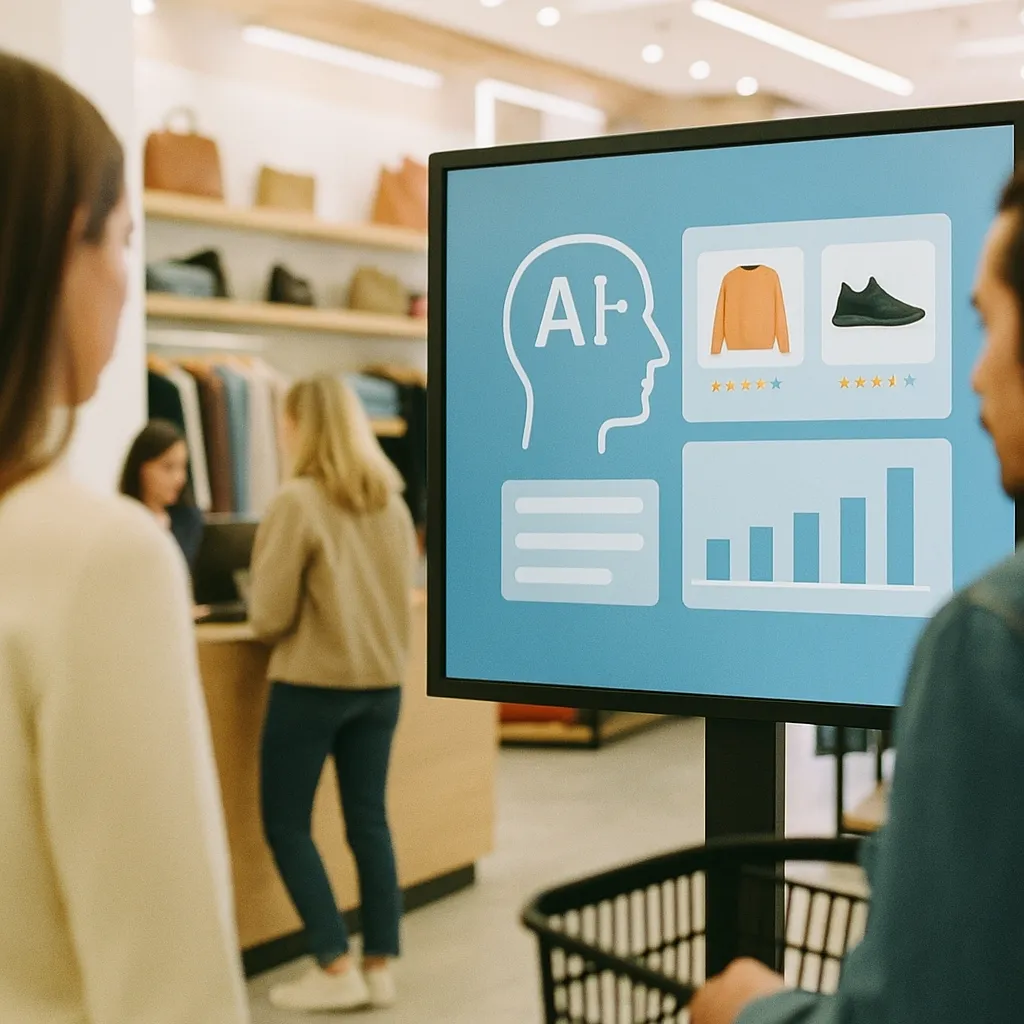
Retail Brew's investigation found that AI deployment in physical retail has expanded beyond its traditional domain — forecasting what to stock and when — into the live customer interaction layer. Store associates are now using real-time AI applications on the floor to surface personalized product recommendations, live inventory data, and customer purchase history during an active conversation with a shopper.
The example Retail Brew highlights: Texas boot brand Tecovas, which deployed a system called "Boot Runner" that gives store associates live inventory data and customer insights during the sale itself. An associate can see what sizes are available in other locations, what styles the customer has bought before, and what complementary products are typically purchased together — without leaving the customer's side.
Eighty-seven percent of retailers now report revenue lift from AI, according to the investigation, with 97% planning to increase AI spending over the next year.
Get this in your inbox.
Daily AI intelligence. Free. No spam.
Why the Store Floor Is the New Frontier
Backend retail AI — inventory management, pricing algorithms, supply chain optimization — has been maturing for years. The ROI is measurable and the integration is largely invisible to consumers. The store floor is a different kind of challenge.
Physical retail's value proposition over e-commerce has always been the human element: the ability to ask questions, see and touch products, and get personalized recommendations from someone who knows the inventory. AI tools that enhance that human interaction rather than replace it represent a genuine extension of the value proposition.
The risk is the opposite: AI tools that make associates seem robotic or distracted — eyes on a screen rather than the customer — undermine the very advantage physical retail is supposed to offer. The Tecovas "Boot Runner" model is designed to keep associates present in the conversation rather than retreating to a terminal.
What This Means for Retail Operations
For store associates, the shift creates new skill requirements. Using an AI tool effectively during a live customer interaction is a learned skill — knowing when to consult the tool and when to trust your own knowledge without breaking the flow of a sale. Training programs for floor AI will become a standard part of retail onboarding.
For retail brands, the floor-level AI layer creates a new competitive dimension. A brand whose associates can instantly answer "do you have this in a 10.5 wide, and when is it back in stock at the Dallas location?" creates a different customer experience than one that requires a trip to the stockroom and a phone call.
For physical retail's long-term survival, floor AI that genuinely improves the in-store experience is arguably the clearest path to differentiation from e-commerce. Online retail already has personalization algorithms. Physical retail's edge is presence. AI that amplifies human presence rather than substituting for it is where the real strategic value lies.
What to Watch
Whether the major retail chains — Target, Walmart, Best Buy — begin visible floor-level AI deployments at scale, and how employees respond, will signal whether this model holds up beyond specialty brands like Tecovas. Watch also for customer reaction data: whether shoppers perceive associate AI tools as helpful or intrusive will shape how quickly the technology proliferates across retail formats.
Hector Herrera covers retail and consumer AI for NexChron.
Did this help you understand AI better?
Your feedback helps us write more useful content.
Get tomorrow's AI briefing
Join readers who start their day with NexChron. Free, daily, no spam.