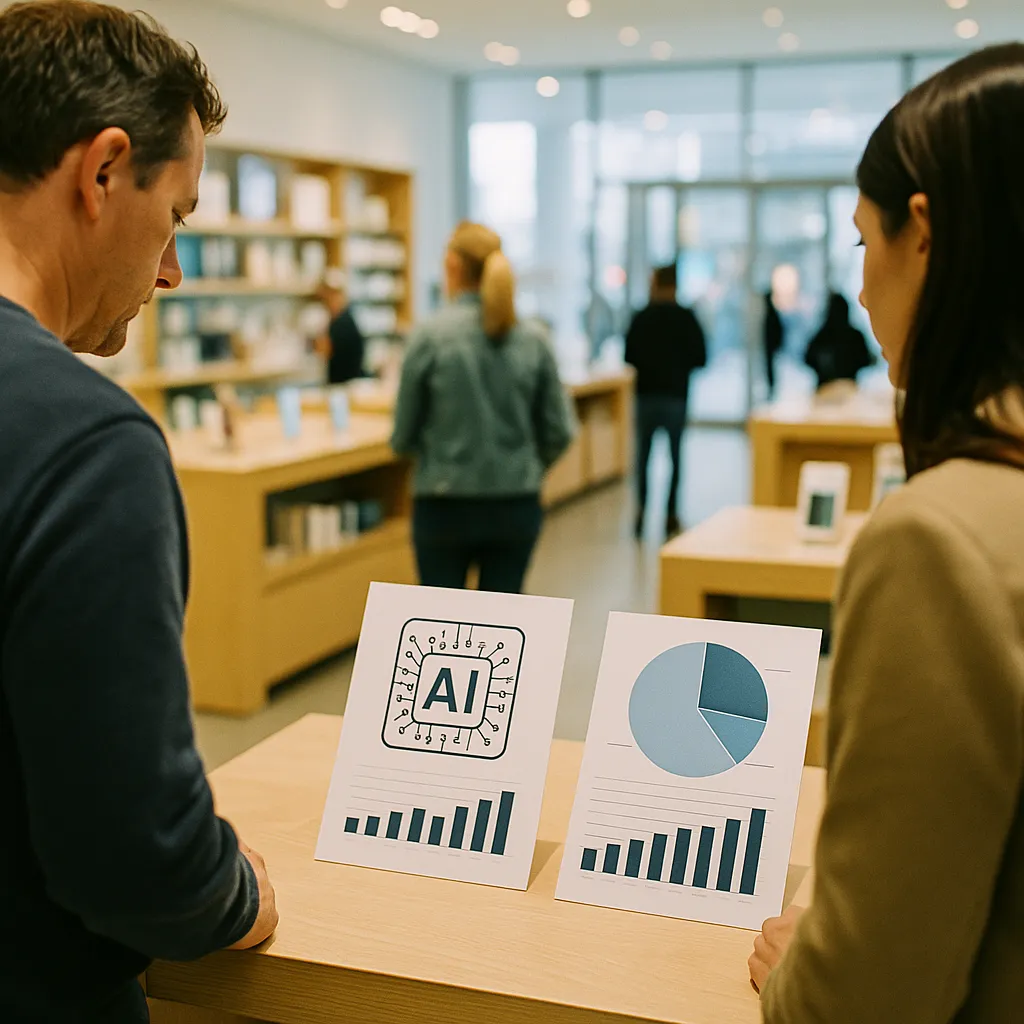
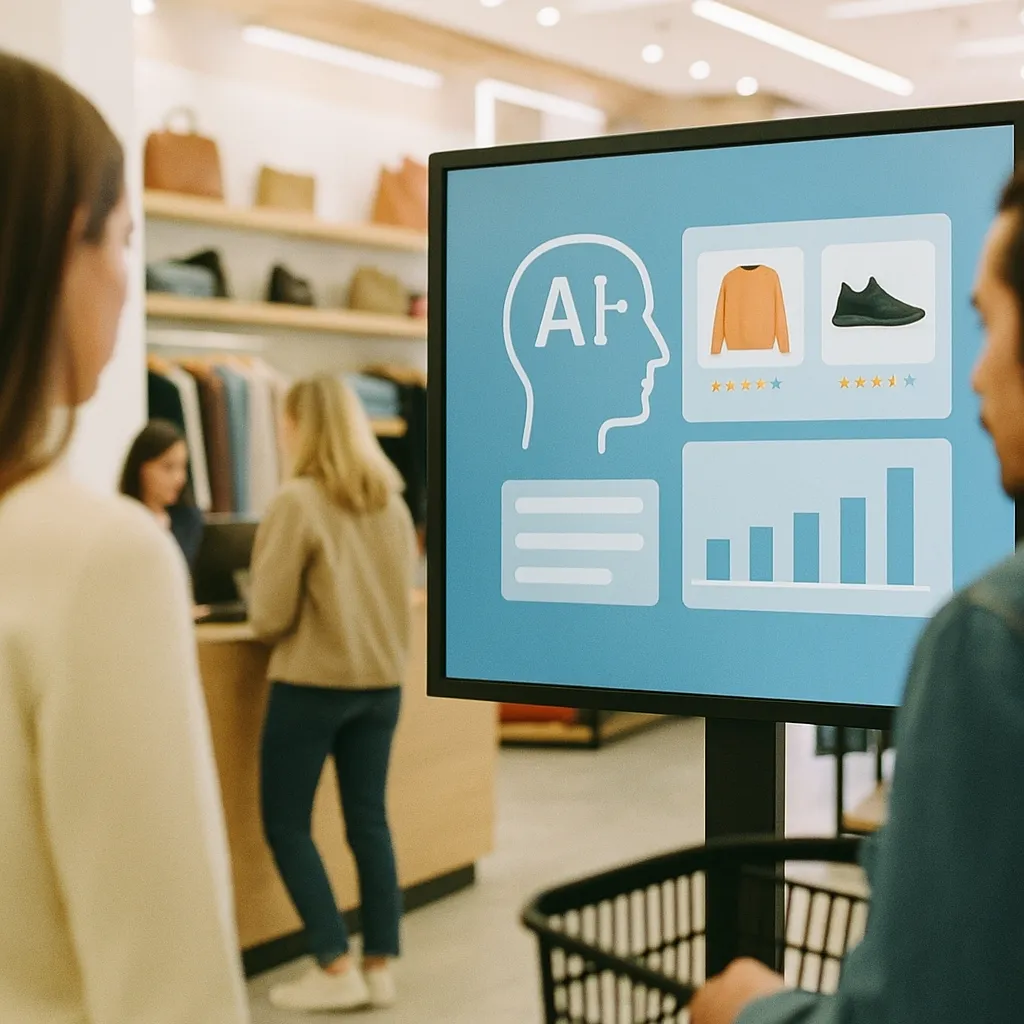
The retail sector has crossed a threshold: nearly 90% of retailers are now actively using AI tools, and the technology has shifted from experimentation to operational backbone across the industry.
Nine in Ten Retailers Now Using AI as Global Market Hits $18.4 Billion in 2026
By Hector Herrera | April 21, 2026
Nine in ten retailers are now actively using AI, and the global AI-in-retail market has reached $18.4 billion in 2026 — crossing from pilot-stage investment to core operational infrastructure at a pace that is reshaping competitive dynamics across the sector. A new industry report tracked by Retail Customer Experience documents both the scale of adoption and a qualitative shift in how retailers are using AI: not just as an efficiency tool, but as a primary autonomous decision-maker.
From Experiment to Infrastructure
The headline figure — nearly 90% adoption — would have been remarkable in 2023. In 2026, it reflects a sector where not using AI is the exception, not the norm.
What has changed more fundamentally than adoption rate is how AI is being used. The industry report points to agentic AI emerging as a primary decision-maker in three core areas:
- Inventory management: AI systems making autonomous restocking, allocation, and markdown decisions based on real-time demand signals
- Personalization: AI generating individualized product recommendations, pricing offers, and content at scale — not just based on purchase history, but on real-time behavioral signals
- Customer experience: AI handling first-line customer service, product discovery, and post-purchase support with declining reliance on human intervention
This is the shift that matters. Retailers who adopted AI in 2022 or 2023 largely used it as an optimization layer on top of existing human decision processes. Agentic AI in 2026 is making autonomous decisions — buying inventory, setting prices, responding to customers — that previously required human judgment.
What Best Buy Is Actually Doing
Best Buy CEO Corie Barry's comments on AI use offer a concrete example of how a major retailer is deploying the technology in production.
Best Buy's live AI deployments include:
Get this in your inbox.
Daily AI intelligence. Free. No spam.
- Customer support: AI handling first-contact resolution for common support requests across call center and digital channels
- Personalized email marketing: AI generating and targeting emails based on individual customer signals, not segment-level templates
- Product search: AI-powered search surfacing more relevant results based on natural language queries rather than keyword matching
None of those applications are experimental. They are in production, affecting millions of customer interactions. The pattern Best Buy describes is typical of what the 90% adoption figure represents across the sector — not R&D pilots, but live customer-facing and operational systems.
The .4 Billion Market: Where the Money Is Going
The market sizing matters as a measure of where investment is concentrating.
$18.4 billion represents total spend on AI technology specifically in retail applications — including AI platforms, AI-enabled software (recommendation engines, demand forecasting systems, conversational AI), and AI services (implementation, customization, ongoing management). This figure does not include the broader tech investments that retail companies make, or the labor cost savings and revenue lift that justify AI adoption.
The growth trajectory reflects both the maturation of enterprise AI platforms and competitive pressure. In an industry with thin margins, AI-driven advantages in personalization, inventory efficiency, and customer experience are translating to measurable revenue and cost differences — creating pressure on laggards to accelerate.
What Laggards Face
The 10% of retailers not actively using AI face a widening gap, not a stable one. AI advantages in retail compound: better recommendation data improves models which improve recommendations. A retailer with 18 months of agentic inventory management has a more capable system than one starting today, even if both use the same platform.
The risk for smaller retailers is not just a capability gap — it is a customer expectation gap. When 90% of a consumer's retail interactions are AI-personalized, the remaining 10% that aren't feel generic. Consumer tolerance for non-personalized retail experiences is declining as AI-driven personalization becomes the baseline.
Two Risks Worth Watching
Regulatory exposure on AI pricing: Whether AI systems that autonomously set prices in response to competitive signals cross legal lines around price coordination is an open question in U.S. antitrust law, receiving active attention from the FTC. Retailers deploying agentic pricing AI should be monitoring this carefully.
Stress-testing under disruption: The 2026 retail AI wave has been tested primarily in stable conditions. How agentic inventory and logistics AI performs during supply chain disruptions — the scenario that would most expose system limitations — has not been demonstrated at scale.
What to Watch
Both the regulatory and resilience questions will surface over the next 12-18 months. Watch for FTC enforcement actions that name AI-driven pricing as a mechanism of harm, and watch for how retailers' AI systems respond the next time a major supply chain event creates inventory scarcity or demand spikes outside historical patterns.
By Hector Herrera | NexChron.com
Source: Retail Customer Experience, 2026
Did this help you understand AI better?
Your feedback helps us write more useful content.
Get tomorrow's AI briefing
Join readers who start their day with NexChron. Free, daily, no spam.