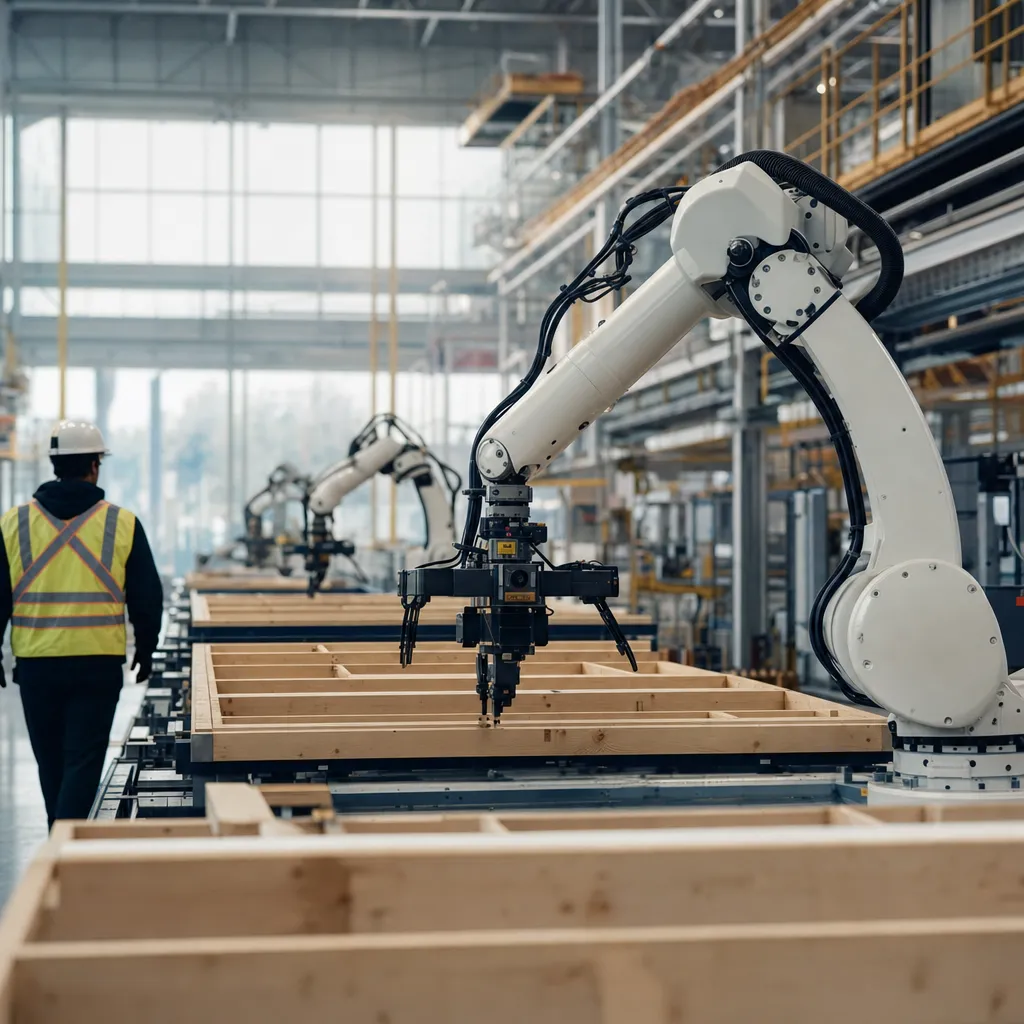
Half of construction projects using AI tools have no AI-specific contract clauses, and most project insurance policies exclude AI-related liability — creating a legal blindspot before the first wave of litigation arrives.
Half of AI-Assisted Construction Projects Have No Contract Clauses for AI Liability
By Hector Herrera | November 27, 2026 | Real Estate
Half of active construction projects using AI tools are operating under contracts that contain no AI-specific clauses, according to reporting by Law360 — and most of the insurance policies covering those projects explicitly exclude AI-related liability. The combination creates a legal blindspot with real financial consequences: when an AI system contributes to a design flaw, a cost overrun, or a safety incident, there is no contractual framework determining who pays.
Construction was an early adopter of AI for practical reasons — design coordination, estimating, scheduling, and safety monitoring all involve the kind of structured data where AI performs well. The speed of adoption outpaced contract law. Standard industry agreements weren't updated, and the result is a liability vacuum that construction attorneys are now warning will produce significant litigation.
How AI Is Being Used in Construction
AI has penetrated construction workflows at multiple layers:
- Design and BIM coordination — AI reviews Building Information Modeling (BIM) files to flag clashes between structural, mechanical, and electrical systems before construction begins
- Cost estimating — AI generates quantity takeoffs and price projections from drawings, often faster and at lower cost than traditional estimating teams
- Safety monitoring — computer vision systems on job sites flag safety violations, including workers without PPE or equipment in restricted zones
- Schedule optimization — AI models predict delays and suggest sequencing changes to keep projects on track
- Document review — AI reviews contracts, RFIs (requests for information), and submittals for discrepancies
Each of these use cases introduces a question that existing contracts don't answer: If the AI output is wrong and that error causes project failure, who is responsible?
The Gap in Contracts and Insurance
Standard construction contracts — including AIA documents, ConsensusDocs, and bespoke owner agreements — were written assuming human professional judgment at every decision point. When a licensed engineer signs off on a structural calculation, that engineer bears professional liability. When an AI system generates a structural calculation and an engineer accepts it without independent verification, the liability chain becomes ambiguous.
Law360's coverage of the issue identifies three specific gaps:
Get this in your inbox.
Daily AI intelligence. Free. No spam.
- No allocation clause — contracts don't specify whether the AI tool vendor, the contractor deploying the tool, the design professional accepting AI output, or the owner bears liability when AI errors cause damage
- Insurance exclusions — most commercial general liability (CGL) and professional liability policies written for construction contain explicit exclusions for AI-generated errors, leaving gaps that no party's coverage fills
- No performance standard — contracts don't define what standard of care applies when AI tools are used, making it unclear whether a professional exercised reasonable judgment in relying on AI output
The insurance exclusion is particularly acute. CGL policies typically exclude coverage for professional errors (covered by E&O policies instead); E&O policies for architects and engineers increasingly carve out AI tool reliance. The result is that an AI-driven error can fall into a gap where no policy responds.
Why This Hasn't Produced Litigation Yet
Construction projects have long timelines. A design decision made in 2024 or 2025 — when AI tool adoption accelerated — may not result in a completed building, a discovered defect, or a cost dispute until 2026 or 2027. The litigation wave hasn't arrived yet because the projects where AI errors would be discovered are still under construction or in early occupancy.
Construction attorneys interviewed by Law360 expect that to change. As projects close out and final cost reconciliations occur, disputes that involve AI tool outputs will surface. The absence of contract language means those disputes will initially be resolved — or fail to be resolved — through litigation over implied duties and professional standards.
What Needs to Change
Construction attorneys are recommending three immediate contract updates for new projects:
1. AI disclosure and approval clause. Require contractors and design professionals to disclose when AI tools will be used in work product, and require owner approval for AI use in high-risk applications (structural design, geotechnical analysis, cost certification).
2. Responsibility allocation language. Specify that the professional signing off on AI-assisted work product bears the same professional liability as for work product generated without AI, and that the professional has an obligation to independently verify AI outputs in high-consequence applications.
3. Insurance verification. Require contractors and design professionals to confirm that their professional liability policies cover AI-assisted work before contract execution, and address coverage gaps through project-specific endorsements or owner-controlled insurance programs.
The insurance market is slower to adapt. Underwriters are still assessing how to price AI-related construction risk, and standard endorsements covering AI liability don't yet exist in most markets. That gap will likely persist until claims data develops.
What to Watch
The first significant construction AI liability case — when it reaches public court records — will force a rapid update to standard contract language across the industry. Industry bodies including the AIA and ConsensusDocs are reportedly working on AI addenda, but neither has published final guidance. Watch for those documents: they will set the de facto standard that most projects adopt going forward.
Sources: Law360
Did this help you understand AI better?
Your feedback helps us write more useful content.
Get tomorrow's AI briefing
Join readers who start their day with NexChron. Free, daily, no spam.