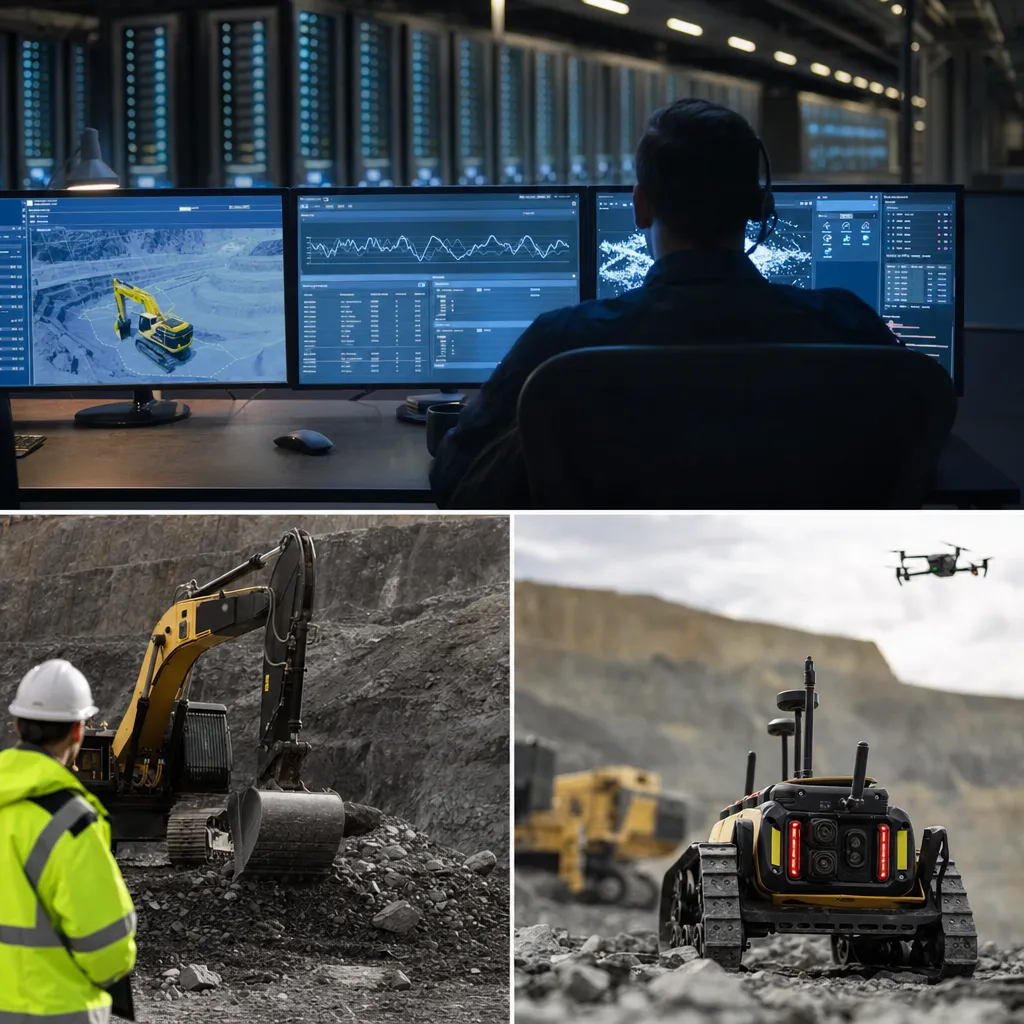
Bedrock Robotics closed a $600 million funding round to commercialize autonomous AI excavators, targeting the skilled operator shortage slowing US construction.
Bedrock Robotics Raises $600M to Build Autonomous AI Excavators for Construction
Bedrock Robotics has closed a $600 million funding round to develop and commercialize autonomous AI excavators and earthmoving equipment — one of the largest construction robotics raises on record. The company targets a skilled operator shortage that is constraining the pace of infrastructure, commercial, and residential construction across the United States.
Why Construction Automation Has Lagged
Construction is among the largest sectors of the global economy that remains heavily dependent on skilled human labor. Unlike manufacturing — which has been automating for decades — construction has resisted robotics because of job site variability: uneven terrain, changing conditions, and real-time judgment calls that early automation systems couldn't handle reliably.
Modern AI systems — combining computer vision, sensor fusion, and machine learning — are changing that calculus. The technology can now navigate unstructured outdoor environments reliably enough to execute real construction work, not just controlled demonstrations. The $600 million raise signals that institutional investors believe the technology is ready to scale from pilot programs to full commercial deployment.
The Skilled Operator Shortage Is Structural
The construction industry faces a severe and growing deficit of licensed heavy equipment operators. Operating an excavator safely and productively takes years to learn — most operators complete two to three years of training programs before running equipment independently on major projects.
This shortage is structural, not cyclical. Baby Boomer operators are retiring faster than younger workers enter the trades. Training pipelines are slow and capacity-constrained. Meanwhile, the Infrastructure Investment and Jobs Act and the Inflation Reduction Act injected hundreds of billions of dollars into projects that need excavation work done — highway grading, utility infrastructure upgrades, data center site preparation, housing development at scale.
Autonomous excavators don't solve this overnight. But they extend the capacity of skilled operators — one human supervisor can potentially oversee multiple autonomous machines — and they enable work to continue on second and third shifts when operators are unavailable.
Get this in your inbox.
Daily AI intelligence. Free. No spam.
Bedrock's Target Market
According to Deadfront.ai's November 2026 construction industry roundup, the $600 million will fund development and commercialization of autonomous AI excavators and earthmoving equipment targeting large-scale construction applications in infrastructure, commercial, and residential markets.
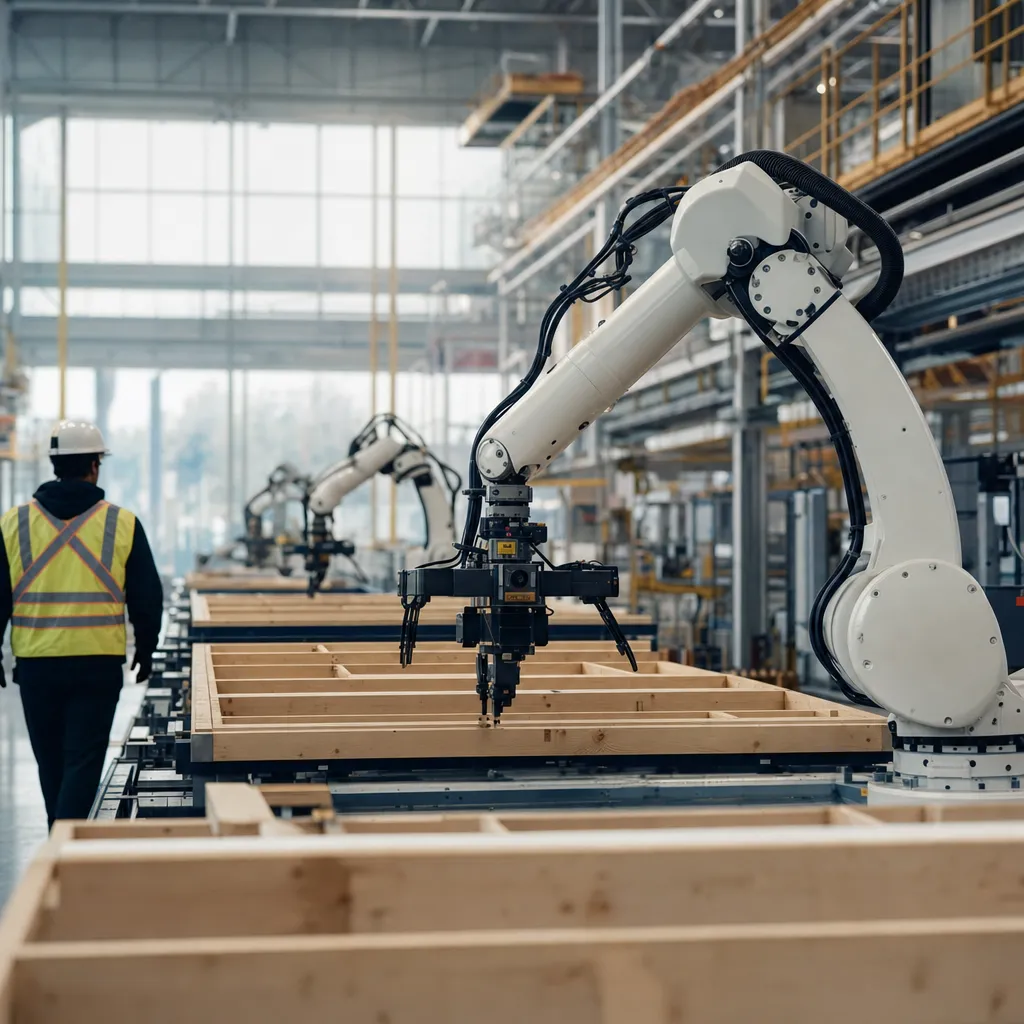
The raise positions Bedrock among a small group of companies attracting major capital for what the industry calls "physical AI" — AI systems that operate on real equipment in real environments, not just on screens or in controlled settings. Physical AI for construction is a later-arriving wave than logistics or manufacturing, partly because construction sites are harder environments to automate and partly because the economic case requires the AI to perform reliably in genuinely unpredictable conditions.
Physical AI Is Attracting Capital Across Industries
Bedrock's raise arrives in a week when physical AI attracted concentrated capital across multiple sectors:
- Genesis AI (France) raised $500 million for AI-powered industrial robotics at a $3.5 billion valuation
- Nvidia's GROOT physical AI platform continues expanding across manufacturing and logistics environments
- Multiple humanoid robotics companies have reported growing commercial commitments from automotive and electronics manufacturers
The common thesis: AI has crossed a capability threshold where it can operate reliably in unstructured physical environments. Factory floors and construction sites are messy in ways that required human judgment to navigate. AI systems are now handling enough of that variability to run unsupervised on production equipment with commercially acceptable error rates.
What to Watch
Bedrock will need to demonstrate commercial viability on actual job sites at scale — not in test conditions. The transition from pilot to production deployment is where autonomous technology programs have most commonly stumbled, not because the technology fails in controlled environments, but because real-world edge cases compound in ways that controlled testing doesn't surface.
Regulatory clarity on autonomous heavy equipment operation also varies by state and project type. Some infrastructure contracts require licensed operators on-site regardless of automation level, limiting the economic case until regulations catch up with the technology.
The first indicator of real progress will be commercial contracts with major general contractors for specific, recurring project types — not pilot agreements, but multi-project commitments where the economics work at market rates without subsidy.
The construction industry's AI moment arrived later than manufacturing, logistics, or financial services. The capital is now committed in size. Whether the technology delivers at production scale will play out over the next 24 months.
Did this help you understand AI better?
Your feedback helps us write more useful content.
Get tomorrow's AI briefing
Join readers who start their day with NexChron. Free, daily, no spam.