OpenAI's GPT-6 Intelligent UI replaces plain-text chat responses with interactive buttons, calculators, and editable graphs — a structural shift in how AI communicates.
OpenAI is rolling out a new interface layer for GPT-6 called Intelligent UI that embeds tappable buttons, custom calculators, and editable graphs directly inside chat responses — replacing the plain-text output model that has defined every AI assistant since ChatGPT launched in 2022. The change is now live for Pro, Plus, Business, and Enterprise subscribers, with free-tier users receiving access through the GPT-6 Luna variant by Thursday.
This is a structural change, not a cosmetic one. AI assistants have answered questions in sentences and paragraphs since their debut. Intelligent UI makes structured information into interactive objects users can manipulate. Ask about a mortgage and get a calculator you can adjust. Ask for a comparison table and get a chart you can edit. The shift rewrites what it means for an AI to "respond."
What's in the Intelligent UI Rollout
Until now, GPT-6 operated largely like every prior version of ChatGPT: text in, text out, with occasional code blocks and markdown tables. Intelligent UI introduces a new rendering layer that interprets structured data within a response and surfaces it as interactive elements.
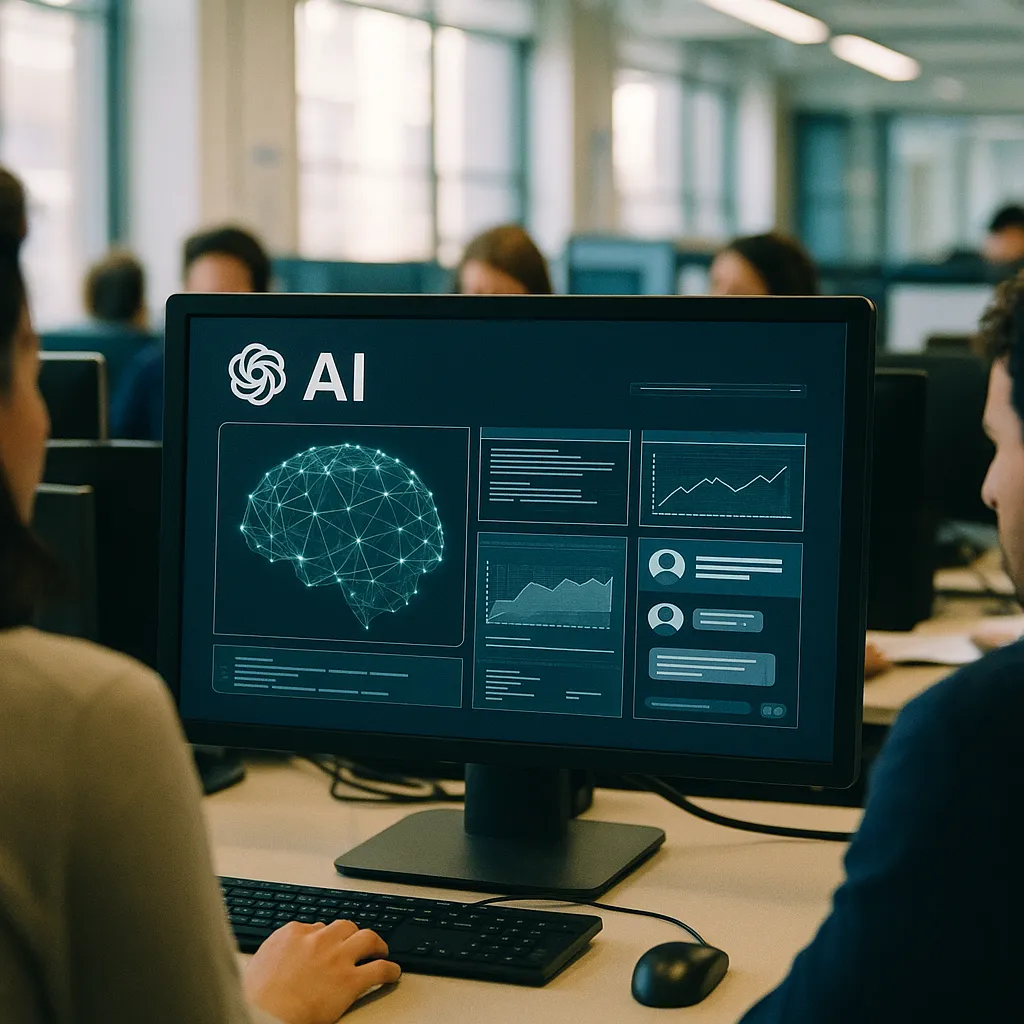
According to OpenAI's rollout details reported by AI Weekly, the Intelligent UI includes:
- Tappable buttons that trigger follow-on actions within the same conversation
- Custom calculators that appear inline when a response involves variable numeric inputs
- Editable graphs that allow users to adjust parameters and see updated visualizations in real time
Pro, Plus, Business, and Enterprise tiers received access immediately. Free-tier users get GPT-6 Luna — a variant of GPT-6 tuned for efficiency — by Thursday. OpenAI has not yet announced API availability for Intelligent UI components, meaning the rollout targets end users through ChatGPT directly.
Get this in your inbox.
Daily AI intelligence. Free. No spam.
Why This Is a Structural Shift
The dominant paradigm for AI interfaces has been the chat window: a text box and a response area. Users receive information as sentences, then export it to a spreadsheet, copy it into a calculator, or manually build a chart. Intelligent UI collapses that workflow into a single interface.
For enterprise users, the implications are immediate. A financial analyst comparing investment scenarios can now interact with variable-driven output without leaving the AI session. A logistics manager reviewing routing options gets editable parameters, not a wall of text. A healthcare worker checking dosing calculations gets an inline calculator, not a formula to retype elsewhere.
The shift also signals where AI product competition is heading. The next phase isn't just about what models know — it's about how they communicate. A model that answers correctly but delivers information in a format users have to manually process is going to lose market share to one that delivers interactive, structured output.
Competitive Pressure
Google's Gemini and Anthropic's Claude both offer strong underlying models, but neither has shipped production-grade interactive UI elements at this scale in ChatGPT's direct competitor context. Google has experimented with structured output in Workspace integrations; Anthropic has built artifacts (separate interactive outputs) into its interface. OpenAI's Intelligent UI is distinct in rendering these elements inline within the chat flow itself.
If the rollout demonstrates strong engagement — and the initial reception from power users suggests it will — expect Google and Anthropic to accelerate similar features within the quarter. The pressure is not hypothetical; enterprise buyers will start asking their AI vendors for parity.
What Developers Need to Know
The current rollout does not include API access to Intelligent UI components. That matters significantly. The thousands of developers building copilots, internal tools, and consumer applications on top of GPT-6 cannot yet use these features in their own products. When API access arrives — OpenAI has not given a timeline — the change moves from "a better ChatGPT experience" to "a new paradigm for how AI surfaces information in software."
Developers building on OpenAI's platform should begin thinking now about how their products present AI output. The shift from text-in/text-out to interactive response objects will require redesigning how third-party applications consume and display AI responses.
What to Watch
The critical next step is API availability for Intelligent UI components. Google I/O responses and Anthropic product announcements in the weeks ahead will signal whether this becomes a platform-wide race or a feature OpenAI holds as a differentiator. Watch also for engagement data from OpenAI — if session length and task completion rates improve measurably with Intelligent UI, the product direction for the entire AI assistant category will follow.
Did this help you understand AI better?
Your feedback helps us write more useful content.
Get tomorrow's AI briefing
Join readers who start their day with NexChron. Free, daily, no spam.