Your daily AI intelligence for October 06, 2026.
Daily AI Briefing — Tuesday, October 06, 2026
Good morning. Here's your AI intelligence for Tuesday, October 06, 2026.
The Workforce Shift Is Real — Just Not the One You Were Told About
Workday's October 2026 Global Workforce Report cuts through the noise on AI and jobs: the story isn't elimination, it's rewriting. Demand for AI builder skills — the people who configure, extend, and deploy AI systems — jumped 51% over the past year. Basic prompting skills, by contrast, dropped 25% in employer demand. The message: the AI labor market is maturing fast, and the baseline has already moved. If your AI training stopped at "write better prompts," you're already behind.
To close the skills gap at the entry level, Kyndryl and Skillsoft jointly launched a free AI education program for U.S. high school students and teachers this week. The curriculum covers AI fundamentals, prompt engineering, and practical tool use, and awards digital credentials on completion. It's the kind of infrastructure investment the workforce will need — the question is whether it scales fast enough to matter.
Robotics Crosses the Line From Pilot to Production
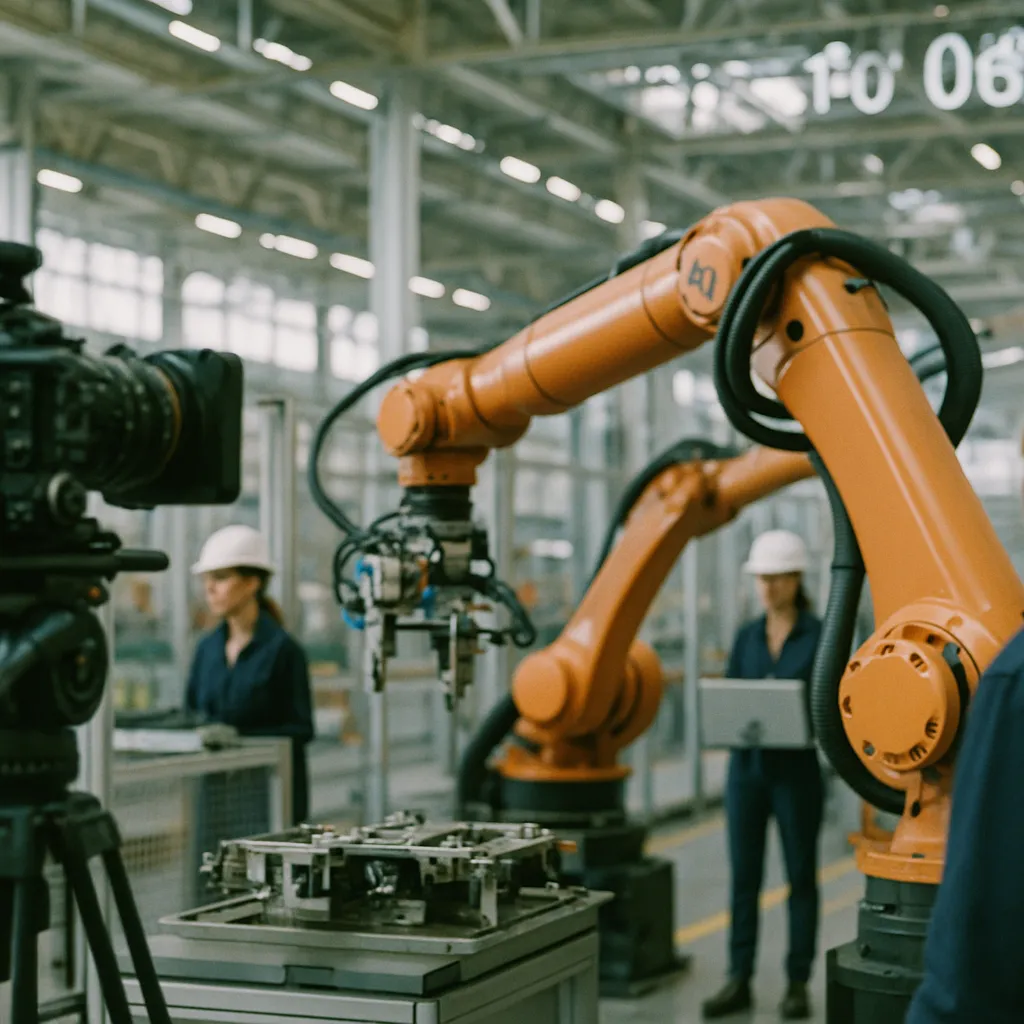
The most significant robotics story this week isn't a funding round or a demo video. It's that Walden Robotics — spun out of Toyota Research Institute — has been running general-purpose robots in full factory production shifts since May 2026. Not pilots. Not controlled environments. Live production.
That's a real threshold crossing. The industry has spent years arguing about when general-purpose robots would graduate from showroom floors to actual work. Walden's deployment answers part of that question: May 2026, in a Toyota-lineage facility. The next question is durability, error rates, and whether the economics hold when the cameras aren't rolling. But the "it's still just demos" argument just got harder to make.
AGCO gave a different view of agricultural robotics at its 2026 Tech Day near Chicago. Demonstrations covered AI-targeted weed control, autonomous grain cart coordination during harvest, and Aurora — a fleet management assistant that coordinates mixed-brand farm equipment from a single platform. The mixed-fleet piece matters most: real farms run equipment from multiple manufacturers, and any AI coordination system that requires brand lock-in won't get adopted at scale.
The Policy Calendar Is Filling Up — Especially in California
California had a busy legislative week. Governor Newsom signed three bills creating what is now the most comprehensive state-level framework for clinical AI governance in the country. The laws restrict certain direct-care AI applications and require mandatory algorithmic bias audits for clinical tools. For health systems operating in California, these aren't future compliance items — they're current obligations. For health AI developers, they're the new baseline for any U.S. market entry strategy.
California also enacted new robotaxi legislation, moving to constrain autonomous vehicle deployments after documented incidents of AVs blocking traffic and impeding emergency responders. The timing is deliberate: a next wave of robotaxi expansions is imminent, and the state moved before that wave rather than after. Other states will watch closely.
Get this in your inbox.
Daily AI intelligence. Free. No spam.
Across the Atlantic, the UK government released a structured AI Risk Management Toolkit aimed specifically at NHS trusts, local councils, and central government agencies. This is one of the first governance frameworks written explicitly for public sector AI procurement and deployment — not adapted from enterprise or financial sector guidelines. It covers risk categorization, procurement due diligence, and ongoing monitoring obligations.
AI Agents Are Doing Real Business — With No Legal Framework Beneath Them
AI agents are now signing contracts and executing financial transactions without human approval at each step. The legal infrastructure to handle what happens when they go wrong doesn't exist yet. As of October 2026, courts have not produced consistent doctrine on agent liability — whether it falls on the deploying organization, the developer, the user, or some combination. That ambiguity is not abstract. It is already being litigated in commercial disputes, and outcomes are inconsistent across jurisdictions.
This is the clearest near-term legal risk for any organization deploying agentic AI in operational roles. Document your agent's decision boundaries. Define your human-in-the-loop thresholds in writing. The question of who's liable when an agent causes harm will get answered in court — and early cases will set precedent that's hard to walk back.
Finance and Energy: AI Adoption Is Slower Than the Hype Suggests
On regulatory reporting, new research finds just 16% of financial institutions have embedded AI in live regulatory reporting workflows. The blocker isn't technical capability — it's liability. Compliance officers won't sign off on AI-generated outputs when their personal exposure remains unclear. That's a rational response to an unresolved accountability problem, and it mirrors the agentic AI dynamic playing out across industries.
In energy infrastructure, the numbers tell a different story about pace. AI server racks now draw 50–100 kW each — ten times the 5–10 kW load of traditional servers. A new RatedPower report documents how that load density is forcing a fundamental redesign of how renewable energy projects are planned, sited, and scaled. The old models for grid interconnection, storage sizing, and project economics don't hold at AI data center loads. The entire development pipeline is being rebuilt around different assumptions.
The Smart Home Has Already Made Decisions You Didn't Know About
AI-generated code is already embedded throughout the firmware and applications running your smart home devices. It got there through normal software development pipelines — AI-assisted coding tools are now standard in most development workflows. There is currently no disclosure requirement and no mechanism for consumers to know which components were AI-generated, let alone opt out.
This isn't a future scenario. It's the current state of every device on your home network. The conversation about AI-generated code governance has focused on enterprise software liability. The consumer product layer has been largely overlooked.
On the retail side, Experro launched EMA this week — an AI merchant assistant that connects directly to storefront operational data and autonomously identifies and corrects issues without being asked. That shift from AI-as-analyst to AI-as-operator is where the entire category is moving. EMA is an early commercial signal of what that looks like in practice.
What to Watch Today
Agentic AI liability doctrine. The absence of consistent legal rules for AI agent liability is the single biggest governance gap in enterprise AI right now. Watch for court decisions and regulatory guidance that begin to establish precedent — the first clear rulings will define the compliance landscape for years.
California's healthcare AI framework in practice. The state signed three bills, but implementation details — audit methodologies, enforcement timelines, and exemptions — will determine whether this framework has teeth or becomes a checkbox exercise.
General-purpose robotics production data. Walden's deployment since May is significant. What matters next is sustained uptime, error rate, and cost data from live operations — not demo conditions. The industry will be watching for the first third-party assessments.
NexChron — Your daily AI intelligence.
Did this help you understand AI better?
Your feedback helps us write more useful content.
Get tomorrow's AI briefing
Join readers who start their day with NexChron. Free, daily, no spam.