An A3 survey finds 86% of manufacturers view AI as the dominant driver of business transformation through 2030. LLM adoption in industrial settings doubled to 35% in a single year.
National Robotics Week 2026: Physical AI Has Hit the Factory Floor — and It's Not Leaving
By Hector Herrera | April 27, 2026
Physical AI has arrived in manufacturing — not as a pilot program, but as operational standard. National Robotics Week 2026, observed across the U.S. in mid-April, spotlighted a factory floor that has been transformed faster than most industry forecasts predicted. According to a new survey from the Association for Advancing Automation (A3) highlighted by Design News, 86% of manufacturers now identify AI as the dominant driver of business transformation through 2030.
The data point that best captures the pace: industrial adoption of large language models — AI systems capable of reasoning across language and context, not just executing pre-programmed commands — jumped from 16% to 35% in a single year. That is not incremental adoption. That is a sector in the middle of rapid transition.
What "Physical AI" Actually Means
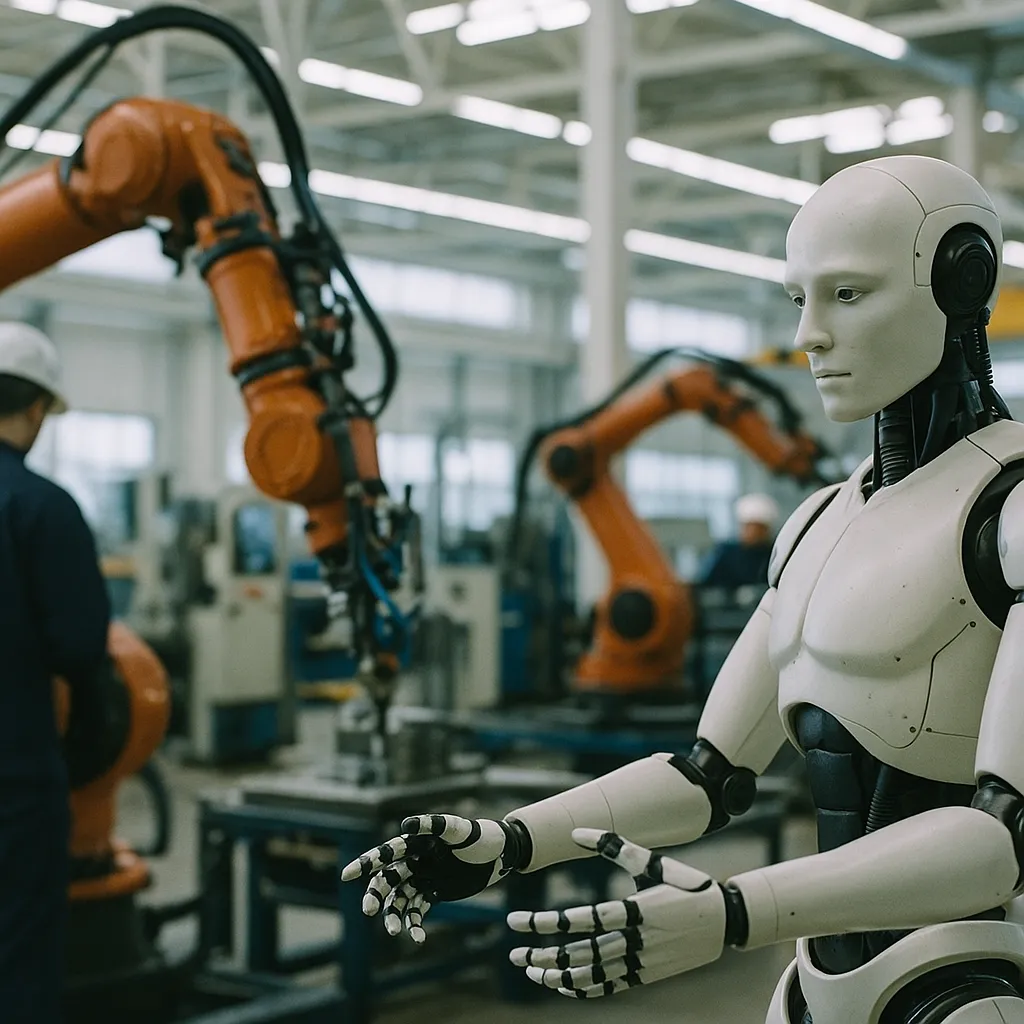
Physical AI is the term the industry has converged on for robotic systems that combine perception, reasoning, and physical action in continuous, real-world environments. Traditional industrial robots follow precise, pre-programmed movement sequences — highly effective for repetitive tasks in tightly controlled settings, but brittle when conditions vary. A robot that stops functioning when a component arrives slightly misaligned, or when a new product variant appears on the line, requires human intervention constantly.
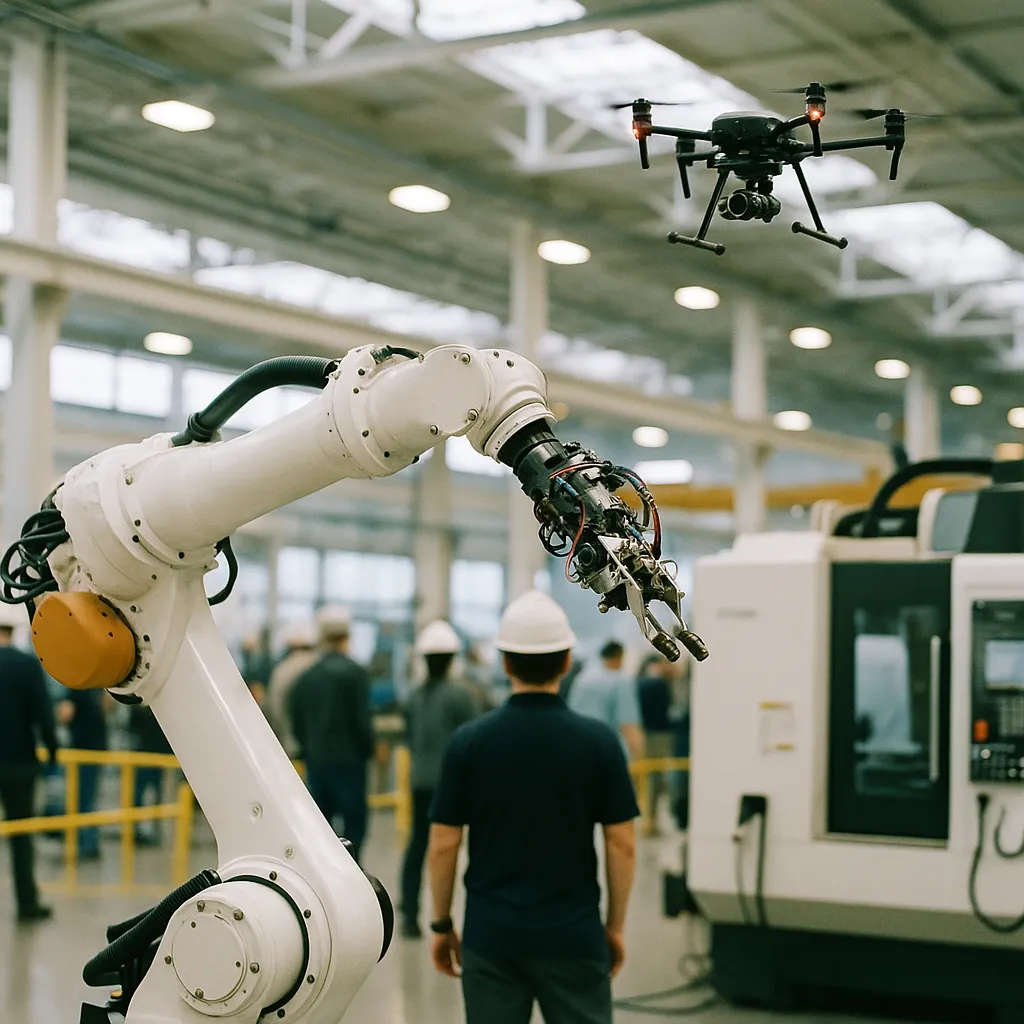
Physical AI systems integrate computer vision, sensor fusion, and machine reasoning to handle variability in real time. A physical AI system performing component assembly can adapt its approach based on what it observes — adjusting grip, identifying defective parts, accommodating positional variation — without stopping for reprogramming. This adaptability is what makes physical AI fundamentally different from the industrial robots that have been on factory floors for decades.
The A3 Survey: Where Manufacturing Actually Stands
The Association for Advancing Automation's 2026 data, highlighted during National Robotics Week, is the most comprehensive industry-wide snapshot currently available.
Key findings:
Get this in your inbox.
Daily AI intelligence. Free. No spam.
- 86% of manufacturers identify AI as their primary business transformation driver through 2030
- LLM adoption in industrial settings grew from 16% to 35% in 12 months
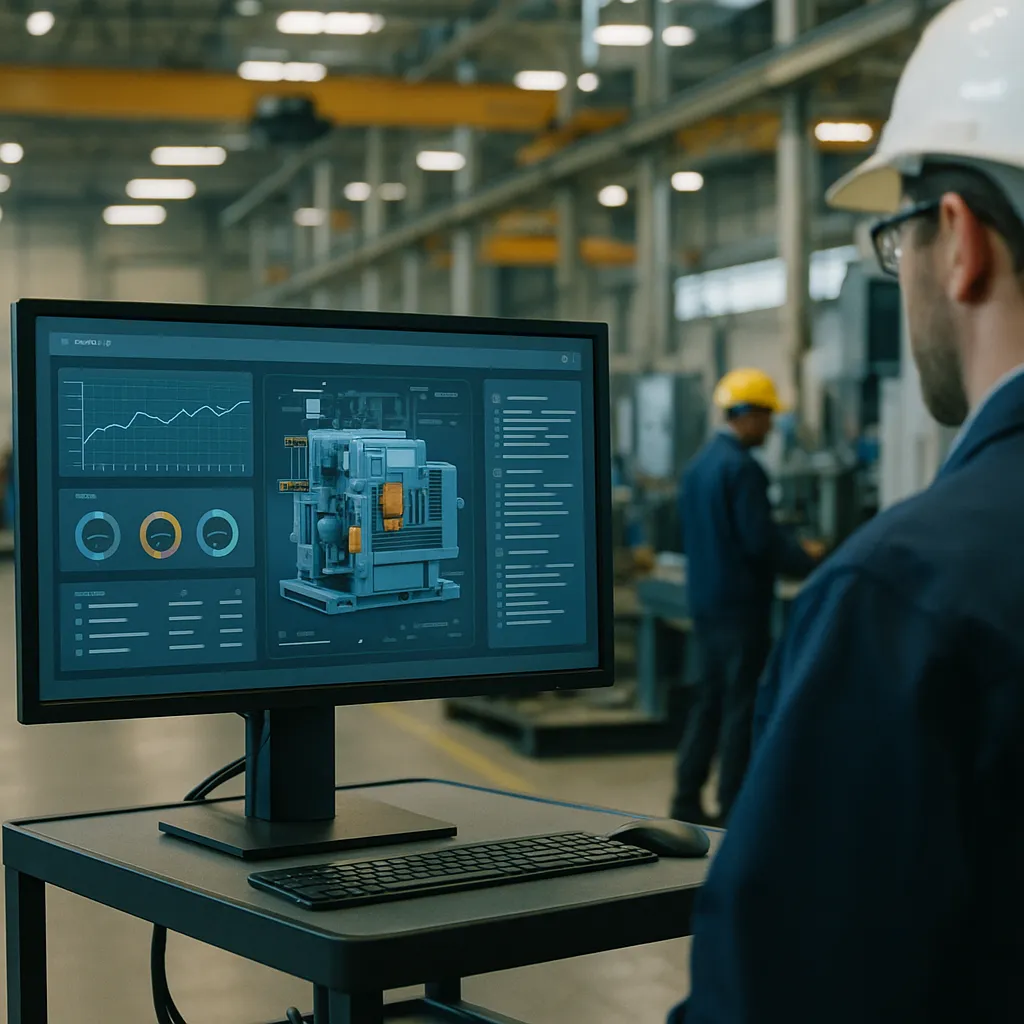
- Top applications: quality inspection, predictive maintenance, production scheduling, and supply chain management
- Primary barriers: legacy equipment integration, workforce training requirements, and upfront system costs
The barriers are real but declining. Industrial-grade robotic hardware costs have fallen substantially over the past decade, and the software layer — where physical AI runs — is increasingly deployable via cloud infrastructure, reducing the upfront capital required for smaller manufacturers to enter the space.
Sector-by-Sector Adoption
The transition is not uniform across manufacturing. Automotive — which has used industrial robots for decades — is integrating physical AI at the assembly layer, enabling systems that can handle multiple vehicle model variants on the same production line without mechanical retooling. This flexibility has direct cost implications: traditional automotive assembly lines required expensive changeovers for each new variant.
Electronics manufacturing, particularly PCB assembly and semiconductor packaging, is deploying AI vision systems for inspection tasks where human visual inspection has historically constrained throughput. AI systems capable of operating at the resolution and speed required for modern chip packaging have moved from research to production standard for Tier 1 suppliers.
Aerospace and defense manufacturing, constrained by the most stringent quality and traceability requirements, is adopting more slowly. The certification path for autonomous robotic processes in FAA-regulated manufacturing is longer and more demanding. But several programs have received approval for AI-assisted inspection in non-critical assembly roles, establishing the precedent for broader deployment.
LLMs on the Factory Floor
The 35% LLM adoption figure deserves specific attention, because LLMs are not the obvious tool for a factory floor environment. Their presence indicates that manufacturers are not just deploying AI for physical manipulation tasks, but integrating AI reasoning into production management, quality documentation, supply chain communication, and maintenance decision-making.
This is meaningful because it suggests physical AI deployment is accompanied by broader AI integration across manufacturing operations — not just robots that act more intelligently, but facilities where AI reasoning informs decisions at multiple levels of the operation simultaneously.
The Workforce Dimension
National Robotics Week 2026 made a deliberate effort to frame physical AI as workforce complementary — a messaging posture that reflects both genuine complexity and industry awareness of political sensitivity around automation.
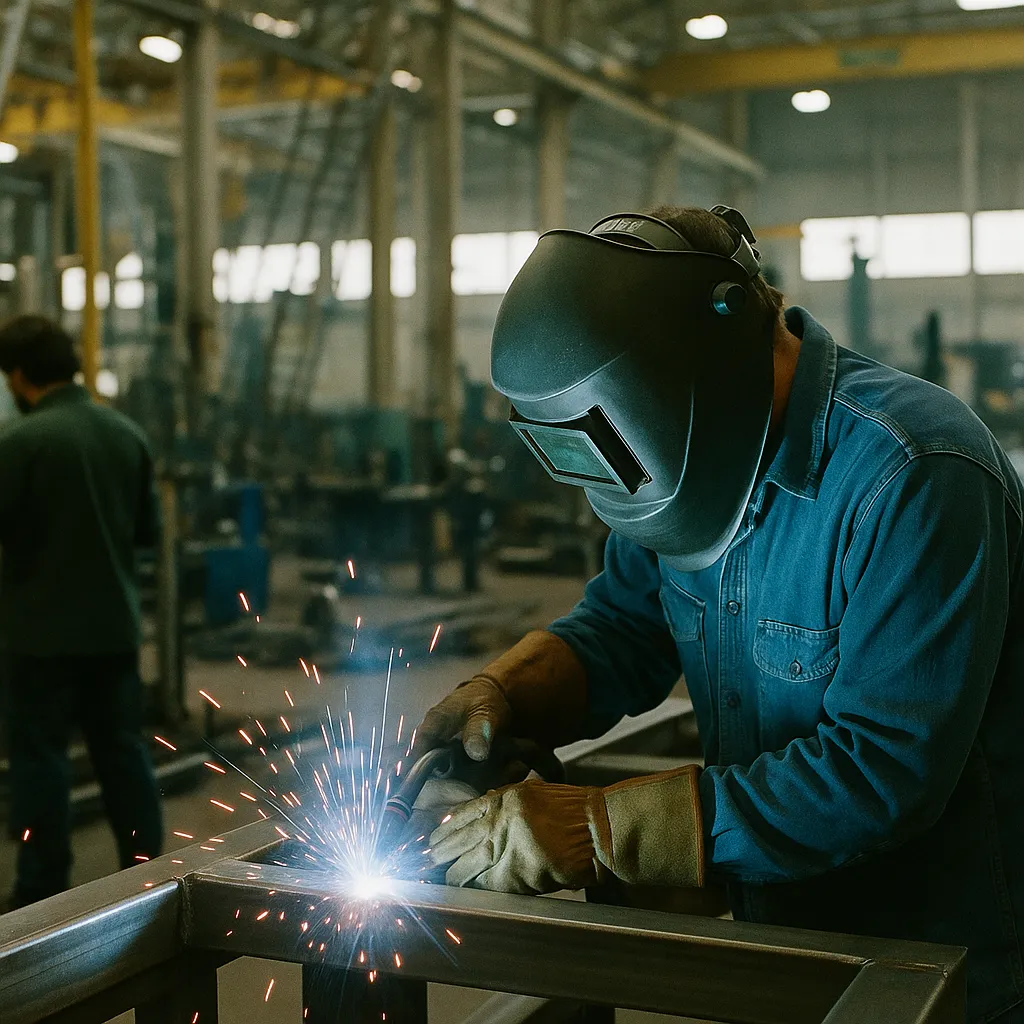
The differentiated reality: highly repetitive, physically demanding tasks in controlled manufacturing environments are the most exposed to automation displacement. Work requiring judgment in variable conditions, maintenance of physical AI systems, and integration and programming work are areas where demand for human workers is growing alongside physical AI deployment.
The A3 survey found a significant majority of manufacturers report active recruiting challenges for robotics technicians and automation engineers — occupations that did not exist in meaningful numbers a decade ago and for which the trained workforce pipeline remains insufficient to meet current demand.
What to Watch
The jump from 16% to 35% LLM adoption in manufacturing in one year is the leading indicator that matters most. If that rate continues on a similar trajectory through 2026 and into 2027, the majority of industrial manufacturers will have AI reasoning embedded in their operations by the end of the decade — ahead of most current forecasts. Watch also whether NVIDIA's Omniverse platform, which provides the simulation-to-deployment infrastructure many physical AI systems use for training, consolidates its position as the industry standard for physical AI development or faces meaningful competition from alternative platforms.
The 86% figure — manufacturers viewing AI as their top transformation driver — represents a mandate, not a prediction. The transition is already underway.
Did this help you understand AI better?
Your feedback helps us write more useful content.
Get tomorrow's AI briefing
Join readers who start their day with NexChron. Free, daily, no spam.