Most manufacturers have spent years and billions on automation—but productivity gains have plateaued. A new analysis argues agentic AI is the connective intelligence that factories are missing.
AI Agents Are the Missing Link Between Factory Automation Investment and Real Results
By Hector Herrera | April 29, 2026 | Manufacturing
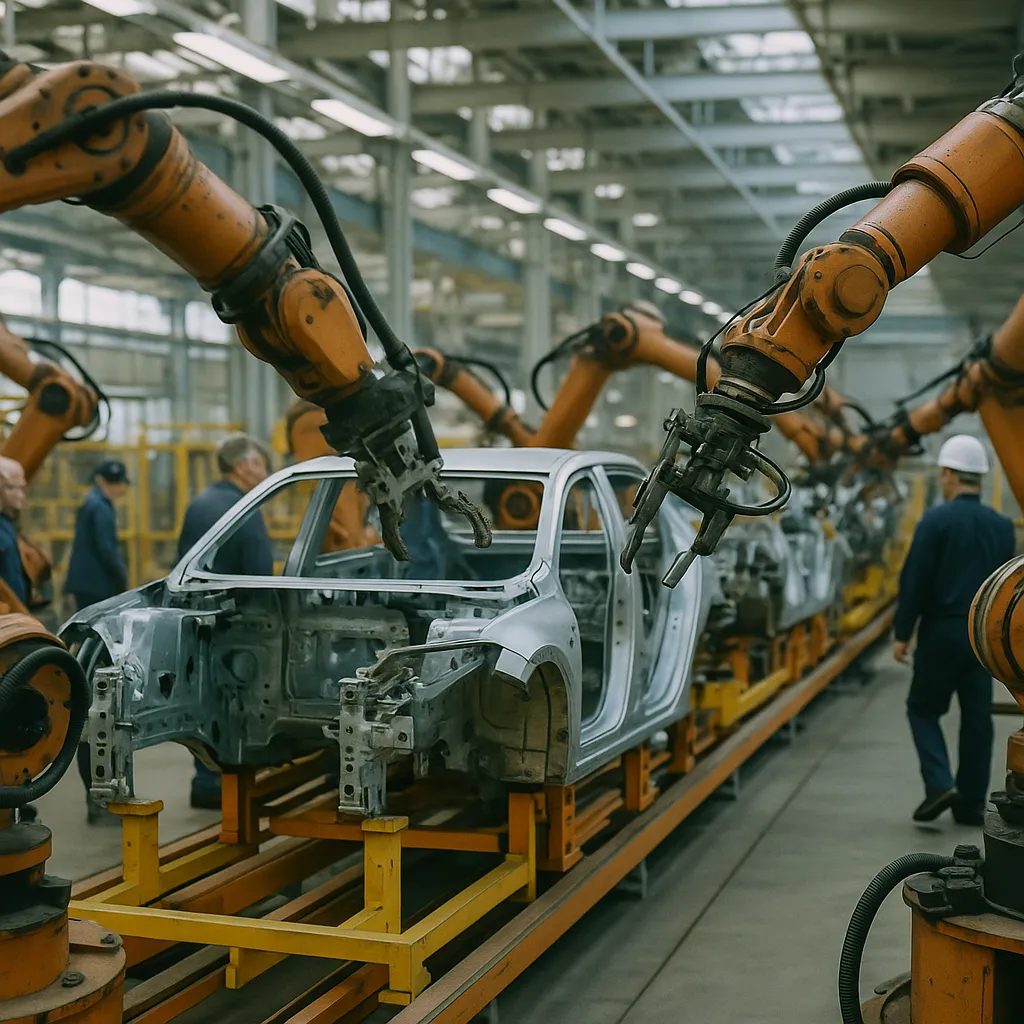
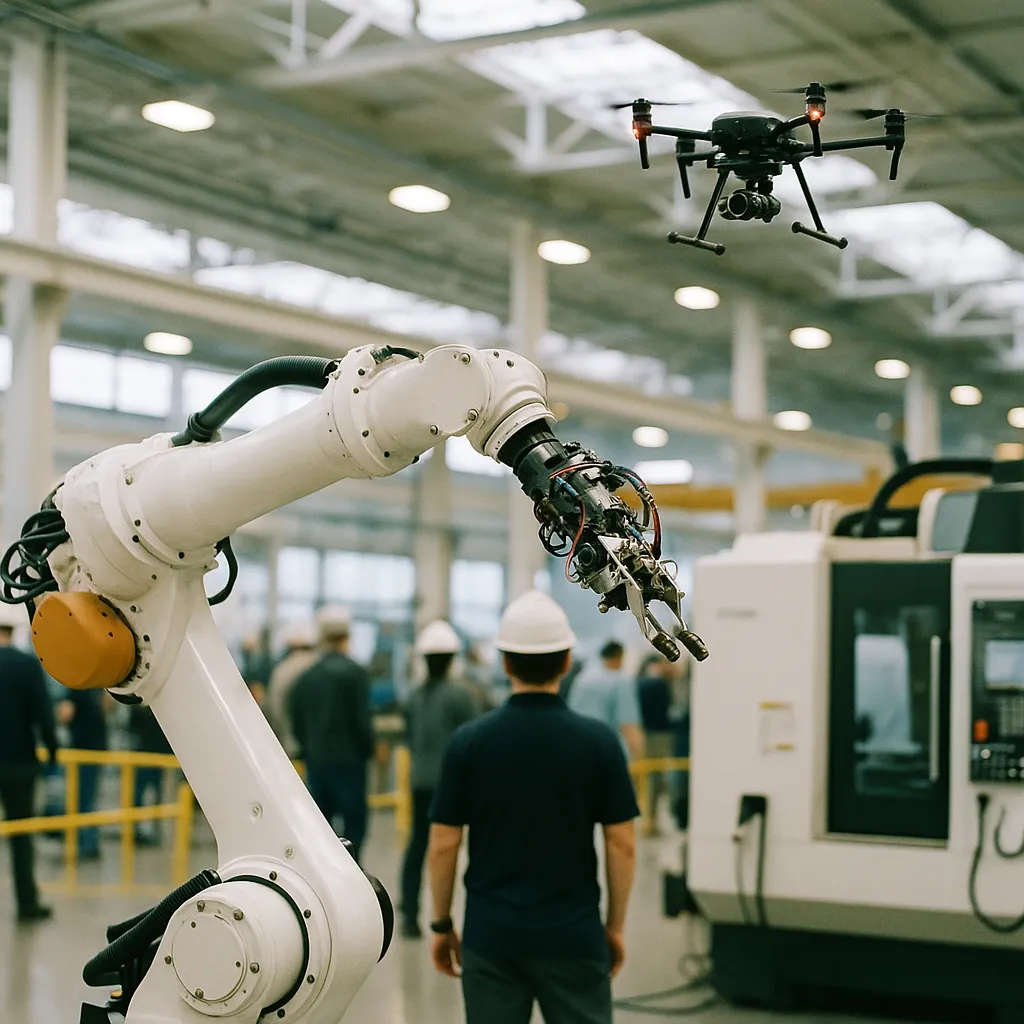
Most manufacturers have spent years—and billions—on automation. Robots on assembly lines, sensor networks, computerized production scheduling. Yet productivity gains have plateaued. A new analysis argues the missing piece is agentic AI: systems that can autonomously orchestrate workflows, respond to production exceptions in real time, and bridge the automation layers that currently don't talk to each other.
The gap matters because the investment has already been made. The hardware is on the floor. The sensors are running. The data is being collected. What factories lack is the connective intelligence to act on it without constant human supervision.
The Automation Productivity Paradox
Factory automation has advanced through several distinct waves. The first brought programmable logic controllers (PLCs) and robotic arms to the assembly line. The second delivered enterprise resource planning (ERP) systems and connected sensor networks. The third added predictive maintenance models and computer vision inspection at quality checkpoints.
Each wave delivered measurable gains—and then ran into a ceiling. The current plateau, where sustained investment produces flattening returns, has a name in manufacturing circles: the automation productivity paradox. You have invested in the infrastructure, but you are not getting the output lift the investment promised.
According to Robotics and Automation News, 2026 is the inflection year—when agentic AI transitions from isolated pilots to operational deployment across manufacturing facilities. The analysis identifies the coordination layer as the bottleneck that earlier automation waves never addressed.
What Agentic AI Actually Does on the Floor
Earlier automation layers required explicit programming for every possible exception. A machine going out of tolerance could log an alert. What it couldn't do was decide what to do about it: reroute the work order, notify the right maintenance crew, adjust downstream scheduling to absorb the delay, and document the decision for quality review—all without a floor manager.
Get this in your inbox.
Daily AI intelligence. Free. No spam.
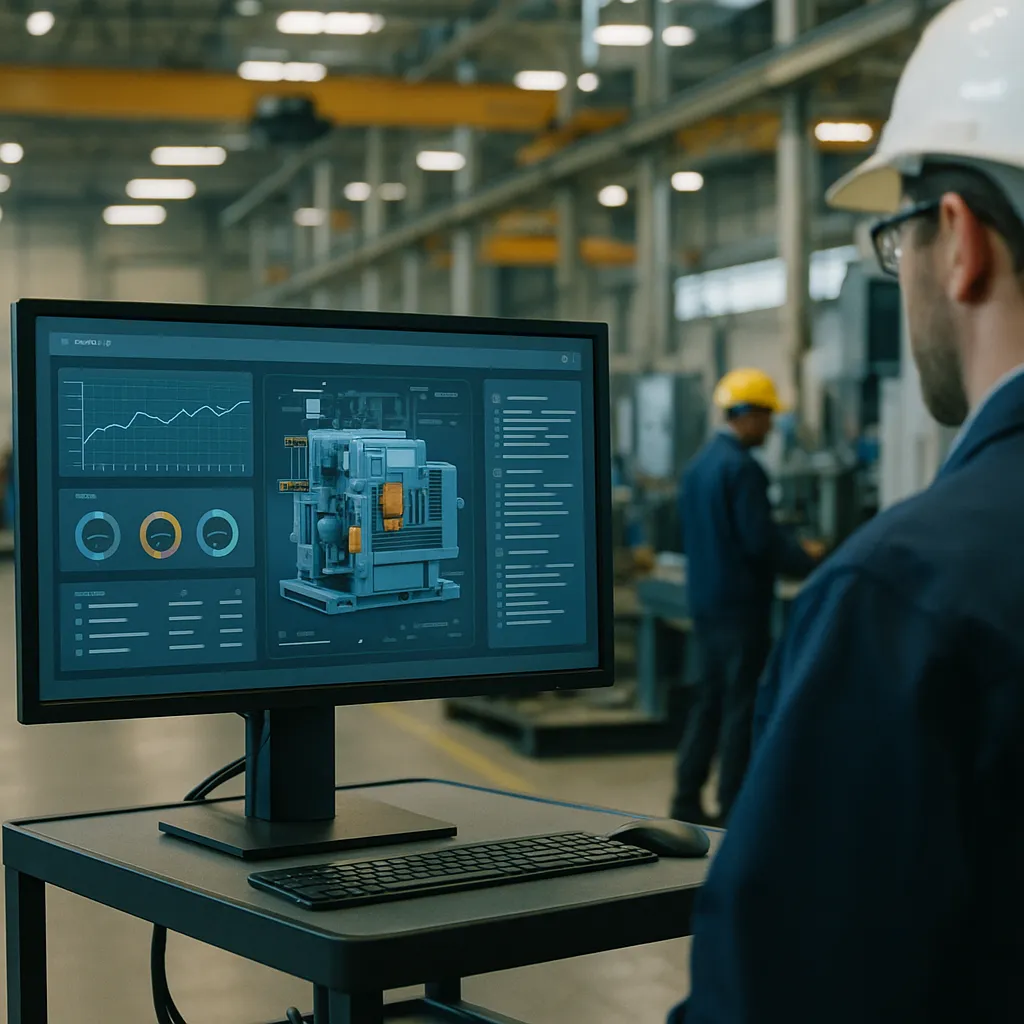
Agentic AI systems can do exactly that. They are built to interpret ambiguous production states and take autonomous corrective action across multiple connected systems simultaneously. An agent that reads inputs from PLCs, ERP systems, and warehouse management software—and acts on them in sequence—eliminates the human coordination overhead that sits between disconnected automation layers.
That coordination overhead is, in many factories, the actual bottleneck. The machines are capable of more output than the workflows allow.
Where the Gains Are Largest
The productivity upside is not uniform across manufacturing segments. Several variables determine which facilities benefit most from agentic AI deployment:
- Data infrastructure maturity. Agents are only as useful as the data they can read. Manufacturers that invested in structured data environments during the ERP wave are better positioned to deploy agents today. Facilities still running paper-based exception tracking have a prerequisite gap to close first.
- Production complexity. High-mix, low-volume manufacturing—custom parts, job shops, aerospace components—involves more exceptions per unit than high-volume commodity production. More exceptions mean more coordination demand, which means more value from autonomous orchestration.
- Operations team size. Mid-market manufacturers without large operations staffs may benefit most. A 200-person facility cannot afford a dedicated workforce for real-time production exception management. An agent that handles that function changes the economics of the plant.
The Integration Problem
The critical challenge is not the AI itself—it is integration. Agentic systems require visibility into the full production stack to orchestrate across it. Manufacturers running five different software systems that were never designed to communicate will face integration work before any agent can be effective.
This creates a structural advantage for facilities that stayed with major industrial software platforms—Siemens, Rockwell Automation, SAP—because those vendors have the platform surface to deploy integrated agentic modules. Smaller operations running custom or legacy software face more complex integration paths.
It also creates a timing question. Companies that deploy now while integration standards are still maturing will face more custom engineering than those who wait for vendor-packaged agentic solutions. But first movers will have trained their agents on proprietary production data longer—and that training advantage compounds.
What to Watch
The near-term signal will be announcements from major industrial software vendors. Siemens, Rockwell, SAP, and Honeywell have all signaled interest in agentic manufacturing AI. When any of them ships a production-ready agentic module—not a pilot program, but a generally available product—it will mark the moment agentic manufacturing moves from analyst conversation to operational reality for mainstream manufacturers.
The 2026 cohort of early adopters will also generate the case studies that drive the next adoption wave. Watch for measurable throughput and yield data from those pilots to enter the public record in late 2026 and 2027. That data, more than any analysis, will determine the pace of what comes next.
Hector Herrera covers manufacturing automation and industrial AI at NexChron. Source: Robotics and Automation News
Did this help you understand AI better?
Your feedback helps us write more useful content.
Get tomorrow's AI briefing
Join readers who start their day with NexChron. Free, daily, no spam.