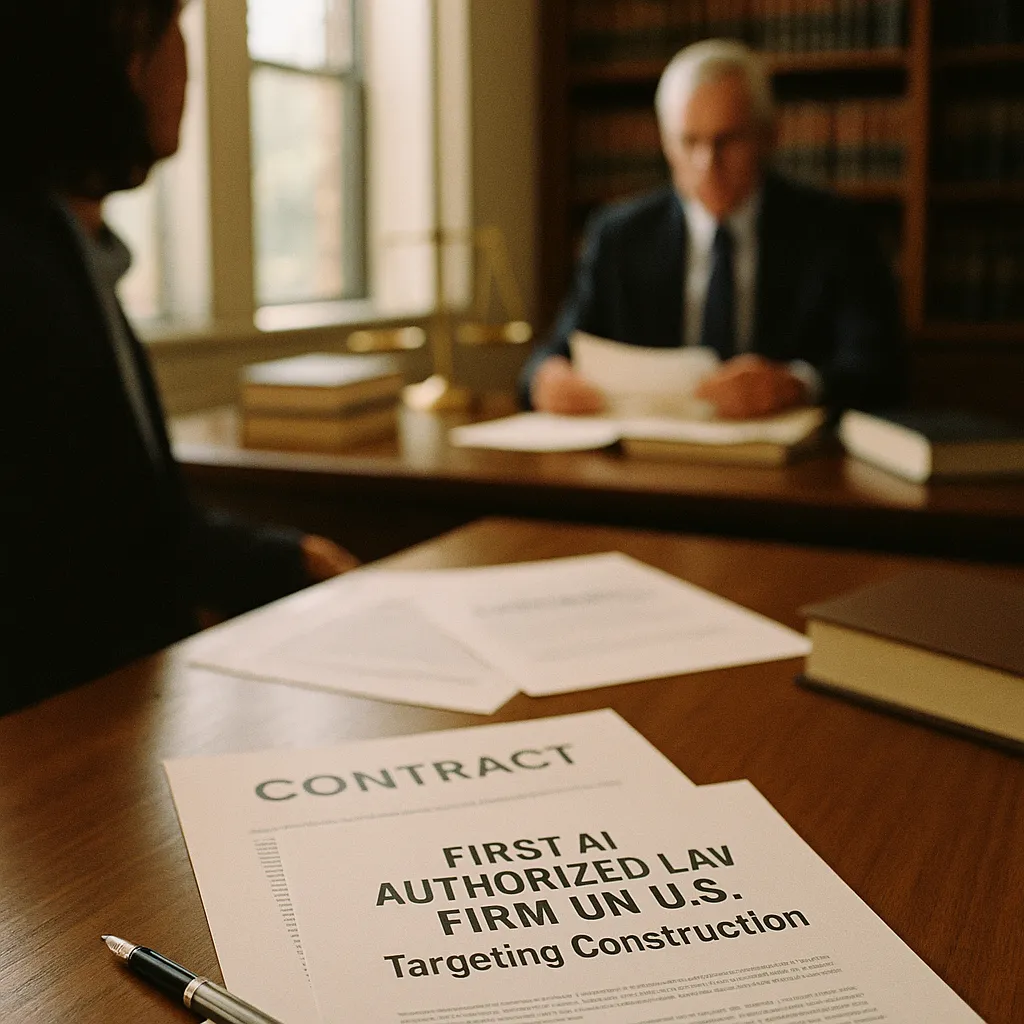
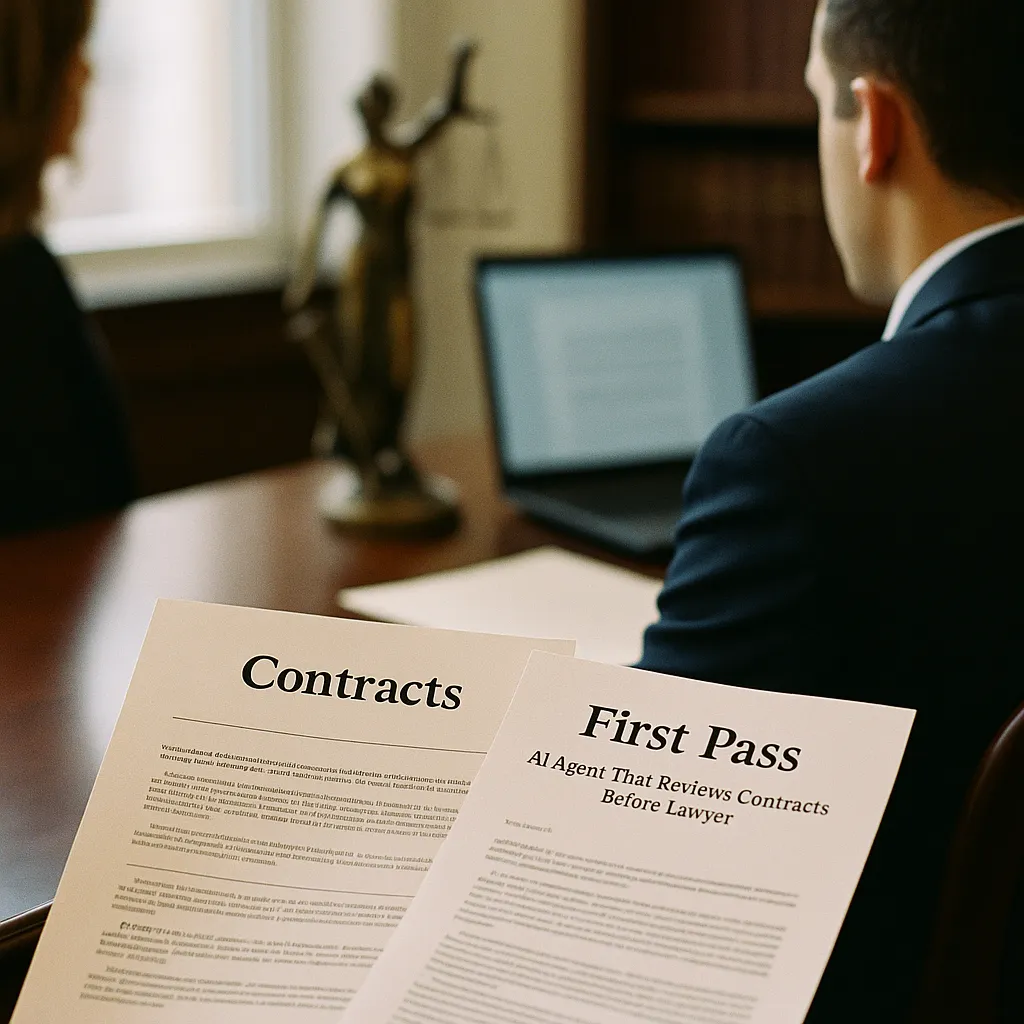
Superlegal launched as the first AI law firm authorized to practice law in the U.S., reviewing construction contracts in under 24 hours for $117 — operating under the Utah Supreme Court's Legal Services Innovation Sandbox.
Superlegal Launches First AI-Authorized Law Firm in the U.S., Targeting Construction at $117 Per Contract
By Hector Herrera | June 4, 2026
Superlegal launched on June 3 as the first AI law firm in the United States authorized to practice law — a structural first that puts AI-assisted legal review inside the formal bounds of the American legal system rather than alongside it. The firm reviews and redlines commercial contracts in under 24 hours for as little as $117, with a licensed attorney signing off on every review. That price point is not a loss leader. It is the business model.
The legal industry has produced a wave of AI contract tools over the past two years — Harvey, Spellbook, ContractPodAi — but most operate as software sold to law firms, not as law firms themselves. Superlegal operates differently. By securing authorization under the Utah Supreme Court's Legal Services Innovation (LSI) Sandbox, it can represent clients directly, give legal advice, and hold legal liability for the work — functions that traditional AI tools are legally prohibited from performing.
What It Does and What It Costs
Superlegal's initial focus is small and mid-sized construction businesses. The firm targets commercial subcontractors, general contractors, and project owners who regularly sign standardized AIA and ConsensusDocs contracts and have historically either skipped legal review entirely or paid thousands of dollars per engagement at traditional law firms.
According to Superlegal's launch announcement, the firm:
- Reviews and redlines contracts in under 24 hours
- Charges as little as $117 per contract review
- Claims to cut legal costs by 90% and deal cycle times by 70%
- Has each review signed off by a licensed attorney
The company has already established partnerships with the Associated General Contractors of America (AGC), a 27,000-member trade association, giving it immediate distribution into the construction industry.
How the Utah Sandbox Makes This Possible
The Utah Supreme Court's Legal Services Innovation Sandbox — established in 2020 — permits non-traditional legal entities to offer legal services that would otherwise require a licensed law firm. It is one of the only such frameworks in the country. Arizona has a similar sandbox. Most states do not.
Get this in your inbox.
Daily AI intelligence. Free. No spam.
Superlegal's authorization means it can hold an attorney-client relationship with construction businesses, carry professional liability, and provide legal advice — not just software output. That distinction matters enormously. When a software tool flags a problematic indemnification clause, the client is on their own to decide what to do. When a law firm flags that same clause, it carries a legal duty of care and can be held responsible for bad advice.
The licensing structure also creates a practical barrier to replication. A competitor can copy Superlegal's technology. It cannot quickly copy its regulatory authorization in states that lack innovation sandbox programs.
Why Construction, and Why Now
The construction industry generates an estimated $1.8 trillion in contracts annually in the U.S. alone. Most of those contracts are signed without legal review. Subcontractors and small general contractors routinely execute six- and seven-figure agreements using standard templates, hoping the language works in their favor. When it does not — and in construction disputes, it rarely works out cleanly — the cost of litigation dwarfs what legal review would have cost.
Superlegal is targeting the compliance gap, not the premium end. The $117 price point is designed to make legal review economically rational for a $50,000 subcontract that previously would never have seen a lawyer. At that scale, the market is enormous: tens of millions of contracts per year signed by businesses that have never had access to affordable legal review.
The timing also reflects where AI legal tools have matured. Contract review and redlining are well-scoped, repetitive tasks — exactly the type of work where large language models outperform both cost and speed benchmarks against junior associates. Superlegal is not trying to replace litigation counsel or transactional lawyers on complex deals. It is occupying the underserved volume layer.
What It Means for the Legal Industry
Superlegal's launch represents the first real test of whether AI law firms — not AI legal tools, but actual licensed legal entities powered by AI — can build a viable business at the low end of the market.
If it succeeds, it creates a template for expansion. Utah's sandbox authorization would not automatically extend to other states, but a demonstrated model with paying clients and a track record creates leverage for regulatory approval elsewhere. Arizona is the next most likely target given its existing sandbox. Several other states are watching both programs closely.
For incumbent law firms serving the construction market, the competitive threat is not immediate — Superlegal is not pitching Fortune 500 general counsel offices. The threat is in the long term, as AI-authorized legal entities establish brand trust with small and mid-sized businesses and gradually move upmarket.
For companies currently using AI contract tools without attorney oversight, Superlegal's model poses a different question: if you can get a licensed attorney's review for $117, why are you using an unlicensed tool?
What to Watch
Superlegal's immediate challenge is throughput — whether it can maintain 24-hour turnaround as volume scales through the AGC partnership. The second test is whether Utah's authorization survives any bar association challenges as the firm grows. Several state bar associations have historically pushed back against unauthorized practice expansions. How regulators in other states respond to Superlegal's model will determine how fast this expands beyond Utah.
Source: GlobeNewswire — Superlegal Launch, June 3, 2026
Did this help you understand AI better?
Your feedback helps us write more useful content.
Get tomorrow's AI briefing
Join readers who start their day with NexChron. Free, daily, no spam.