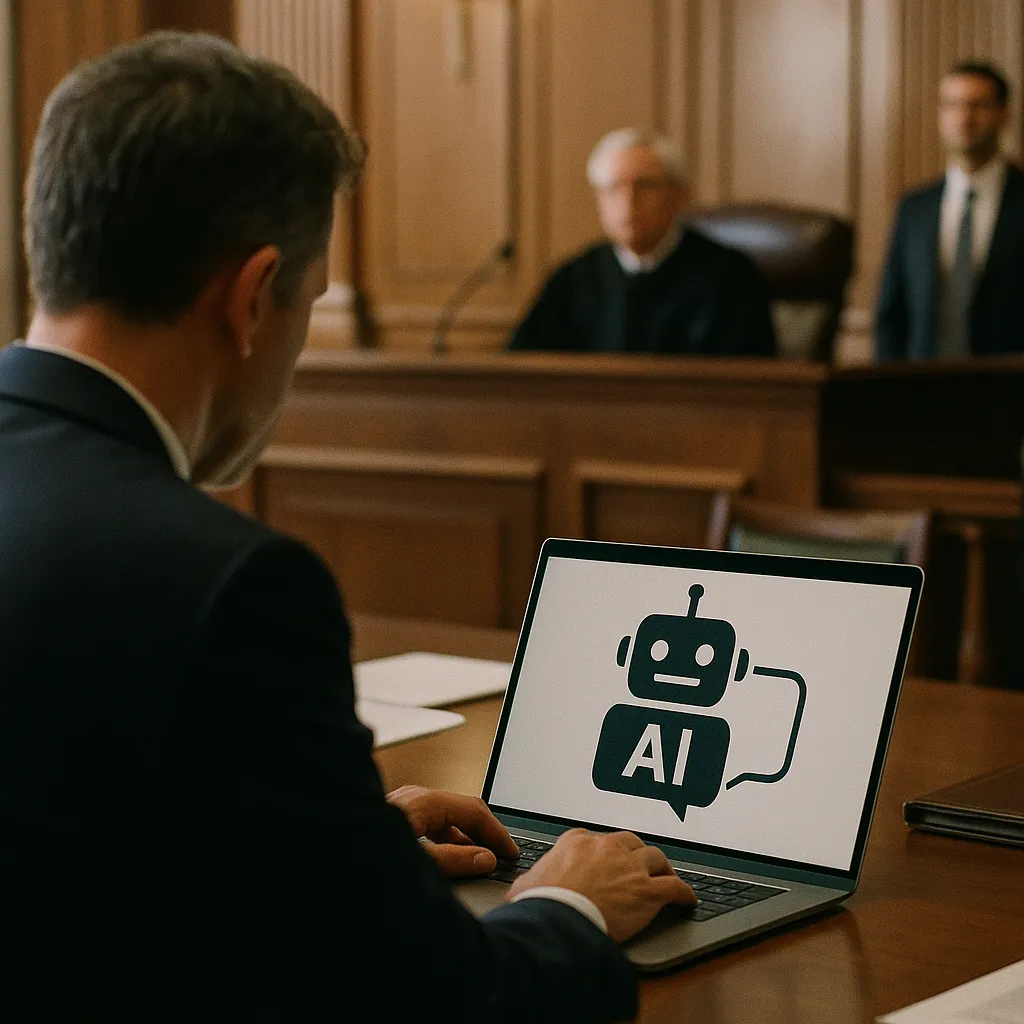
More than 1,200 court cases globally now involve AI-related sanctions — and a wave of state disclosure laws is following suit.
AI Chatbots Face Escalating Legal Scrutiny as Court Sanctions Top 1,200 Cases
By Hector Herrera | May 19, 2026 | Legal
Judges have now issued AI-related sanctions in more than 1,200 cases globally, according to an analysis by Kelley Drye & Warren LLP, with roughly 800 of those cases concentrated in U.S. courts — a milestone that marks the transition of AI legal liability from novelty to systemic concern. Courts are no longer just warning lawyers; they are imposing real financial penalties, and a cascade of state disclosure legislation is following in their wake.
The pattern is clear: every quarter the case count grows, the penalties get larger, and the scope of exposure widens beyond law firms to any business deploying a consumer-facing AI chatbot.
From Warnings to Sanctions
For two years, judicial rebukes of AI-generated legal filings were largely cautionary. That changed in 2025 and has accelerated through early 2026.
The sharpest example: a federal court in Oregon imposed a $109,700 sanctions order against a lawyer whose AI-generated filings contained fabricated case citations — what the court described as AI "hallucinations" introduced into the formal record of a federal proceeding. The dollar figure signals that courts are willing to inflict financial pain, not just professional embarrassment.
Globally, documented AI-related court sanctions have climbed from fewer than 200 in 2024 to more than 1,200 today. The U.S. accounts for approximately two-thirds of cases, the majority involving attorneys who submitted AI-generated research or draft language without independent verification. Courts across multiple circuits are treating this as a failure of professional responsibility — not a forgivable technical mistake.
Bar associations have tracked the pattern. At least 32 states have now issued formal guidance on AI use in legal practice, and several have opened disciplinary proceedings tied to AI-generated filings. The American Bar Association's 2025 guidance classifies undisclosed AI reliance in court submissions as a potential violation of competence and candor rules. For attorneys, that creates a dual exposure: sanctions from the court and discipline from the bar.
Get this in your inbox.
Daily AI intelligence. Free. No spam.
California's SB 243 Is Becoming the National Template
While courts have addressed AI through sanctions, state legislatures are addressing it through disclosure mandates. California's SB 243, effective January 2026, requires AI chatbot operators to disclose upfront — before any substantive interaction — that users are communicating with an AI system rather than a human. The law covers consumer-facing applications broadly: customer service bots, health chatbots, legal intake tools, and financial advisory platforms.
Within months of the law taking effect, at least ten states introduced similar measures:
- Florida — SB 1148: mandatory disclosure for AI in regulated consumer industries
- Massachusetts — H. 4890: chatbot disclosure requirements for health and financial services
- Missouri — SB 631: disclosure tied to existing consumer protection statutes
- New Jersey — A. 4946: broad disclosure requirements for any commercial AI communication
- Five additional states with bills in committee or pre-filed for 2026 sessions
Legal analysts at Kelley Drye describe SB 243's language as a de facto national standard in formation. Companies serving national customer bases must either build California-compliant disclosure systems for all users or build and maintain separate state-by-state versions — and most are choosing the former.
The Exposure Is No Longer Confined to Lawyers
The composition of the 1,200 global cases matters as much as the headline count. While legal filings remain the largest category, the case mix has broadened substantially to include:
- Consumer AI products where users alleged deception about whether they were communicating with a human
- Healthcare chatbots where undisclosed AI interactions intersected with medical advice and informed consent regulations
- Financial services chatbots where AI representations triggered securities and consumer finance liability
- E-commerce and customer service bots where users claimed they were misled about product terms, eligibility, or return policies
This breadth means the legal risk is not limited to the legal profession. Any company deploying a consumer-facing AI chatbot is now operating in a legal environment where disclosure failures can trigger sanctions, regulatory enforcement, or civil litigation — often simultaneously.
Professional Responsibility: The Compounding Risk for Law Firms
Law firms face a specific compounding problem: AI use errors carry both judicial sanctions and bar discipline risk, and the two processes are independent. A court can sanction a lawyer for a bad filing; the state bar can separately discipline the same lawyer for the same conduct under professional responsibility rules.
Large firms have largely responded by implementing formal AI use policies requiring attorney review of all AI-generated content before filing. Smaller practices — where AI adoption is proportionally highest — have been slower to put formal review protocols in place, according to legal technology surveys. That gap represents the highest-density source of future sanctions cases.
What to Watch
The most consequential near-term development is a potential federal standard for chatbot disclosure. The FTC has jurisdiction over deceptive commercial practices and has publicly signaled interest in AI transparency enforcement. A federal rule or enforcement action could supersede the state-by-state legislative patchwork — or collide with the current administration's stated preference for limiting federal AI regulation.
Also watch: insurance product evolution. A handful of specialty insurers have begun offering AI liability coverage for law firms specifically, reflecting an actuarial judgment that AI-related legal exposure is now predictable enough to price. When insurers commoditize a risk category, it signals that the risk has crossed from emerging to established.
For any organization deploying chatbots or AI-generated content in professional contexts: disclose proactively, verify all AI outputs before submission to any official proceeding, and assume state disclosure requirements will reach your jurisdiction before the end of 2026.
Sources: Kelley Drye & Warren LLP — AI Chatbots Face Rising Legal and Legislative Scrutiny
Did this help you understand AI better?
Your feedback helps us write more useful content.
Get tomorrow's AI briefing
Join readers who start their day with NexChron. Free, daily, no spam.