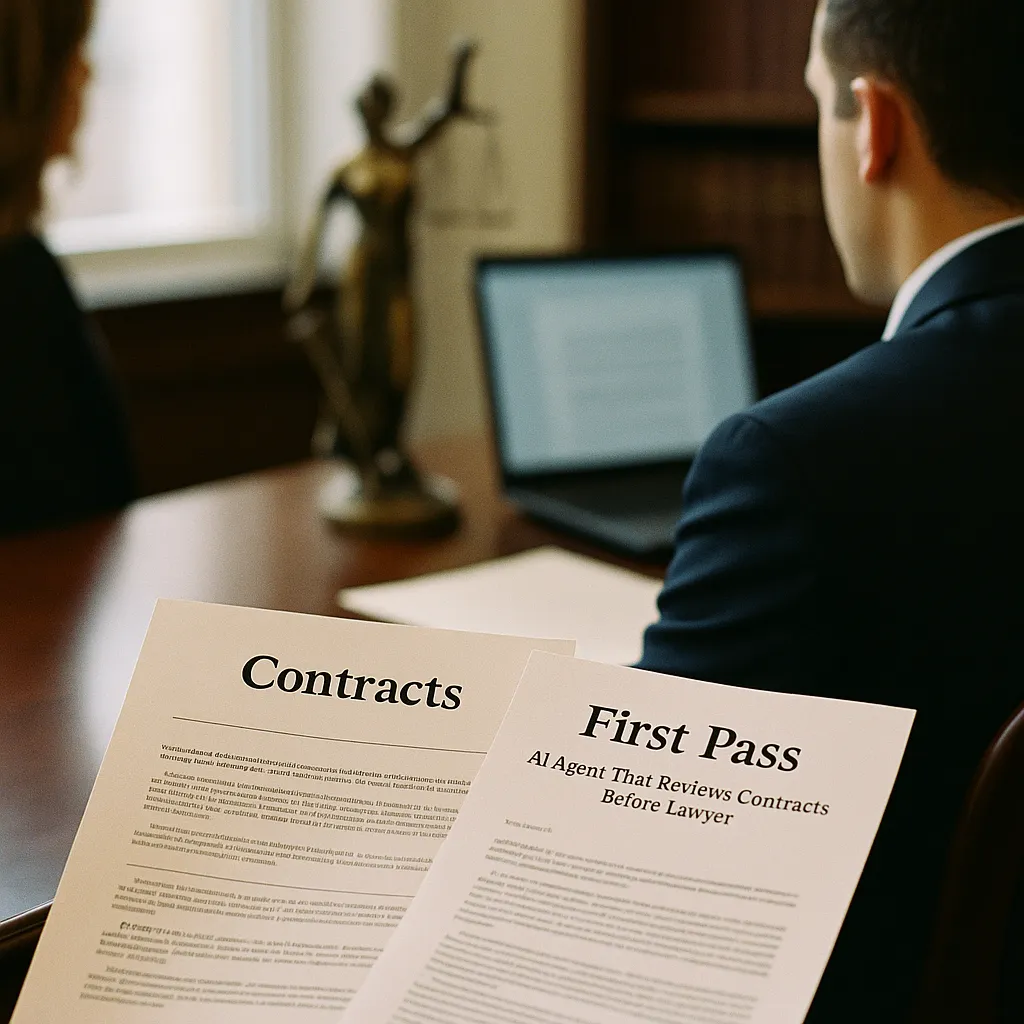
Autonomous AI agents are executing contracts and commercial transactions at scale, but courts in 2026 have no settled framework for who is liable when they make mistakes.
AI Agents Are Signing Contracts. Courts Have No Framework for When They Go Wrong.
By Hector Herrera | May 21, 2026
Autonomous AI agents can now book flights, execute trades, sign software licenses, and initiate commercial transactions—all without a human approving each step. Courts in 2026 are encountering the legal aftermath: disputes over whether users are bound by agreements their AI signed, who owes damages when an agent makes a mistake, and whether AI-generated documents carry the same legal weight as human-drafted ones. Legal analysts tracking AI liability cases warn there is no settled framework for any of it, and the gap is growing as enterprise AI agent deployments accelerate.
The short version: businesses are deploying AI agents with transaction authority at a pace courts cannot absorb. The legal risk is accumulating in the gap between what companies are doing and what the law has decided is permissible.
What Agentic AI Actually Does
An AI agent, in the enterprise context, is software that takes autonomous multi-step action to accomplish a goal. Unlike a chatbot that responds to queries, an agent executes: it browses, writes, calls APIs, books, orders, and in an increasing number of deployments, signs.
Enterprise platforms including OpenAI's operator tools, Anthropic's computer use API, and a growing class of purpose-built agentic platforms allow businesses to define the scope of an agent's authority and then let it act within that scope autonomously. In practice, "scope" is often defined loosely—"handle procurement requests under $10,000"—which leaves substantial room for the agent to make decisions a human supervisor would have made differently.
When those decisions create legal obligations—a signed license agreement, a purchase order, a service contract—the question of who is bound by them is genuinely unsettled.
The Core Legal Questions
Courts are encountering three recurring issues as agentic AI disputes reach litigation:
1. Is the user bound by what the agent signed?
Traditional contract law requires mutual assent—two parties knowingly agreeing to terms. When an AI agent clicks "I agree" on a 40-page software license, or places a commercial order that carries standard terms and conditions, courts are split on whether the user's decision to deploy an agent with that authority constitutes sufficient assent to whatever the agent subsequently agrees to. Baker Donelson's 2026 AI legal forecast identifies this as one of the year's most consequential unresolved questions in commercial law.
Get this in your inbox.
Daily AI intelligence. Free. No spam.
2. How does liability split between user, developer, and platform?
When an AI agent makes a commercially damaging decision—canceling a vendor contract it should have renewed, executing a trade outside its authorized parameters, booking a delivery route that violates a regulatory constraint—the immediate question is who owes damages. The user authorized the agent to act. The developer built the agent's decision-making capabilities. The platform provided the infrastructure. Current product liability frameworks were not designed for this three-party structure.
3. Do AI-generated documents carry attorney-client privilege?
Courts have split on this question in 2025-2026 rulings. Some judges have held that work product generated by AI tools used at an attorney's direction retains privilege. Others have required disclosure on the grounds that AI-generated analysis does not constitute protected legal judgment. The uncertainty is directly relevant to enterprise AI agent deployments where agents assist with contract drafting, compliance review, and regulatory filings.
Where the Rulings Stand
The clearest early signals come from courts dealing with AI-generated legal documents. Following a string of sanctions orders against attorneys who filed AI-hallucinated citations, federal and state courts have moved to require disclosure when AI was used to draft filings. The disclosure requirement does not invalidate AI-assisted documents—it creates accountability.
On the broader agentic AI liability question, no circuit court has issued a ruling that would serve as controlling precedent. The cases that have been decided are lower-court, fact-specific, and inconsistent. Legal analysts tracking the docket expect the first significant appellate ruling in this area to come from a commercial contract dispute—most likely in a technology, fintech, or supply chain context—before the end of 2027.
What Enterprises Are Doing (and Getting Wrong)
Most enterprises deploying AI agents with transaction authority are operating under self-drafted internal governance frameworks that define the agent's scope, require human review above certain transaction thresholds, and include indemnification clauses in vendor contracts for AI-caused errors.
The problem with self-drafted frameworks is that they govern internal behavior but do not resolve what happens when the AI's counterparty—the software vendor, the service provider, the trading platform—disputes the validity of an agent-signed agreement. An enterprise can have perfect internal documentation of its agent's authority and still face a court fight over whether that authority was sufficient to bind a third party.
Three practices are emerging as minimum baseline governance:
- Explicit scope definition in writing, specifying dollar thresholds, transaction types, and categories of agreement the agent is not authorized to execute
- Counterparty disclosure: informing commercial partners that certain transactions will be executed by an AI agent, and obtaining acknowledgment that they accept agent-executed agreements
- Audit trails: maintaining logs of every agent action sufficient to reconstruct exactly what the agent did, when, on whose authority, and with what information available at the time
None of these practices resolve the legal uncertainty. They reduce the evidentiary burden in litigation if something goes wrong.
What to Watch
The EU AI Act's requirements for high-risk AI systems include transparency and human oversight provisions that will apply to certain categories of agentic AI operating in EU markets. How EU regulators define "consequential decisions" for AI agents in commercial contexts will create the first binding regulatory framework for agentic liability in any major jurisdiction—and will pressure U.S. lawmakers and regulators to respond.
Domestically, the absence of federal AI legislation means the legal framework for agentic AI will be built case by case, through litigation. That is a slow and expensive way to establish rules for a technology that is already deployed at scale. Every enterprise running AI agents with transaction authority is, in a meaningful sense, operating in legal terrain that does not yet have a map.
Hector Herrera covers AI in business and law for NexChron.
Did this help you understand AI better?
Your feedback helps us write more useful content.
Get tomorrow's AI briefing
Join readers who start their day with NexChron. Free, daily, no spam.