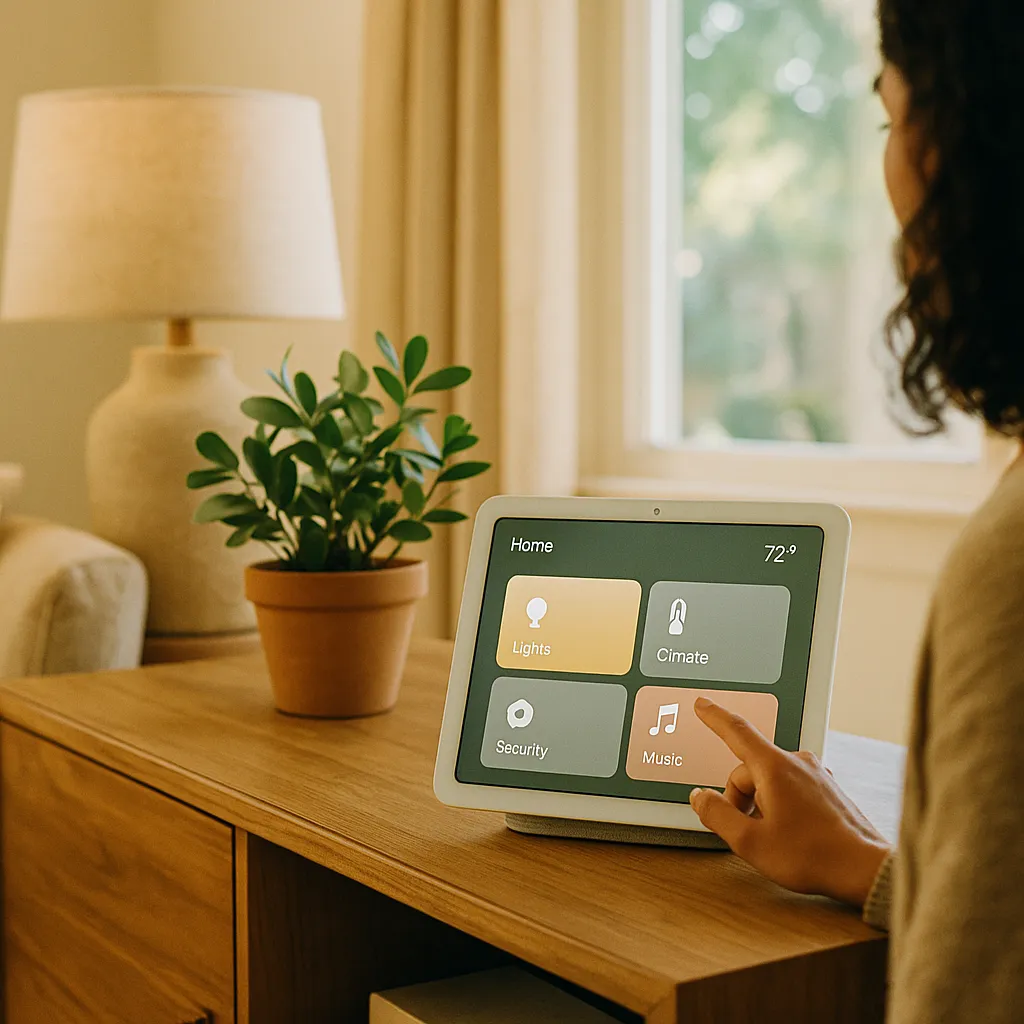
Apple's first smart home display — the HomePad — launches October 13 with facial-recognition Siri that personalizes the interface per household member.
Apple is launching its first smart home display — a countertop and wall-mount hub called the HomePad — on October 13, 2026, alongside a new HomePod mini and Apple TV. The launch ends years of speculation and positions Apple directly against Amazon Echo Show, Google Nest Hub, and Meta's Portal in the contested smart home platform market.
The device runs a purpose-built operating system anchored by a significantly upgraded version of Siri. What distinguishes it from competitors: facial recognition that personalizes the interface per household member, so each person in the home sees their own calendar, messages, smart home controls, and media preferences the moment they walk into frame. Apple has not disclosed whether that biometric processing happens on-device or in a privacy enclave — a question that will matter significantly to buyers who've watched Siri lag behind competing assistants for years.
A Late Entry Into a Crowded Market
Apple spent years watching Amazon and Google define what a smart home hub looks like. The HomePad's 6-to-7-inch form factor places it in the same class as the Echo Show 8 and Nest Hub Max — countertop devices designed to live in kitchens and living rooms, persistent enough to serve as the ambient control layer for a home.
The delay wasn't for lack of demand. Home automation has been a consistent growth category: smart speaker and display shipments have grown steadily since 2020, and Amazon's Alexa and Google Home have built deep ecosystems around routines, third-party integrations, and Matter-protocol device compatibility. Apple has controlled HomeKit for years but never gave it a dedicated display surface until now.
The HomePad changes that. It becomes the physical center of the Apple Home ecosystem — the device that shows you who's at the door, controls your lights and locks, plays music, manages your calendar, and surfaces the same AI assistant that lives on your iPhone and Mac.
Get this in your inbox.
Daily AI intelligence. Free. No spam.
What the AI Upgrade Actually Means
Apple's competitive pitch rests on Siri's upgrade. The existing Siri is widely considered the weakest major voice assistant on factual queries and multi-step tasks. The upgraded version powering HomePad is reportedly more capable at conversational context — holding a thread across multiple requests — and at integrating data across Apple's app ecosystem: Mail, Calendar, Messages, HomeKit, and third-party apps that support Apple Intelligence.
Facial recognition as personalization infrastructure is the sharper differentiation. Competing hubs authenticate by voice or by who's signed into the primary account. A display that knows which family member is standing in front of it — and reconfigures itself accordingly — is a meaningfully different product. A teenager walks by and sees their music queue and school calendar. A parent approaches and gets the thermostat controls and grocery list.
Whether that works reliably in practice is unknown until the device ships. Apple's track record on AI features in recent years has been one of delayed rollouts and conservative scoping.
The Bundle Matters
The October 13 launch bundles three products: HomePad, a new HomePod mini, and a new Apple TV. That's deliberate. Apple isn't selling a display — it's selling a cohesive home media and control layer. The HomePod mini anchors the audio side; Apple TV covers the living room screen; HomePad is the persistent ambient hub. Together they cover the main rooms of a home with connected Apple hardware.
That strategy mirrors what Amazon has done for years with Echo, Dot, and Fire TV. The difference is that Apple's installed base of iPhone users — over one billion globally — gives it an immediate potential audience that no pure smart home company can match. If HomePad ships with tight iPhone integration and Handoff support that lets you move tasks between phone and hub fluidly, the switching cost for Apple households becomes real.
What to Watch
The key questions for HomePad: First, whether the upgraded Siri performs reliably enough to change Apple's AI reputation. Second, how Apple handles the privacy framing around in-home facial recognition — this will be scrutinized. Third, whether the pricing lands competitively; Apple's HomeKit ecosystem has historically been premium-priced, and the smart home display market has been price-sensitive.
Apple hasn't announced pricing yet. Pre-orders are expected alongside the October 13 announcement. Third-party reviews will follow in late October.
Source: 9to5Mac — Apple's HomePad Smart Home Hub Launching on Oct. 13
Did this help you understand AI better?
Your feedback helps us write more useful content.
Get tomorrow's AI briefing
Join readers who start their day with NexChron. Free, daily, no spam.