Apple's HomeView smart display launches November 13 at $299, recognizing up to six household members and serving each a personalized Siri AI experience — the company's most aggressive move yet into smart home.
Apple HomeView Launches November 13 at $299 With Personalized Siri AI for Every Member of the Household
By Hector Herrera · November 4, 2026
Apple's first smart display, the HomeView, goes on sale November 13 at $299 — and it does something neither Amazon nor Google has managed to pull off at this price point: it knows who is talking to it. The seven-inch tabletop device can recognize up to six household members and serve each person a distinct home screen, communication hub, and smart home interface powered by Siri AI. That identity-first design is Apple's opening move in what is becoming a full-contact war for the center of the home.
The smart display market has been dominated for years by Amazon's Echo Show and Google's Nest Hub, both of which treat the household as a single unit. You get one calendar, one set of preferences, one media queue. Apple's bet is that personalization is the unfulfilled promise of every smart home product to date — and that the household able to tell its devices apart from its family members is the one that actually gets used.
What HomeView Actually Does
According to Gadget Hacks' full hardware breakdown, HomeView ships with:
- A seven-inch display designed for tabletop or countertop placement
- On-device face and voice recognition for up to six profiles, with no cloud upload required for identity matching
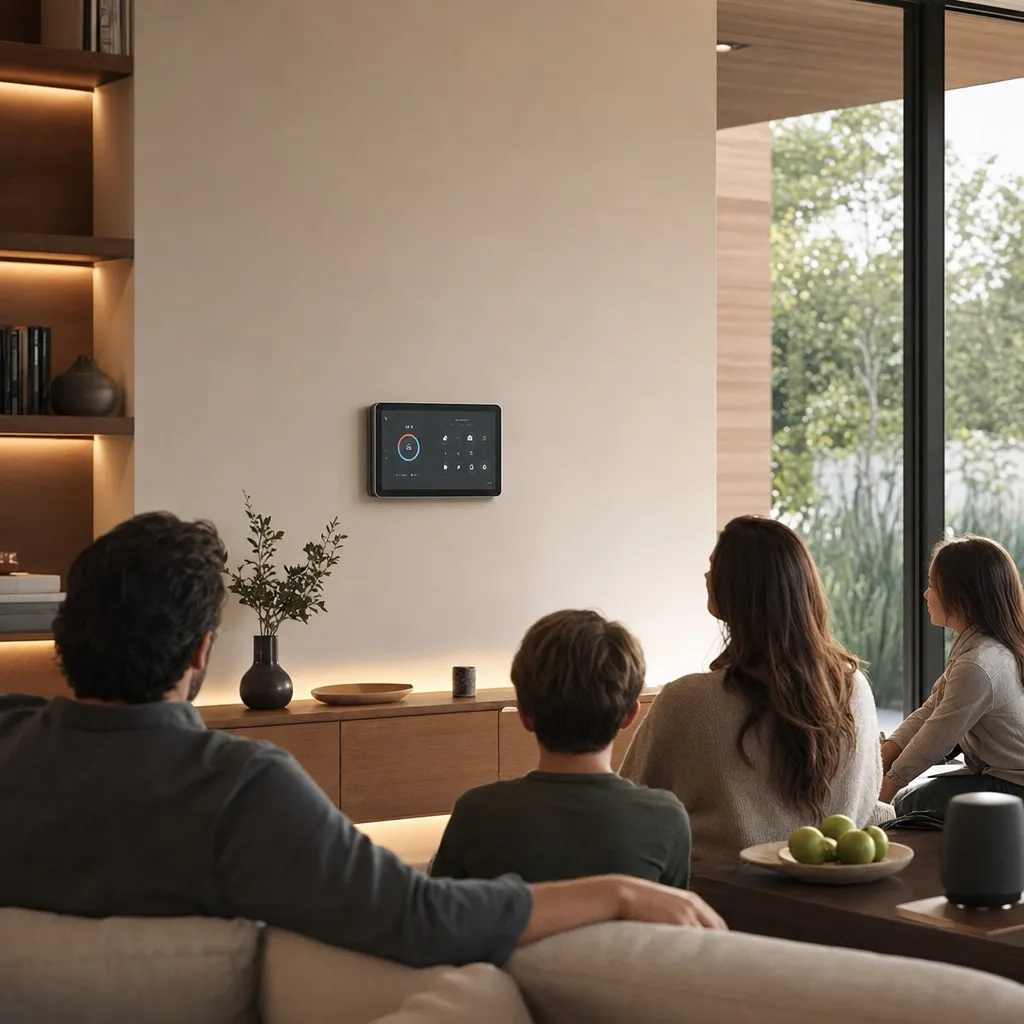
- Per-member home screens — each family member sees their own calendar, messages, smart home shortcuts, and media when they approach the device
- Siri AI integration that surfaces context based on the recognized user: a teenager gets homework reminders; a parent gets meeting prep and a commute update
- Full HomeKit hub functionality, replacing the need for a separate HomePod mini or Apple TV for smart home control
- FaceTime on the display, with automatic framing that follows the recognized speaker
The $299 launch price positions HomeView below the HomePod (which tops out at $299 without a screen) and directly against Amazon's Echo Show 10 at $249 and Google's Nest Hub Max at $229.
Get this in your inbox.
Daily AI intelligence. Free. No spam.
Why This Matters Now
Apple has spent three years building the identity layer that makes HomeView possible. The same on-device machine learning that powers Face ID on iPhones now runs locally on HomeView's chip — meaning Apple can credibly say that household member profiles never leave the device. That matters in a market where privacy concerns have slowed smart speaker adoption: a 2024 Pew survey found that 45% of non-owners cited privacy as their primary reason for avoiding the category.
The launch also marks a strategic pivot for Siri. Apple has acknowledged that Siri lagged behind Google Assistant and Amazon Alexa in task completion for years. HomeView is the first Apple hardware where Siri is the product, not a feature baked into a phone or watch. If the display succeeds, it gives Apple a data feedback loop on how its AI performs in ambient home settings that it has never had before.
The Competitive Picture
Amazon and Google are not standing still. The Echo Show 15 (a wall-mounted display launched in 2021) added basic voice profile support, and Google's Nest Hub Max can recognize up to six faces in its household. But neither company has shipped a device where identity-aware personalization is the headline feature rather than a buried setting.
The differentiator Apple is betting on is the depth of Siri integration across its ecosystem. HomeView owners who also use iPhone, iPad, and Apple Watch will see continuity: a task started on iPhone surfaces on HomeView, a calendar event on HomeView syncs immediately to the phone. For households already inside Apple's ecosystem, that coherence is difficult for Amazon or Google to replicate without matching Apple's hardware breadth.
The retail channel matters here too. HomeView will be sold through Apple Stores with hands-on demos — a distribution advantage that lets sales staff walk buyers through the household profile setup in person. That in-store moment, where a customer sees their own face recognized and their own preferences appear, is the pitch no ad can fully replace.
What to Watch
November 13 is the first real test: whether early adopters find the household recognition as reliable as Apple's demos suggest, and whether Siri's contextual awareness justifies the $299 price over a $249 Echo Show. If HomeView earns strong reviews in the first two weeks, expect Google and Amazon to accelerate roadmap responses in early 2027. If recognition errors emerge at scale, Apple faces a credibility problem in the category it just entered.
The deeper question is whether a device that knows who you are is a feature households want — or one they haven't been asked about yet.
Source: Gadget Hacks — Apple Smart Home Event 2026: Prices and Release Dates
Did this help you understand AI better?
Your feedback helps us write more useful content.
Get tomorrow's AI briefing
Join readers who start their day with NexChron. Free, daily, no spam.