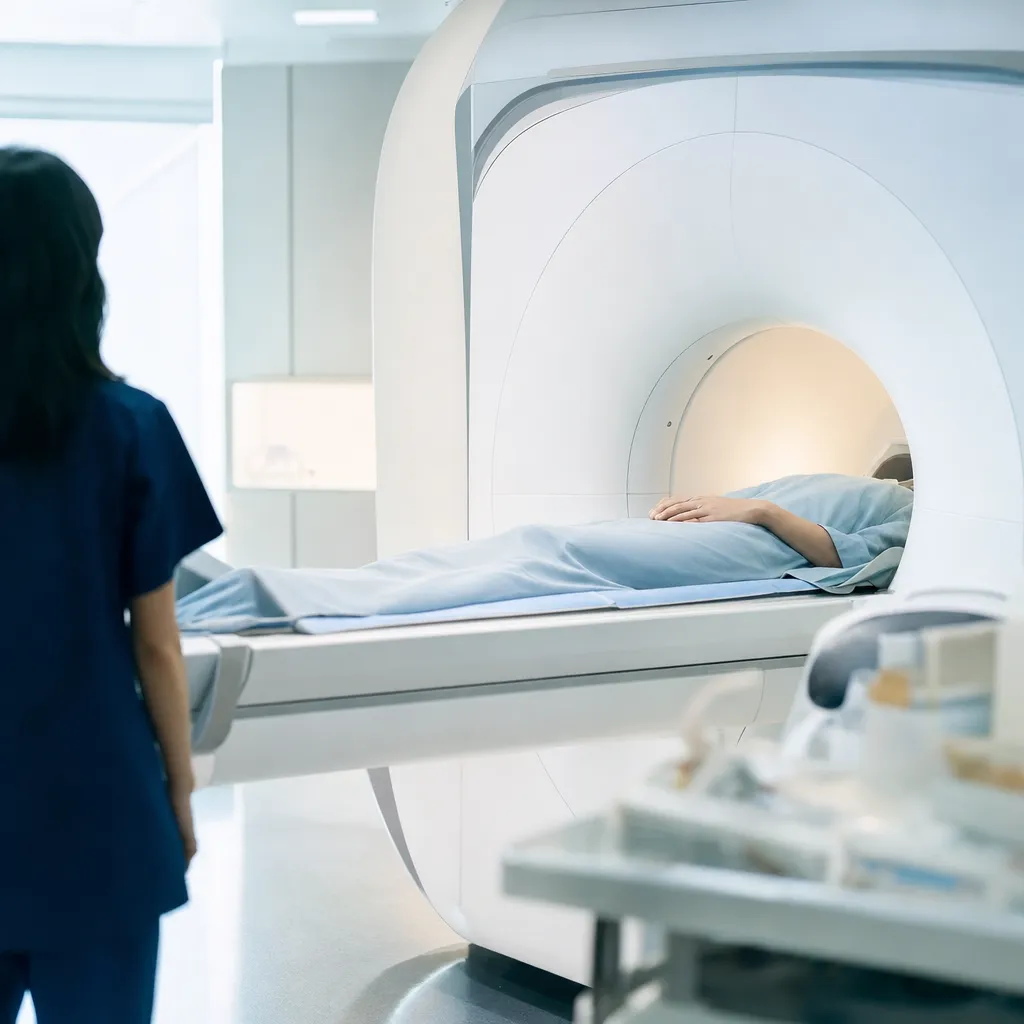
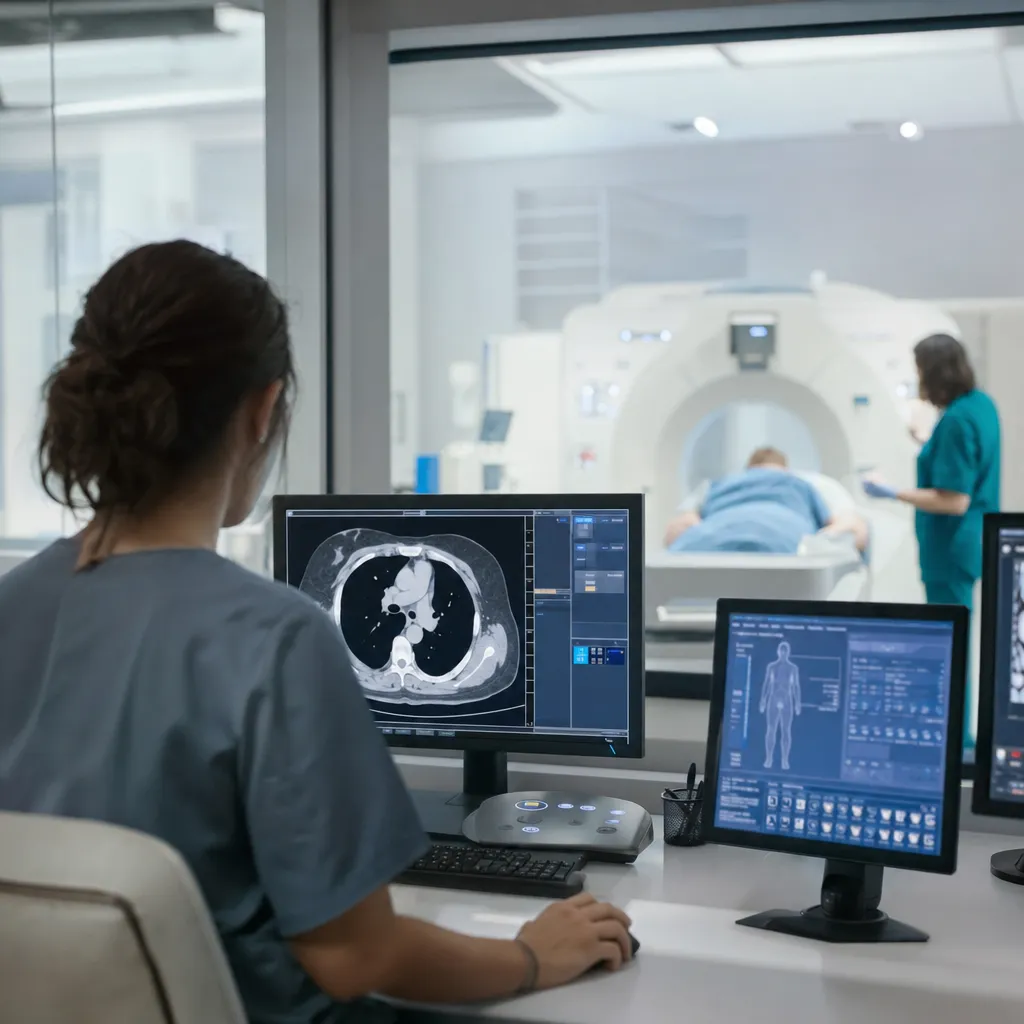
The NHS has launched a £200,000 project to establish national monitoring standards for AI diagnostic tools, responding to rapid clinical deployment without consistent oversight.
The NHS has launched a £200,000 project to build national standards for monitoring the safety and performance of AI diagnostic tools — responding directly to the rapid spread of AI imaging systems through clinical settings without consistent oversight mechanisms. The initiative, developed in partnership with the Royal College of Radiologists, will generate guidance that informs national policy on how AI medical devices are governed across UK health systems.
The project fills a gap that has become hard to ignore: AI tools for reading CT scans, chest X-rays, MRIs, and mammograms are now deployed across dozens of NHS trusts, some outperforming consultant radiologists on specific benchmarks. But there is no standardized national process to verify that those tools continue to perform safely when patient populations shift, when software is updated, or when deployed on equipment configurations different from what they were trained on.
What the Project Will Determine
The initiative focuses on three central questions:
Performance thresholds. What accuracy and safety benchmarks should AI diagnostic tools meet before clinical deployment — and how should those thresholds differ across contexts? A tool used for routine screening carries different risk tolerances than one used in emergency triage, and no national standard currently bridges that distinction.
Ongoing monitoring design. Once deployed, how should performance be tracked? Options under consideration range from periodic structured audits to continuous output sampling to mandatory incident reporting when AI recommendations diverge significantly from clinical outcomes. Currently, monitoring approaches vary widely across trusts and are largely self-defined.
Accountability assignment. Who bears responsibility when an AI diagnostic tool underperforms or causes harm — the NHS trust that deployed it, the manufacturer, or a central regulatory body? This question has remained deliberately ambiguous in existing frameworks and is a primary source of institutional hesitancy about formal monitoring programs.
The Royal College of Radiologists brings both clinical expertise and professional authority to the process. Radiologists have been among the most engaged clinical groups in the AI diagnostic conversation — welcoming performance improvements while consistently pushing for validation rigor before clinical reliance.
Get this in your inbox.
Daily AI intelligence. Free. No spam.
Why This Matters Now
Two pressures drove the initiative.
The MHRA (Medicines and Healthcare products Regulatory Agency) updated its AI medical device framework earlier this year but largely left post-deployment monitoring standards for institutions to develop independently. That produced a patchwork approach: some NHS trusts built internal monitoring programs, others did not, and there is no consistent benchmark for what adequate monitoring looks like.
The second pressure came from documented incidents in which AI diagnostic tools — widely deployed and well-validated on initial datasets — performed significantly worse on specific patient subpopulations, particularly those underrepresented in training data. These cases raised questions that existing governance frameworks were not designed to answer: how often should post-market performance be reassessed, and against what standard?
The Budget Reality
£200,000 is a modest budget for a problem of this scale. AI diagnostic tools are already embedded in NHS workflows for breast cancer screening, diabetic retinopathy screening, and chest X-ray triage. Building a monitoring framework that applies consistently across all of these requires coordination across dozens of trusts, multiple clinical specialties, and several regulatory agencies.
The project appears designed to produce guidance and policy recommendations rather than operational monitoring infrastructure. That is a reasonable scope for the budget — but it means the actual implementation of whatever monitoring framework emerges will require significantly more resource than this commission provides. The £200,000 buys the blueprint; building the building costs more.
The Global Context
The NHS is not alone in scrambling to build post-deployment oversight for AI diagnostic tools. The FDA's Digital Health Center of Excellence has been developing parallel frameworks for US-based AI medical devices. The EU AI Act classifies AI-assisted diagnostics as high-risk, requiring ongoing conformance assessments from manufacturers.
What distinguishes the NHS initiative is its explicit focus on existing deployments — tools already in clinical use — rather than pre-market evaluation of new products. Most current regulatory frameworks are better calibrated for the approval stage than for monitoring what happens to AI tools as clinical environments evolve around them: new equipment, new patient populations, new clinical protocols.
That is a genuinely important distinction. The tools posing the greatest near-term patient safety risk are not the ones being evaluated for approval now — they are the ones already making clinical recommendations across the NHS, with limited systematic oversight.
What to Watch
The project is expected to produce initial findings in mid-2027. If those recommendations are adopted as national NHS policy, the UK will establish a reference model for post-deployment AI diagnostic governance that health systems worldwide are actively seeking. NHS trusts currently deploying AI imaging tools without formal monitoring programs should treat the mid-2027 timeline as the beginning of a window, not the end of one — compliance expectations will follow the guidance.
Did this help you understand AI better?
Your feedback helps us write more useful content.
Get tomorrow's AI briefing
Join readers who start their day with NexChron. Free, daily, no spam.