CGI and Helsinki University Hospital's AI brain hemorrhage detection system has earned EU Medical Device Regulation certification — one of the first AI diagnostic tools to clear the EU's most rigorous pathway.
An AI System That Spots Brain Bleeds Just Cleared Europe's Toughest Medical Device Standard
An AI-powered head analysis tool developed by CGI, Helsinki University Hospital (HUS), and Planmeca has received official certification under the EU Medical Device Regulation — marking one of the first automated brain hemorrhage detection systems to clear the EU's most rigorous regulatory pathway for AI diagnostics. The certification matters because the EU AI Act's high-risk medical AI provisions are now fully in effect, and very few AI health tools have shown they can survive both the safety evidence requirements and the ongoing post-market surveillance obligations that the MDR imposes.
What EU MDR Certification Actually Means
Most AI tools used in clinical settings today operate under a regulatory gray zone. They are deployed as software accessories, decision-support aids, or workflow tools that don't technically qualify as medical devices — which means they aren't subject to the clinical evidence standards the EU has applied to MRI machines and surgical robots for years.
The EU Medical Device Regulation changed that. MDR, which replaced the older Medical Device Directive (MDD) in 2021, requires software intended to aid diagnosis to demonstrate clinical safety and efficacy through documented evidence, not just vendor claims. It also requires manufacturers to maintain active post-market surveillance — continuous monitoring of real-world performance once the tool is deployed.
Getting certified under MDR is significantly harder than what most AI health companies have faced before. The process demands clinical validation data, a quality management system, and a notified body review — an independent third-party audit by an EU-designated certification organization.
The CGI-HUS system cleared all of it.
What the System Does
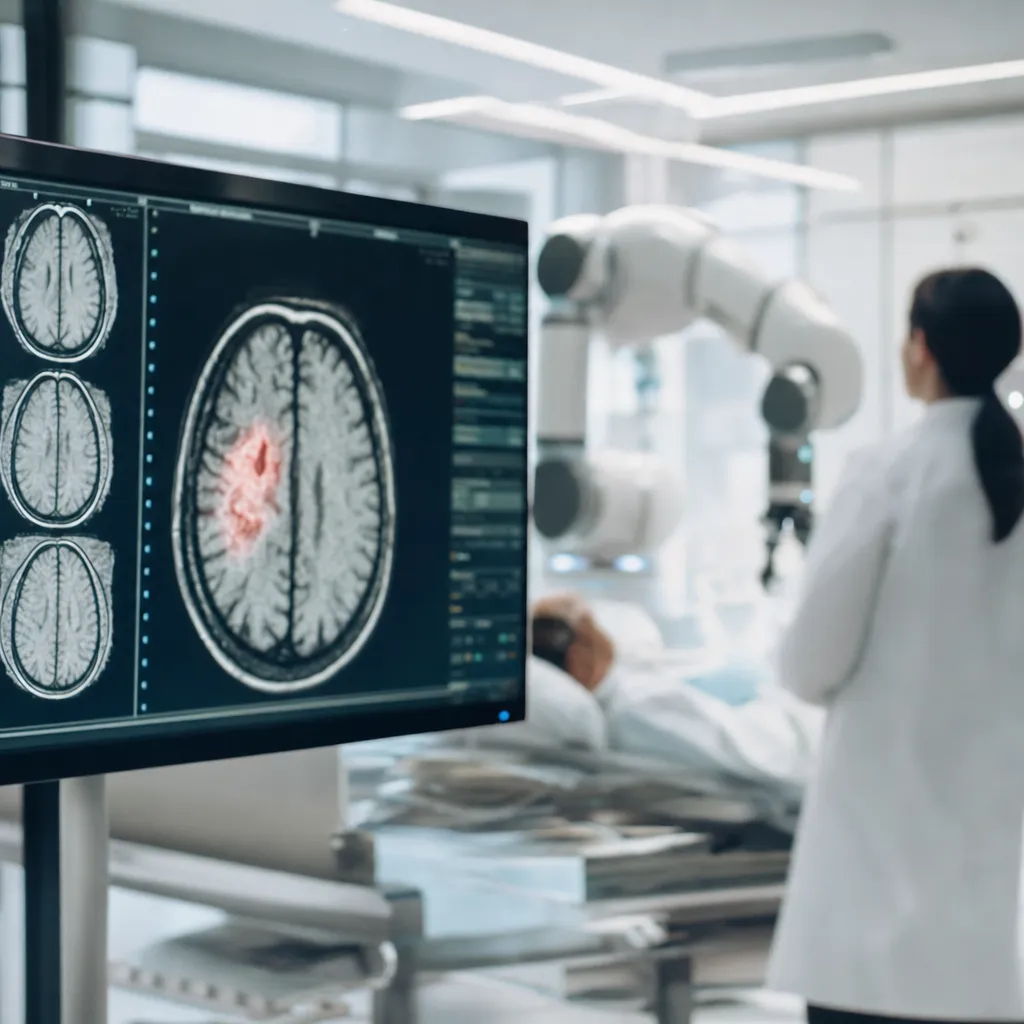
The AI analyzes head CT scans to automatically detect brain hemorrhages — bleeding in or around the brain — and flag them for radiologist review. Brain hemorrhage is a time-critical condition. The faster a clinician identifies it, the better the patient outcome. Manual CT reading under emergency conditions is fast but imperfect; trained radiologists working overnight shifts or under high patient volumes can miss or delay findings.
The system was developed through a collaboration between three organizations:
Get this in your inbox.
Daily AI intelligence. Free. No spam.
- CGI, the Canadian IT services and consulting firm with a major European healthcare practice
- Helsinki University Hospital (HUS), one of Finland's largest hospital systems and a recognized leader in clinical AI research
- Planmeca, a Finnish medical imaging company whose hardware the AI integrates with
The joint development model — combining a technology integrator, a clinical institution, and an imaging hardware provider — is becoming a template for AI diagnostics that can actually clear regulatory review, because the clinical evidence comes from real hospital deployment rather than retrospective datasets assembled after the fact.
Why This Certification Is a Regulatory Template
The timing of this certification is deliberate. The EU AI Act designates AI used in clinical diagnosis as high-risk, which triggers an additional layer of obligations on top of MDR — including conformity assessments, transparency requirements, and human oversight protocols. Those provisions are phased in through 2026 and 2027.
Right now, most hospitals and AI health vendors across Europe are watching to see which tools survive the combined MDR-plus-AI Act regulatory stack. Very few have. The CGI-HUS certification demonstrates that the dual-compliance pathway is achievable, and it creates a documented blueprint other companies can study.
The practical implications for the EU health AI market:
- Other AI diagnostic vendors will face pressure to pursue MDR certification rather than position their tools as non-device software
- Hospital procurement teams in EU member states will increasingly use MDR certification as a minimum bar for clinical AI purchases
- Notified bodies — the third-party auditors — are already backlogged; more companies pursuing MDR will lengthen those queues
- Developers targeting the U.S. market may accelerate FDA 510(k) or De Novo filings, using EU MDR certification as evidence of clinical rigor
Brain Hemorrhage Detection Is a High-Stakes AI Wedge
Brain hemorrhage is not a rare edge case. Stroke, traumatic brain injury, and spontaneous hemorrhage collectively account for millions of emergency CT reads per year globally. The condition demands immediate recognition: a hemorrhagic stroke treated within the first hour has dramatically better outcomes than one identified three hours later.
AI-assisted detection in this space has been an active research and commercial area for years. What was missing was a tool that could demonstrate — in a certified, legally accountable way — that it performs reliably enough to put in front of real patients in real hospitals.
Existing AI triage systems from companies like Viz.ai and Aidoc have cleared FDA pathways in the U.S. The CGI-HUS system's EU MDR certification opens a comparable lane in Europe, where the regulatory bar is different and, in some respects, more demanding because of MDR's post-market surveillance requirements.
What to Watch
The next test is adoption: whether HUS and other Finnish hospital networks deploy the certified system at scale, and whether CGI pursues commercialization partnerships across other EU markets. Watch also for how the European Commission handles the regulatory guidance gap identified in parallel — a new report on EU hospital shadow AI released this week found widespread confusion about which clinical AI tools require MDR certification and which don't. That guidance gap won't fix itself; the CGI-HUS certification sets a data point, but the Commission still owes the market a clear compliance roadmap.
By Hector Herrera
Did this help you understand AI better?
Your feedback helps us write more useful content.
Get tomorrow's AI briefing
Join readers who start their day with NexChron. Free, daily, no spam.