President Trump hosted the CEOs of NVIDIA, Anthropic, Google, OpenAI, and Meta at the White House, producing a joint voluntary commitment on frontier AI responsibilities framed as an alternative to federal legislation.
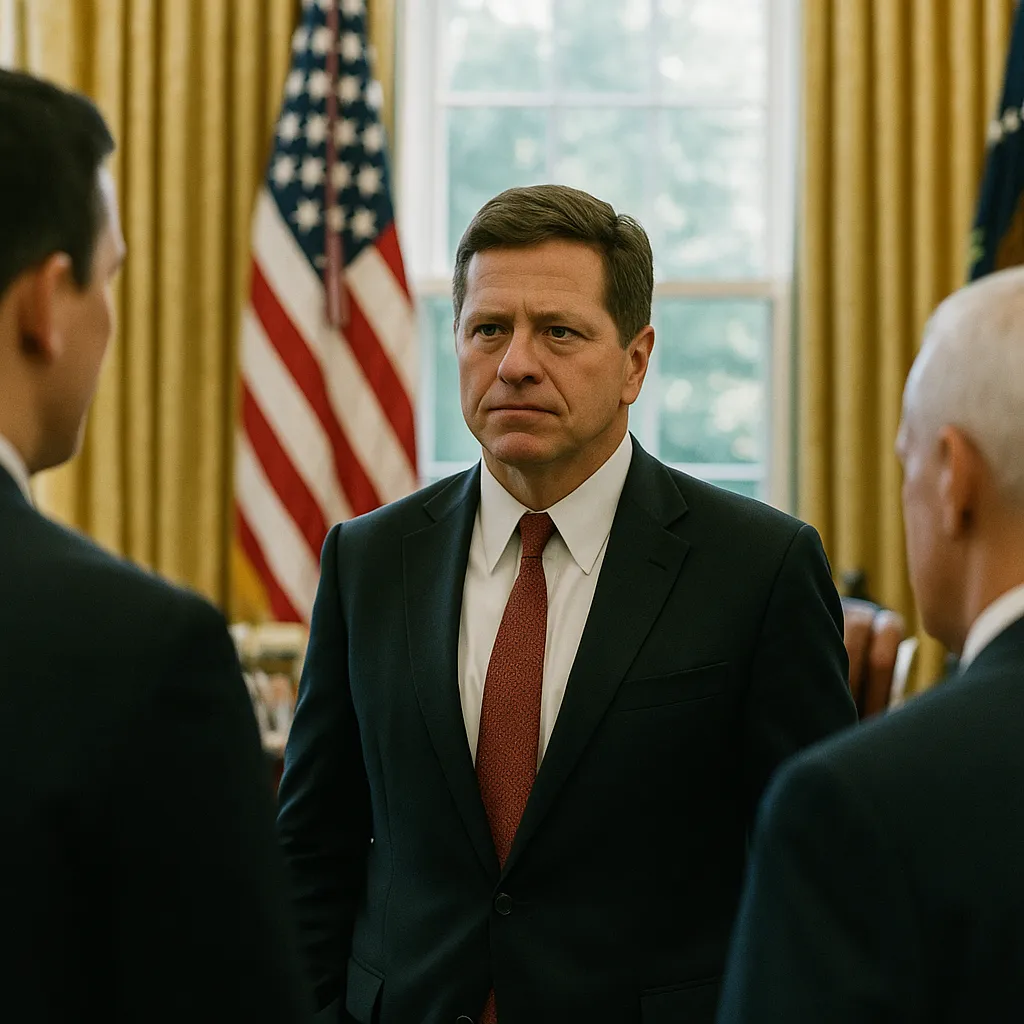
President Trump hosted the chief executives of NVIDIA, Anthropic, Google, OpenAI, and Meta at a White House luncheon on October 1 that produced a joint voluntary commitment on frontier AI responsibilities. The gathering — attended by Jensen Huang, Dario Amodei, Sundar Pichai, Sam Altman, Greg Brockman, and Mark Zuckerberg — signals that the administration's approach to AI governance remains firmly industry-led as the European Union's AI Act enters full enforcement of its General Purpose AI provisions.
What Was Agreed
The joint commitment is framed as a voluntary alternative to federal AI legislation, not a complement to it. The White House described it as an industry statement on frontier AI responsibilities, covering topics including safety testing, information sharing between labs, and transparency commitments. Specific binding obligations, enforcement mechanisms, or timelines were not disclosed publicly, according to Fortune's coverage of the luncheon.
Trump also used the occasion to reiterate two standing positions: his opposition to any "globalist scheme" to regulate AI — a reference to international coordination frameworks including those being developed at the UN and through the EU AI Act — and his intent to block state-level AI laws he characterizes as burdensome to innovation.
The Self-Regulation Argument
The administration's case for industry self-governance rests on two claims. First, that federal legislation would move too slowly to keep pace with AI development and would risk locking in outdated technical frameworks. Second, that companies have direct technical knowledge of their models that regulators lack, making industry-authored standards more effective in practice.
Critics of this approach point to a structural problem: voluntary commitments have no enforcement mechanism. A company that signs on and then violates the spirit of the agreement faces no legal consequence beyond reputational damage — which has historically been a weak deterrent in technology markets during periods of rapid competitive growth.
Get this in your inbox.
Daily AI intelligence. Free. No spam.
The 2023 White House voluntary AI commitments, signed by several of the same companies now present at this luncheon, produced mixed results. Independent audits of safety testing adherence were inconsistent, and several commitments were quietly narrowed in scope as competitive pressure intensified.
The EU Divergence
The timing is significant. The EU AI Act's General Purpose AI (GPAI) provisions — which impose mandatory transparency and systemic risk obligations on the largest foundation model providers — are now in full enforcement. Every company at the White House luncheon is subject to those rules for their EU operations.
This creates a two-track reality for global AI governance. US companies must simultaneously comply with binding EU requirements while operating under the voluntary US framework — a situation that effectively means EU compliance standards become the operational baseline regardless of domestic US policy. The question for enterprise customers is whether "complies with EU AI Act" becomes a de facto global certification that makes the US voluntary framework largely academic.
What the CEOs Get
For the companies in the room, the luncheon serves several purposes. It signals that the administration views them as governance partners rather than subjects of regulation — a valuable political relationship in an era when antitrust scrutiny, export controls, and energy permitting for data centers all require executive-branch goodwill. A joint commitment also provides political cover: companies can point to their stated responsibilities if regulatory pressure intensifies from Congress or state attorneys general.
For Trump, the gathering reinforces his position with a business-oriented base that views heavy AI regulation as a competitive disadvantage against China.
What to Watch
The practical test of the voluntary commitment is whether any of the signatory companies changes observable behavior — safety testing timelines, transparency reporting, or incident disclosure — in ways that can be independently verified. Congressional pressure for more formal accountability structures has been building from both parties; the question is whether a White House-backed voluntary framework satisfies or inflames that pressure.
California's own AI legislation trajectory — Governor Newsom signed SB 53 in September and has been navigating a complex relationship between the governor's office and the legislature — will be an early indicator of whether Trump's threat to preempt state laws carries political weight in Sacramento.
Did this help you understand AI better?
Your feedback helps us write more useful content.
Get tomorrow's AI briefing
Join readers who start their day with NexChron. Free, daily, no spam.