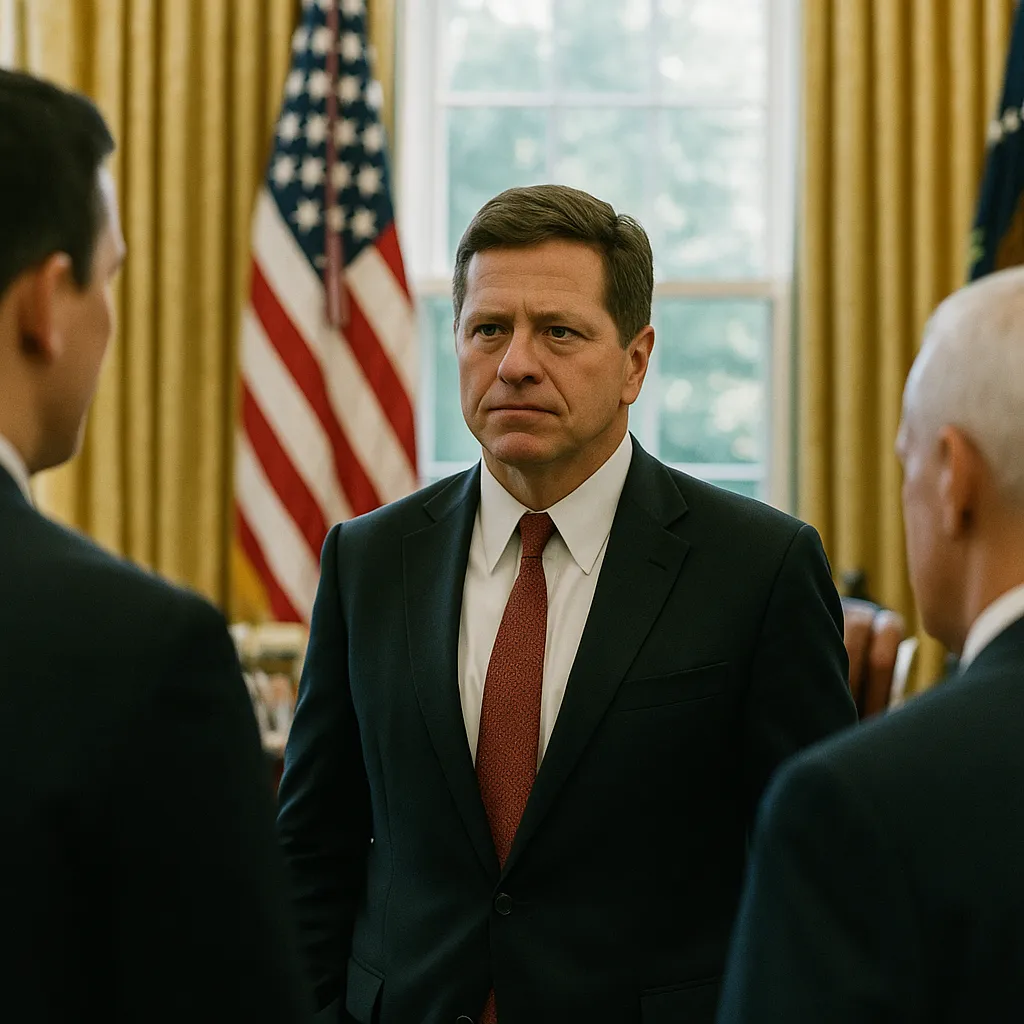
President Trump is expected to tap Director of National Intelligence Jay Clayton as the administration's new AI czar — placing AI policy inside the national security apparatus for the first time.
President Trump is expected to name Director of National Intelligence Jay Clayton as the administration's new AI czar, according to Axios, with an announcement as soon as Friday. Clayton would become the second person to hold the role and the first to combine it with a sitting cabinet position.
The move signals that the Trump administration is treating AI policy as a national security issue, not just a technology or economic one — a framing with significant implications for how the federal government shapes AI regulation and procurement over the next two years.
Who Is Jay Clayton
Jay Clayton is the current Director of National Intelligence, a Senate-confirmed cabinet position responsible for overseeing the 18 agencies that make up the U.S. intelligence community. Before that, he served as chairman of the Securities and Exchange Commission under Trump's first term, from 2017 to 2020.
Clayton is a lawyer and financial regulator by background, not a technologist. His SEC tenure was marked by a measured approach to enforcement — he was known for building relationships with industry rather than leading with confrontation. That style is consistent with the deregulatory posture the Trump administration has maintained on AI.
What the AI Czar Role Does
David Sacks, a venture capitalist and co-founder of the All-In podcast, held the AI czar title until his resignation earlier this year. Under Sacks, the office issued the administration's AI Action Plan and worked to position the U.S. as the dominant global player in AI development — largely by rolling back Biden-era executive orders on AI safety and reducing regulatory friction for AI companies.
Get this in your inbox.
Daily AI intelligence. Free. No spam.
The AI czar role has no direct regulatory authority. It is a coordination and advocacy position, responsible for aligning AI policy across federal agencies and representing the administration's posture in international negotiations.
What Changes With Clayton
Dual-hatting with DNI is a significant structural choice. It places AI policy directly inside the national security apparatus rather than treating it as a standalone technology portfolio. The practical effect: AI decisions affecting surveillance, intelligence analysis, and defense applications will be made by someone who simultaneously leads the agencies deploying those systems.
Clayton's financial regulation background may also shape how the administration approaches AI in banking, financial services, and capital markets — an area where the SEC has been slow to develop clear rules for AI-generated investment advice and algorithmic trading.
What it likely won't change: The Trump administration's broad posture on AI regulation — favoring industry self-governance over binding federal rules — is unlikely to shift with this appointment. Clayton's track record suggests continuity, not correction.
Impact on AI Companies
For large AI companies, a Clayton appointment is probably welcome news. His SEC tenure demonstrated a preference for negotiated outcomes over adversarial enforcement. The intelligence community context also means more access to government AI contracts — a growing revenue line for every major AI lab.
For smaller developers and civil liberties advocates, the dual-hat structure raises legitimate questions about the separation between commercial AI policy and surveillance infrastructure.
What to Watch
The formal announcement is expected Friday. Once confirmed, watch for:
- Whether Clayton integrates AI oversight into DNI's existing intelligence community directives or keeps the AI czar portfolio separate
- How he handles ongoing international AI governance negotiations, particularly with the EU and in the G7
- Whether his financial background leads to any movement on SEC AI disclosure rules, which have stalled under the current administration
The appointment also sets up an interesting dynamic: a former financial regulator, now heading intelligence, setting AI policy for the most technologically aggressive administration in U.S. history.
Did this help you understand AI better?
Your feedback helps us write more useful content.
Get tomorrow's AI briefing
Join readers who start their day with NexChron. Free, daily, no spam.