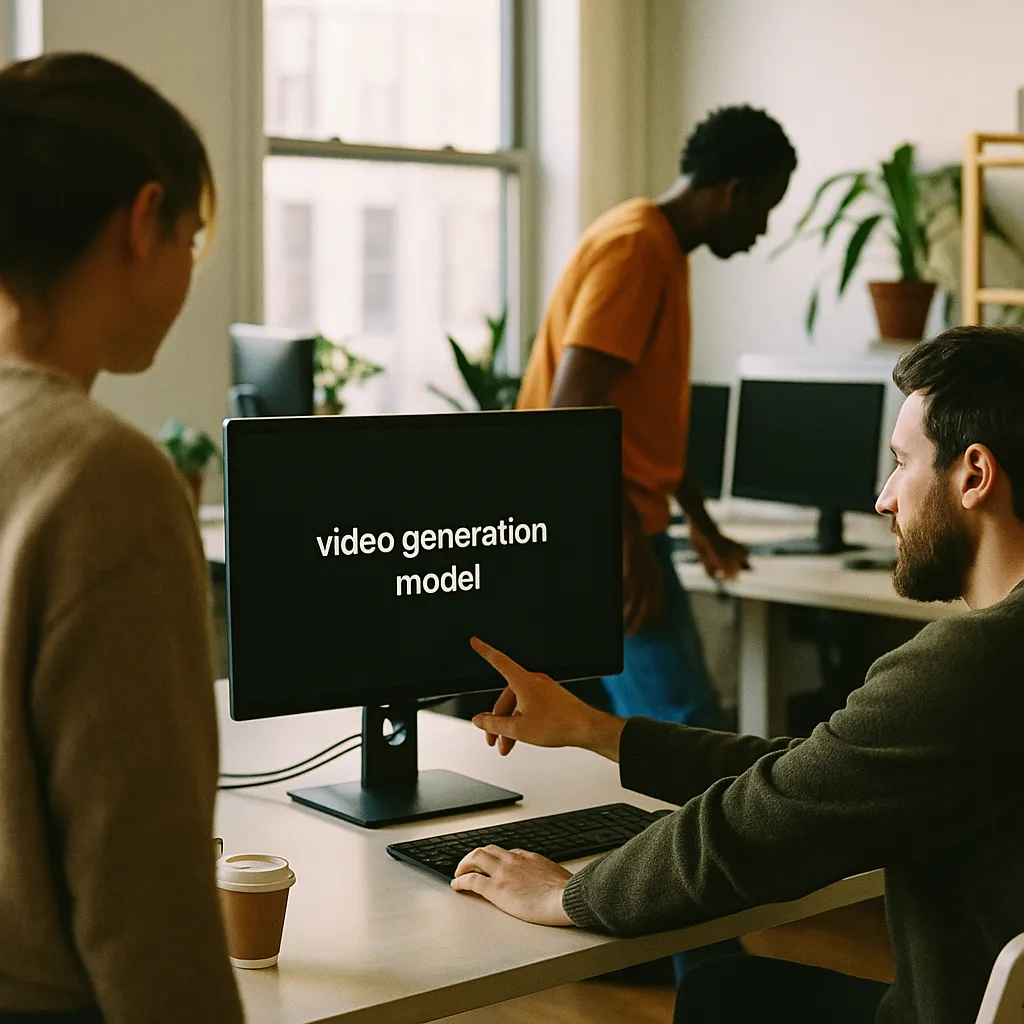
A clear strategic divide is forming in global film production: Hollywood restricting AI under union agreements, Chinese studios deploying it at scale to industrialize content creation at lower cost.
Hollywood Pulls Back on AI as China Accelerates: A Global Film Industry Split Is Hardening
A strategic divide in global film production is solidifying in September 2026: Hollywood is restricting AI tool use under guild agreements designed to protect working artists, while Chinese studios are deploying algorithmic storytelling and digital-twin production systems to industrialize content creation at lower cost. The gap between these approaches is no longer a philosophical debate—it is becoming a competitive reality with measurable output consequences.
The divide is playing out against a backdrop of back-to-back AI film events: the AI Film 3 Entertainment Conference in Phoenix runs September 17–19, and Venice's AI-adjacent programming this month reflects a global creative industry still negotiating its relationship with generative tools.
How the Hollywood Restrictions Work
The SAG-AFTRA and WGA agreements reached after the 2023 strikes established frameworks for AI use that studios must follow. The core constraints:
- Digital twins: AI captures of a performer's likeness, voice, and performance style require ongoing consent and separate compensation for each use. Perpetual licensing of a digital twin—creating an AI actor who can be deployed indefinitely without the person's ongoing participation—is prohibited without renewed agreements.
- Script generation: AI-generated scripts cannot be submitted as writer-originated work for credit purposes. AI can be used as a writing tool, but the human writer retains authorship and associated compensation.
- Background replacement and crowd generation: These AI uses are permitted under specific conditions but require disclosure to affected unions.
The practical effect is that U.S. studios using AI in production face a compliance layer that adds cost and process complexity—offsetting some of the production savings that AI tools would otherwise deliver.
According to industry coverage from Media & Entertainment News, U.S. guild agreements are particularly focused on blocking perpetual digital twin use as the highest-priority protection, reflecting actors' concern that AI could replicate their work indefinitely after a single capture session.
China's Approach: Industrialization at Scale
Chinese studios operate under no equivalent guild framework. The country's entertainment production system, which is state-influenced and union structures function differently than in the United States, has no parallel to SAG-AFTRA's consent and compensation requirements for digital likenesses.
Chinese studios are using AI in production at multiple layers:
Get this in your inbox.
Daily AI intelligence. Free. No spam.
- Algorithmic storytelling: AI systems that generate narrative structures optimized for platform engagement metrics, particularly for streaming services with massive behavioral data pools
- Digital twin performers: AI-generated actors and partially synthetic performances that reduce casting and talent costs, particularly for supporting roles and crowd scenes
- Post-production automation: AI-driven color grading, sound design, and VFX at a speed and cost level that traditional workflows cannot match
The result is a production cost advantage that, at scale, could allow Chinese studios to produce more content at lower per-unit cost than their Hollywood counterparts—particularly for mid-tier genre content that does not depend on star power or prestige narrative.
The Competitive Arithmetic
The strategic tension is not that AI makes better films. The evidence so far suggests AI-generated content at scale tends toward the algorithmically average rather than the distinctively good. The tension is that volume and cost efficiency matter in streaming economics, where platform libraries compete on breadth and release cadence as much as on individual title quality.
If Chinese studios can produce twice the volume of genre content at half the cost, and if that content is good enough to generate engagement on international streaming platforms, Hollywood's guild-constrained approach creates a structural competitive disadvantage in the mid-market segment of streaming content. Premium film and prestige television remain less exposed—the competitive advantage of human creative talent is most defensible at the high end.
The Scorsese-Black Forest Labs storyboarding partnership announced in June illustrated how established auteurs can use AI tools for pre-production work under existing guild frameworks without triggering the consent and compensation constraints that apply to performance capture. Pre-production AI use—concepting, storyboarding, production design—is less constrained than AI use in principal photography or post-production affecting union members.
The Digital Twin Fight Is the Central Issue
Guilds and studios are both watching the digital twin question most closely, because it is the use case with the highest long-term economic consequence for performers. A single motion-capture and voice-recording session could, in principle, produce an AI likeness usable across decades of productions—eliminating the ongoing labor relationship between a studio and an actor.
The perpetual digital twin prohibition in current U.S. guild agreements is the contractual line that Hollywood studios cannot cross in domestic productions. For international co-productions, or for productions made outside the U.S. guild system, the rules do not apply.
This creates a regulatory arbitrage opportunity: productions structured outside the guild framework—either geographically or through production company arrangements—can use performer likenesses in ways that SAG-AFTRA agreements prohibit. Tracking how studios use international production structures to navigate domestic guild restrictions will be one of the defining legal-creative stories of the next few years.
What to Watch
The Phoenix AI Film 3 Entertainment Conference (September 17–19) and the Venice programming this month will surface the perspectives of filmmakers actively working with AI tools—not just the guild-versus-studio negotiation dynamic that dominates the policy discussion. Films like Dreams of Violets, which premiered at Tribeca with AI-generated visual elements, demonstrate that artists can work within guild constraints and still push the creative frontier. The harder question is whether Hollywood's constraint-based approach becomes a creative differentiator—human authorship as a quality signal—or a competitive liability as Chinese and other international studios produce at greater volume and lower cost.
By Hector Herrera
Did this help you understand AI better?
Your feedback helps us write more useful content.
Get tomorrow's AI briefing
Join readers who start their day with NexChron. Free, daily, no spam.