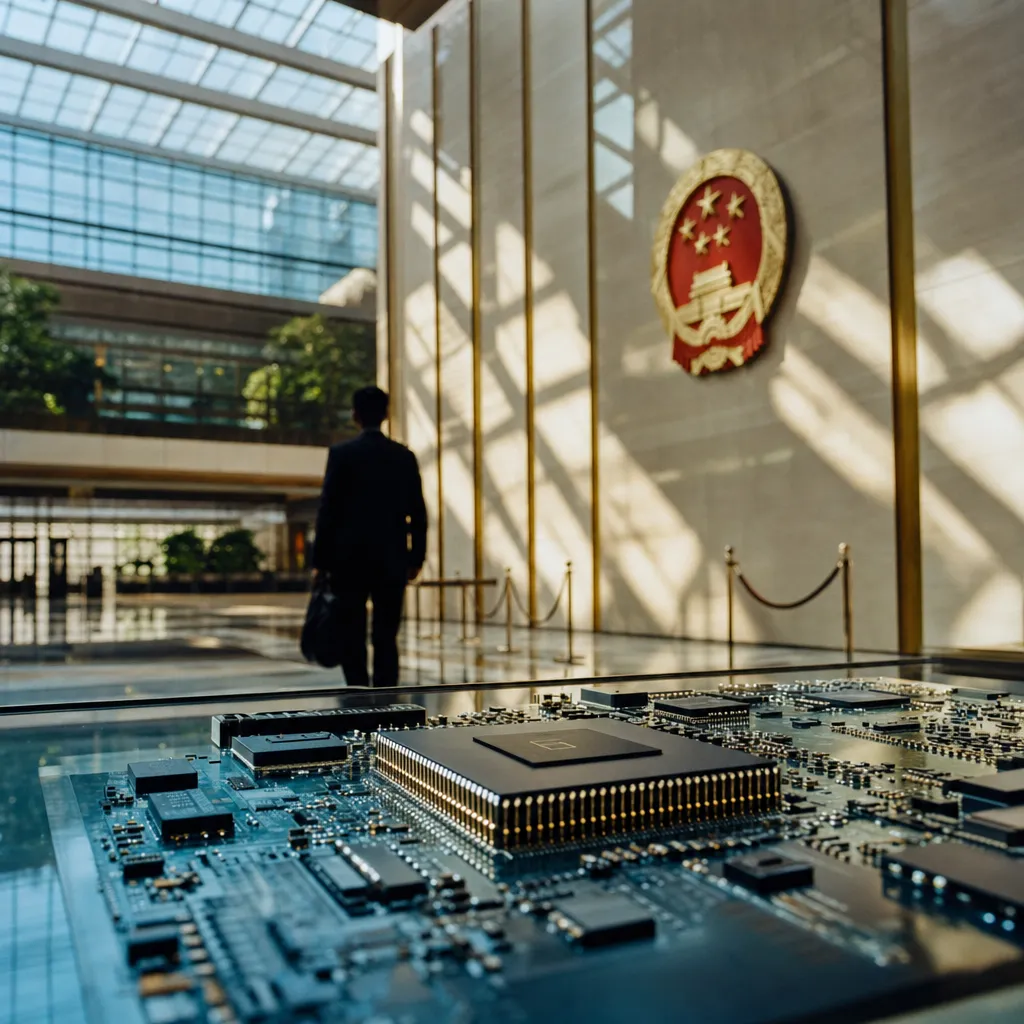
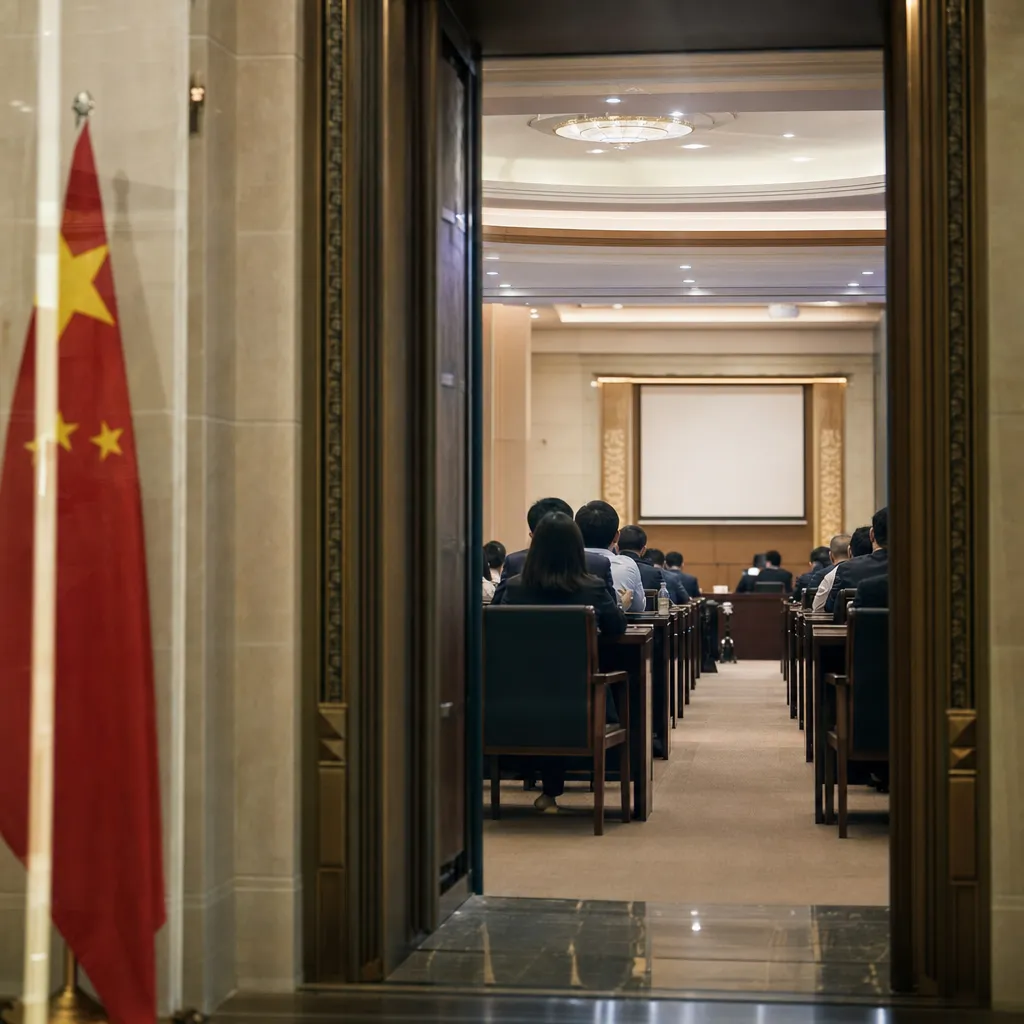
China's NDRC is fast-tracking a sweeping AI law naming DeepSeek, Moonshot AI, and Alibaba as first-wave enforcement targets — the clearest sign yet that Beijing won't let frontier AI development outpace its regulatory framework.
China is fast-tracking a sweeping AI law that will regulate the full development-to-deployment lifecycle, and it has named three of the country's most prominent AI companies — DeepSeek, Moonshot AI, and Alibaba — as first-wave enforcement targets. For the first time, Beijing is signaling it will no longer let frontier AI development outrun its regulatory framework.
China's National Development and Reform Commission (NDRC) announced the accelerated timeline on November 3, 2026. The move closes a gap that observers have noted for months: Chinese AI companies have been operating under a patchwork of sector-specific rules while their American and European counterparts faced increasingly codified AI governance regimes.
What the Law Covers
According to Reuters, NDRC Deputy Director-General Wang Ruomeng outlined three pillars of the forthcoming framework:
- Data duties — Requirements around training data sourcing, labeling standards, and data security obligations
- Compute controls — Oversight of infrastructure used to train frontier models, likely intersecting with existing export-control regimes on chips
- Incident-disclosure rules — Mandatory reporting when AI systems cause harm or behave unexpectedly, similar to the EU AI Act's serious incident notification clauses
The law will also introduce sandbox gating requirements, meaning companies must demonstrate safety compliance in controlled environments before deploying certain classes of AI systems publicly.
DeepSeek, the open-weight model lab that rattled global markets earlier this year, Moonshot AI (creator of the Kimi reasoning model), and Alibaba's DAMO Academy AI division are specifically identified as first-wave targets — the companies likely to face the earliest audits and compliance reviews.
Get this in your inbox.
Daily AI intelligence. Free. No spam.
Why Now
Beijing's timing is not accidental. DeepSeek's R2 and Kimi's reasoning capabilities have drawn intense international scrutiny, while Alibaba's Qwen model family has become a global open-source benchmark. Chinese AI companies are no longer just domestic players — they are setting standards that ripple into Western research and enterprise deployments.
That visibility creates both national pride and regulatory pressure. The NDRC is threading a needle: it wants to preserve China's AI momentum while asserting enough control to prevent the kinds of autonomous capability developments that could embarrass or destabilize the state.
The move also mirrors a global trend. The EU AI Act is now fully in force for high-risk system obligations. The U.S. has issued executive orders requiring safety evaluations for frontier models. China's regulators have watched both frameworks develop and are now synthesizing elements of each into domestic law.
What This Means for Businesses
For Chinese AI companies, the implications are immediate and structural:
- Legal and compliance teams — long thin in AI-native startups — will need rapid expansion
- Sandbox gating will extend development timelines for any model crossing capability thresholds the law defines
- Incident disclosure obligations will require new internal monitoring infrastructure
For international companies operating in China or using Chinese AI models, the law introduces new due-diligence considerations. If a compliance audit finds problems with a Chinese model your product relies on, your exposure depends on how the law handles upstream liability.
For open-source users of DeepSeek and Qwen models globally, the practical impact is less clear. The law appears targeted at development and deployment within China, not use of Chinese-origin weights by foreign developers. But that interpretation will need to survive regulatory practice before anyone can rely on it.
What to Watch
Wang Ruomeng did not specify an enactment date. Watch for the NDRC to publish a draft text for public comment — the standard step before Chinese legislation becomes enforceable — and pay attention to how broadly the sandbox gating thresholds are drawn. If capability benchmarks are set at levels DeepSeek's current models already exceed, enforcement pressure could arrive faster than the industry expects.
Did this help you understand AI better?
Your feedback helps us write more useful content.
Get tomorrow's AI briefing
Join readers who start their day with NexChron. Free, daily, no spam.