Film, music, and publishing leaders met in India on May 8 to coordinate a global copyright defense strategy for the AI age, targeting policy windows in the EU, US, and India.
Creative Industries Unite to Defend Copyright Against AI at Global Roundtables
By Hector Herrera | May 9, 2026 | Creative
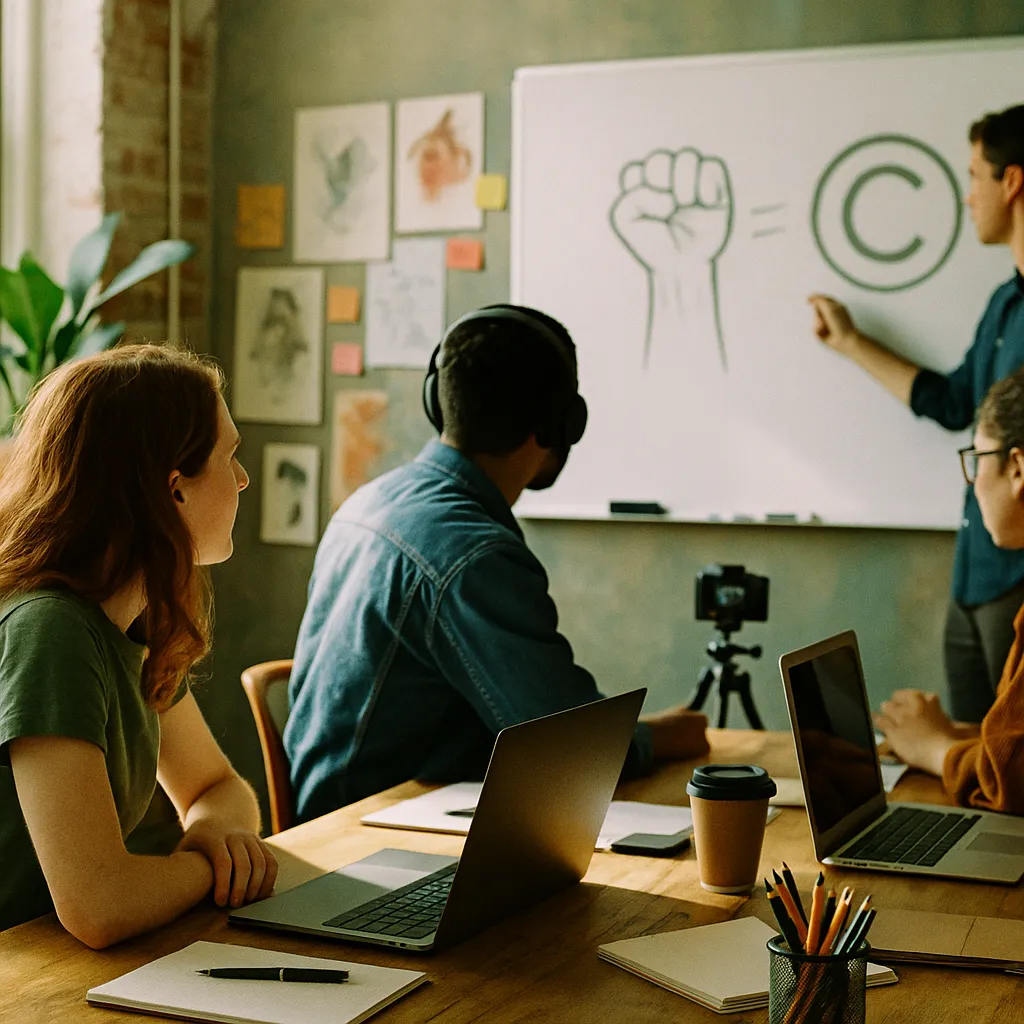
Creative industry leaders from film, music, publishing, and related sectors convened roundtables across India on May 8 to coordinate a global push for stronger copyright protections in the AI age. The gatherings mark an escalation from individual industry complaints to coordinated multi-sector action, timed to influence policy windows in the EU, US, and India before AI-generated content further displaces human creators in commercial markets.
What Happened
According to Film Information, participants from film, music, and publishing industries met in India on May 8 to align on a shared policy position regarding AI and copyright. Discussions focused on two connected problems: how existing intellectual property frameworks fail to address AI companies training on copyrighted content without licenses, and how AI-generated outputs now compete with licensed human work in commercial markets.
Participants called on policymakers in multiple jurisdictions to update intellectual property laws. The India location is deliberate: India is a major production hub for global creative industries and a jurisdiction where AI copyright rules are still being established, giving domestic creative sectors a window to shape policy before the landscape hardens.
The Core Legal Problem
The dispute has been building since at least 2022. AI companies have trained large language models and generative systems on datasets that include copyrighted text, images, audio, and video — in most cases without licensing that content or compensating rights holders. The legal argument from AI companies has been that training on data constitutes "fair use" under US copyright law, or analogous exceptions in other jurisdictions.
The legal outcomes to date have been mixed, and the creative sectors have not been unified in how they've responded:
- Music: Several major labels have filed suits against AI music generation companies. Some licensing agreements have been reached, though terms are rarely disclosed publicly.
- Publishing: The New York Times, multiple book publishers, and individual authors have active litigation against AI companies. Some smaller settlements have occurred.
- Visual art: Class action lawsuits against image generation companies are working through US federal courts, with uncertain outcomes.
- Film and video: The film industry has primarily addressed AI through guild agreements — WGA and SAG-AFTRA — that regulate how AI can be used in production rather than pursuing copyright claims directly.
The May 8 roundtables signal that these sectors see value in aligning across industries rather than pursuing separate legal and policy strategies with divided lobbying resources.
Get this in your inbox.
Daily AI intelligence. Free. No spam.
Why India
India's creative industries are globally significant. Bollywood is the world's largest film industry by output volume. India has a substantial music industry, a large English-language publishing sector, and a fast-growing digital content economy. It is also home to major AI development operations — both domestic companies and the Indian operations of US and Chinese AI firms.
India's AI policy framework is still forming. The country has not yet enacted comprehensive AI legislation, which means the copyright-AI intersection is more open to policy influence here than in the EU, where the AI Act is already in force. Participants at the roundtables are positioning India as both a domestic advocacy target and a potential model for other developing markets where AI rules are still being written.
A strong Indian copyright framework for AI training would directly affect how companies operating in India build and license their systems — and could create pressure for similar protections in other major markets that are watching India's approach.
What They're Asking For
While a unified public charter has not been released, reports from the roundtables indicate participants are pushing for:
- Mandatory licensing for AI training on copyrighted materials, with fair compensation to rights holders
- Transparency requirements obligating AI companies to disclose what content their models were trained on
- Revenue-sharing mechanisms that route a portion of AI commercial revenue to creators whose work contributed to training
- Output labeling that identifies AI-generated content distributed in commercial markets
These positions are broadly consistent with advocacy from the music industry in the US and with provisions the EU AI Act begins to address, though the EU framework stops short of mandatory licensing in most cases.
The Multi-Sector Advantage
Coordinated multi-sector advocacy is more politically effective than fragmented industry-by-industry campaigns. When film, music, publishing, and adjacent industries align on a common policy framework, they can apply simultaneous pressure across multiple jurisdictions — the US Copyright Office's ongoing AI rulemaking, India's emerging AI policy process, and the EU's implementation of AI Act requirements.
The creative industries collectively employ tens of millions of workers globally and generate significant export revenue for major economies. That economic weight gives them political standing that individual lawsuits don't.
What to Watch
Whether the roundtables produce a shared policy document that can be submitted to regulatory bodies across jurisdictions simultaneously. The US Copyright Office AI rulemaking is the most immediately actionable target; India's policy window is the most strategically open.
Also watch the film industry specifically. Bollywood and Indian regional cinema have engaged less directly with the AI copyright debate than music and publishing. The May 8 roundtables suggest that is changing, and film's involvement would significantly expand the coalition's reach and political weight.
Did this help you understand AI better?
Your feedback helps us write more useful content.
Get tomorrow's AI briefing
Join readers who start their day with NexChron. Free, daily, no spam.