OpenAI's new Dots agents run continuously on cloud computers, connect to 4,000+ apps, and maintain context across ChatGPT, Slack, and Teams — live today for Pro and Enterprise users.
OpenAI just shipped the most significant expansion of ChatGPT since it launched: persistent AI agents called Dots that run continuously on their own cloud computers, remember everything across sessions, and act across more than 4,000 apps without being summoned. This is not a chatbot upgrade — it's a shift toward AI that works in the background of your life.
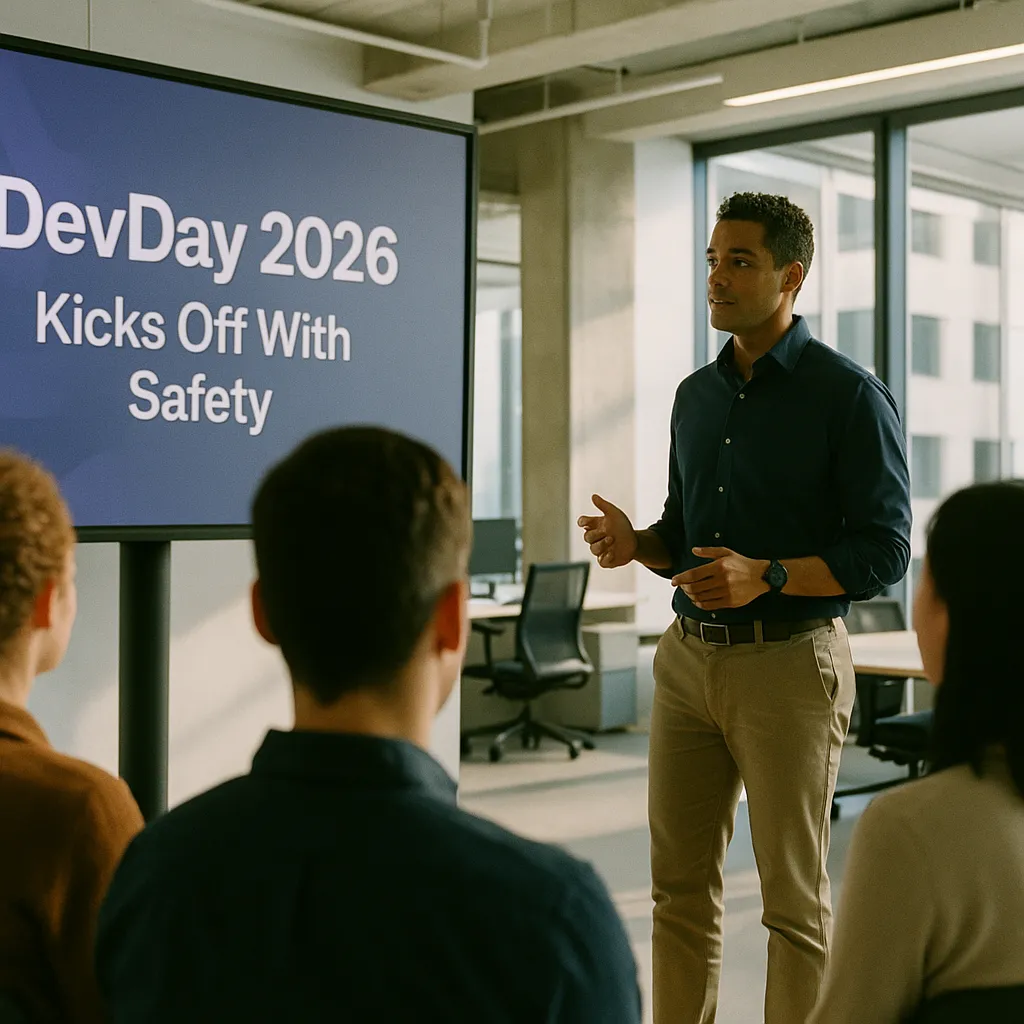
Announced today at DevDay 2026 and live immediately for Pro, Business Premium, and Enterprise subscribers, Dots marks OpenAI's clearest move yet into the territory of autonomous AI agents — systems that don't just answer questions but complete ongoing tasks.
What Dots Actually Does
Each Dot is a persistent AI agent powered by GPT-6 Astra, OpenAI's most capable model. Unlike a standard ChatGPT session, a Dot doesn't reset when you close the tab. It runs on a dedicated cloud computer, maintains full context across every interaction, and picks up exactly where you left off — whether you're in ChatGPT, Slack, or Microsoft Teams.
Key capabilities at launch:
- Persistent memory and context — no need to re-explain your project, preferences, or history
- 4,000+ app integrations — connects to tools across productivity, communication, finance, and operations
- Cross-platform continuity — same Dot, same context, across ChatGPT, Slack, and Teams
- User-defined rules — you specify which actions require your approval before execution, and which are blocked entirely
That last point matters. OpenAI is building a permission layer into the agent by default — you decide how much autonomy your Dot has before it acts on your behalf.
Why This Is Happening Now
The autonomous agent race has been building for over a year. Anthropic has Claude's computer use capabilities. Google DeepMind has Project Mariner. Startups like Cognition (Devin) and Adept raised hundreds of millions betting that the next interface shift wouldn't be chat — it would be AI that just does things.
Get this in your inbox.
Daily AI intelligence. Free. No spam.
OpenAI, sitting on the largest consumer AI user base in the world, is now making its move. Dots doesn't require technical setup or API access. It's a product feature rolled into existing subscription tiers — which means it reaches tens of millions of users immediately rather than through a developer preview.
The cloud computer architecture is significant. Running agents on OpenAI's infrastructure rather than inside a browser tab means the Dot can work even when your laptop is closed, execute long-horizon tasks across hours or days, and maintain state at a scale a browser extension never could.
What This Means for Businesses and Workers
For enterprise teams already on ChatGPT Business Premium or Enterprise, Dots is available today without new procurement. That's a fast on-ramp.
The practical implications:
- Operations and project management — a Dot can monitor project trackers, flag blockers, and draft updates without prompting
- Customer-facing workflows — agents can handle intake, routing, and follow-up across communication tools
- Knowledge work — persistent context means a Dot can track a research thread, a deal, or a hiring process across weeks
The flip side is governance. Enterprises that have spent the last two years drafting AI acceptable-use policies now need to update them. A Dot acting on behalf of an employee — sending messages, accessing files, modifying records — creates new questions about authorization, audit trails, and liability.
OpenAI's approval-gating system gives users individual control, but enterprise IT and compliance teams will need centralized policy tools. Whether OpenAI ships those at launch or later is not yet clear from today's announcement.
What to Watch
The immediate question is which app integrations are live at launch versus coming soon — 4,000 apps is a large claim and the real-world coverage across enterprise toolchains will determine how quickly adoption accelerates. Watch for enterprise security audits and policy guidance from major IT consultancies in the coming weeks; those will either accelerate or slow Dots deployment in regulated industries.
Hector Herrera covers AI infrastructure and enterprise adoption at NexChron.
Did this help you understand AI better?
Your feedback helps us write more useful content.
Get tomorrow's AI briefing
Join readers who start their day with NexChron. Free, daily, no spam.