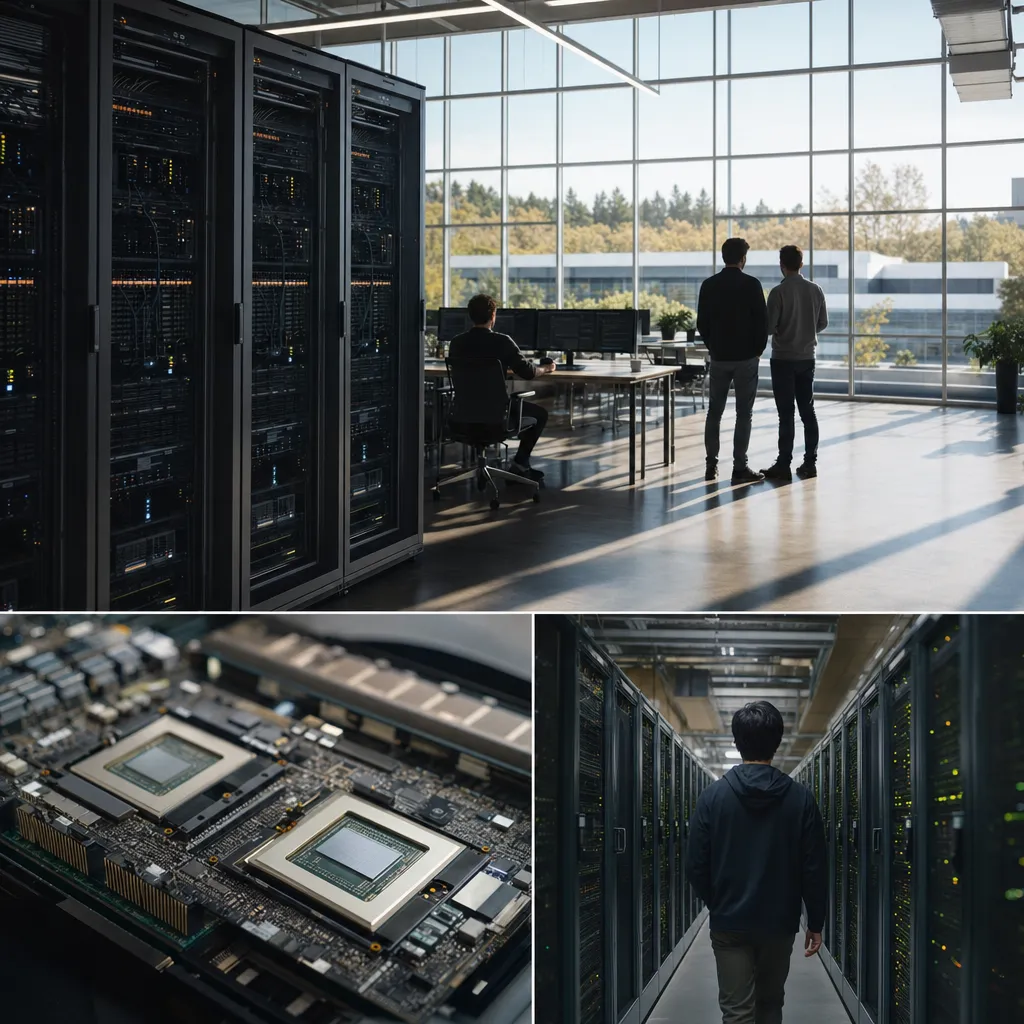
AMD is investing $1 billion in Meta Platforms as its Helios rack-scale AI systems enter live testing at Meta data centers, challenging Nvidia's grip on hyperscaler AI infrastructure.
AMD is making a $1 billion equity investment in Meta Platforms as the two companies lock in one of the largest AI infrastructure partnerships in the chip industry's history. According to TechTarget, AMD Helios rack-scale systems are already installed and under testing at Meta data centers — marking the first real hardware validation of AMD's effort to become a credible alternative to Nvidia at hyperscaler scale.
The deal matters because it reflects a deliberate strategy by Meta to avoid dependence on a single chipmaker. Nvidia separately invested $3 billion in Meta, creating a unusual dynamic where Meta's two primary chip suppliers have both made equity bets on the company they're selling to.
The scope of the deal
- AMD equity investment in Meta: $1 billion
- Nvidia's separate equity investment in Meta: $3 billion (for comparison)
- Partnership scope: Accelerators (GPUs), CPUs, networking, and rack-scale systems
- Infrastructure scale: Up to 6 gigawatts of AI infrastructure buildout covered under the partnership
- Current status: AMD Helios rack-scale systems installed and in active testing at Meta
The 6-gigawatt figure is striking context. A single gigawatt of AI computing infrastructure can power roughly 500,000 high-performance servers. The scope here reflects Meta's stated ambition to build AI infrastructure at a scale that rivals the largest national grid buildouts.
What AMD Helios is
Helios is AMD's rack-scale AI system — the company's answer to Nvidia's NVL72 and GB200 NVLink clusters. Rather than selling individual GPUs or CPUs, rack-scale systems integrate compute, memory, and networking into a pre-engineered unit optimized for large language model (LLM) training and inference. Getting Helios into Meta's testing pipeline is AMD's most significant hyperscaler validation to date.
Get this in your inbox.
Daily AI intelligence. Free. No spam.
The competitive picture
Nvidia dominates AI accelerator market share — estimates place it at roughly 80% of the data center GPU market. AMD's MI300X accelerator has gained traction in cloud inference workloads, but displacing Nvidia at the training layer, where Meta runs its Llama model series, requires proven rack-scale performance at scale. The Helios testing announcement is AMD's clearest signal yet that it's competing at that level.
The equity cross-investment structure is unusual in enterprise technology. Both AMD and Nvidia now hold equity stakes in Meta — their largest shared customer. That alignment creates financial incentives beyond simple vendor relationships: both chipmakers have a direct stake in Meta's AI infrastructure success.
What this means for businesses
For enterprise buyers and CIOs, the AMD-Meta partnership signals that the AI chip market is genuinely becoming a two-supplier market at the top end. That's meaningful for procurement strategy: AMD's validated presence at hyperscaler scale gives enterprise buyers negotiating leverage with Nvidia they haven't had in years.
It also suggests that AMD's infrastructure roadmap is real, not aspirational. A $1 billion equity position paired with live hardware testing is a different level of commitment than a product roadmap slide.
What to watch
Whether Helios clears Meta's internal benchmarks and moves from testing to production deployment is the next critical data point. A production win at Meta — one of the world's three or four most demanding AI training environments — would reshape the competitive landscape in ways that press releases about partnerships cannot.
Did this help you understand AI better?
Your feedback helps us write more useful content.
Get tomorrow's AI briefing
Join readers who start their day with NexChron. Free, daily, no spam.