Agricultural AI tools that issue planting and pesticide recommendations without explanation or override mechanisms pose a direct risk to food security, according to new policy analysis.
Agricultural AI tools that issue planting, irrigation, and pesticide recommendations without explanation or override controls pose a direct risk to food security—not just individual farms. That's the warning from a policy analysis published November 5 by Modern Diplomacy, which argues that the precision-farming AI sector has deployed faster than transparency standards could follow, and that the gap is a systemic vulnerability.
The stakes in agriculture are different from other AI sectors. In a customer service chatbot, a model error means a frustrated user. In a field-level prescription—the specific treatment applied to a specific acre of a working farm—a model error can mean a failed crop. For a small or mid-size farming operation, that can mean the difference between a viable season and financial ruin.
The Oversight Gap
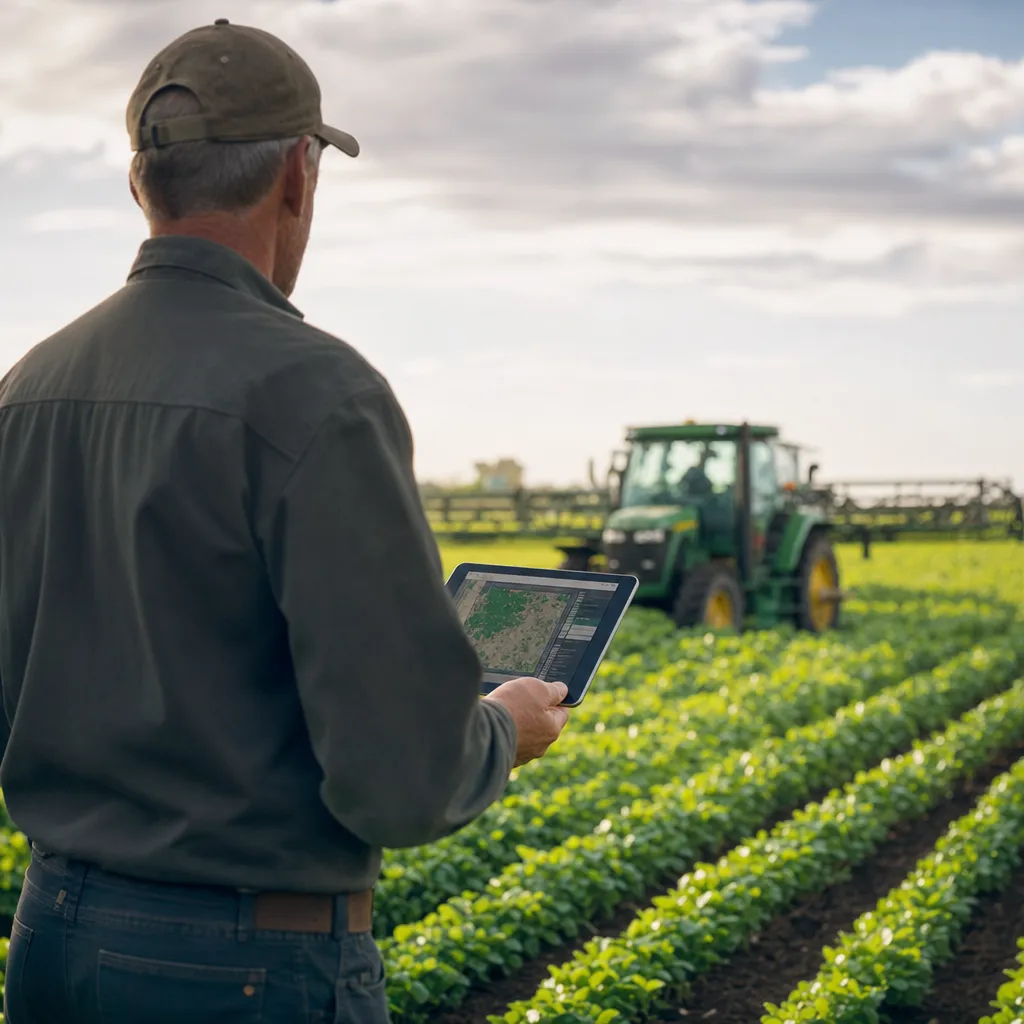
Most commercial precision-farming AI platforms today operate on a recommendation model: the system analyzes sensor data, satellite imagery, and weather inputs, then issues a prescription. The farmer sees the output but not the reasoning. Many platforms don't offer an explanation mechanism at all—the recommendation arrives as a directive, not a conversation.
The analysis identifies three specific failure modes this creates.
Expert knowledge erosion. When farmers follow AI recommendations without understanding the reasoning, they gradually lose the agronomic judgment needed to identify when a recommendation is wrong. This erosion is the most significant long-term food resilience risk—not just a problem for individual farms, but for the institutional knowledge base that keeps agricultural systems functioning when models fail.
Agronomic expertise is generational. It's built from years of observing how specific soil compositions, microclimates, and crop varieties behave under variable conditions. AI tools that position themselves as the decision authority—rather than a decision aid—create dependency cycles that erode that expertise over time.
Edge cases at scale. AI models are trained on historical data. When unusual conditions arise—an atypical pest pressure, a microclimate anomaly, an emerging pathogen—the model may have no good training signal. A human agronomist would recognize this uncertainty and ask questions before recommending treatment. A model that doesn't know what it doesn't know will issue a recommendation anyway, often with the same confidence display as a recommendation on well-understood conditions.
Get this in your inbox.
Daily AI intelligence. Free. No spam.
No accountability chain. When an AI prescription causes crop damage and a farmer seeks recourse, most current platforms' terms of service limit liability significantly. Without audit trails showing what inputs the model used, explainability showing why it made a specific recommendation, or mandatory human review steps, there is no accountability chain when things go wrong.
What Experts Are Calling For
The policy analysis recommends three structural changes to how precision-farming AI is deployed.
Mandatory explainability. AI recommendations should come with reasoning farmers can evaluate—which data points drove the prescription, what alternatives were considered, and what confidence range the model assigns to the recommendation. This doesn't require exposing proprietary model architecture; it requires surfacing the inputs and logic in plain language.
Override mechanisms. Farmers must be able to reject or modify AI prescriptions without system pushback, with that override logged for future model improvement. Currently, some platforms treat farmer modifications to AI recommendations as user errors to be corrected rather than data points that could improve the model.
Agronomist review gates. For high-stakes prescriptions—pesticide applications, irrigation decisions during drought stress, harvest timing—mandatory human agronomist review before the prescription is executed. This positions AI as a tool that assists human judgment rather than replaces it, which is both operationally safer and more accurate about what current models can reliably do.
The Industry Context
Precision-farming AI adoption has accelerated substantially through 2025 and 2026. Investment in agtech AI has followed market projections forecasting double-digit growth through the late 2020s. The commercial pressure to deploy and scale these tools is real.
But the analysis notes that speed of adoption is precisely the problem. In a sector where the consequences of model failure are measured in destroyed harvests rather than bad user experiences, governance frameworks need to precede deployment at scale—not follow it.
The comparison to other high-stakes AI domains is instructive. Medical AI in clinical settings increasingly requires human physician review before AI recommendations become orders. Financial AI in regulated settings requires explainability for credit decisions under existing consumer protection law. Agricultural AI, which affects food supply chains that touch every consumer, has no equivalent standard.
The difference in regulatory attention is not proportional to the risk. An AI error in a credit decision affects one borrower. An AI error propagating across tens of thousands of farms—using the same model with the same flaw—can affect crop yields across a region.
What to Watch
Whether major precision-farming platforms—including tools from John Deere, Trimble Agriculture, and Climate Corporation—voluntarily add explainability and override features ahead of potential regulatory requirements. And whether the incoming Congress, which has signaled interest in sector-specific AI governance, includes agriculture in the first round of AI accountability legislation. The current absence of a standard is a known gap. How long it takes to close it will determine whether the food resilience warning in this analysis stays theoretical.
Did this help you understand AI better?
Your feedback helps us write more useful content.
Get tomorrow's AI briefing
Join readers who start their day with NexChron. Free, daily, no spam.