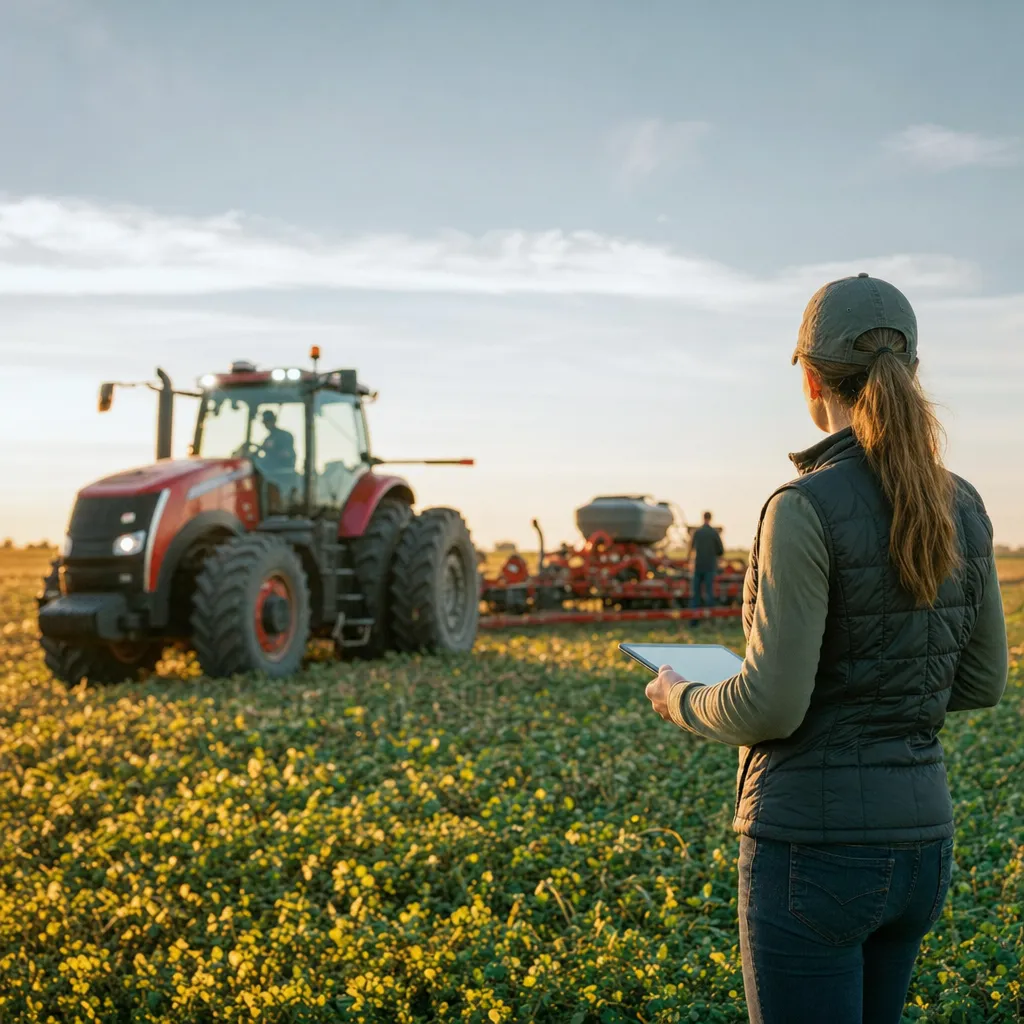
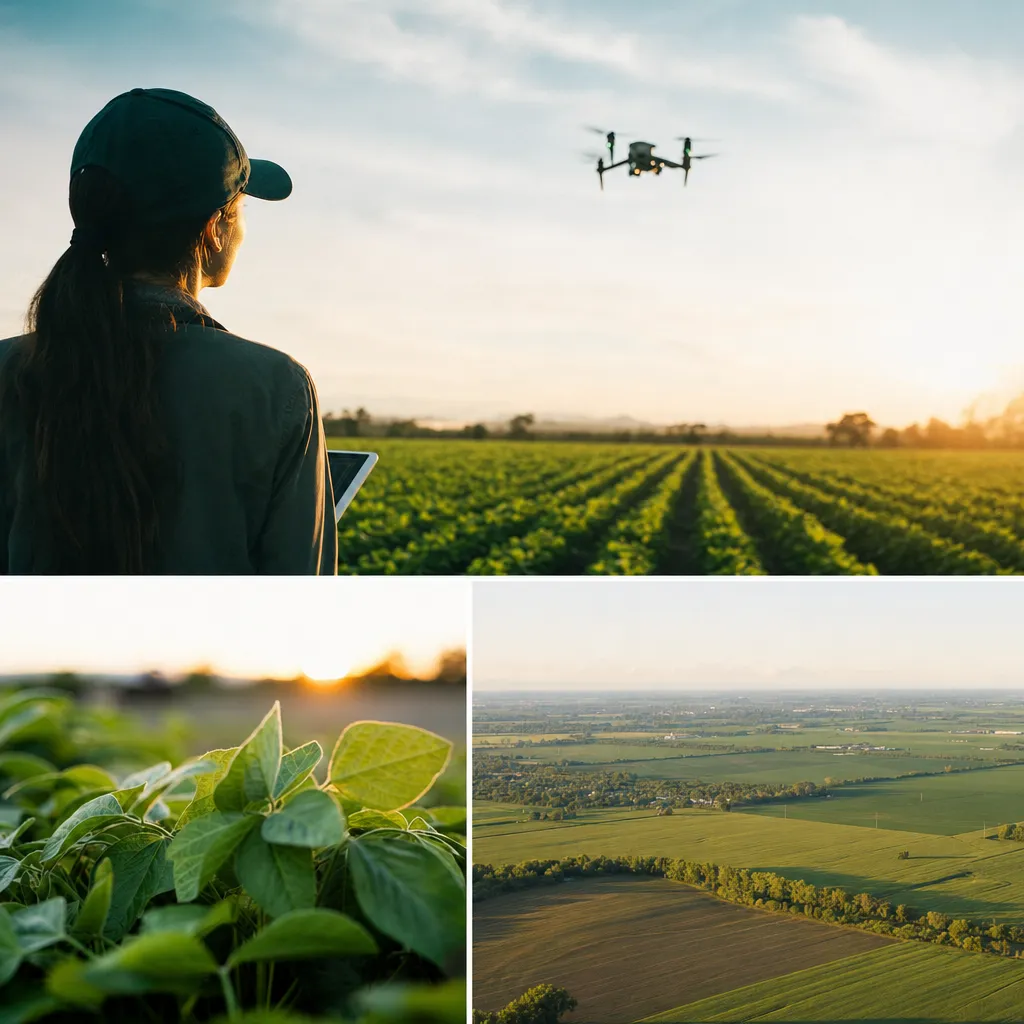
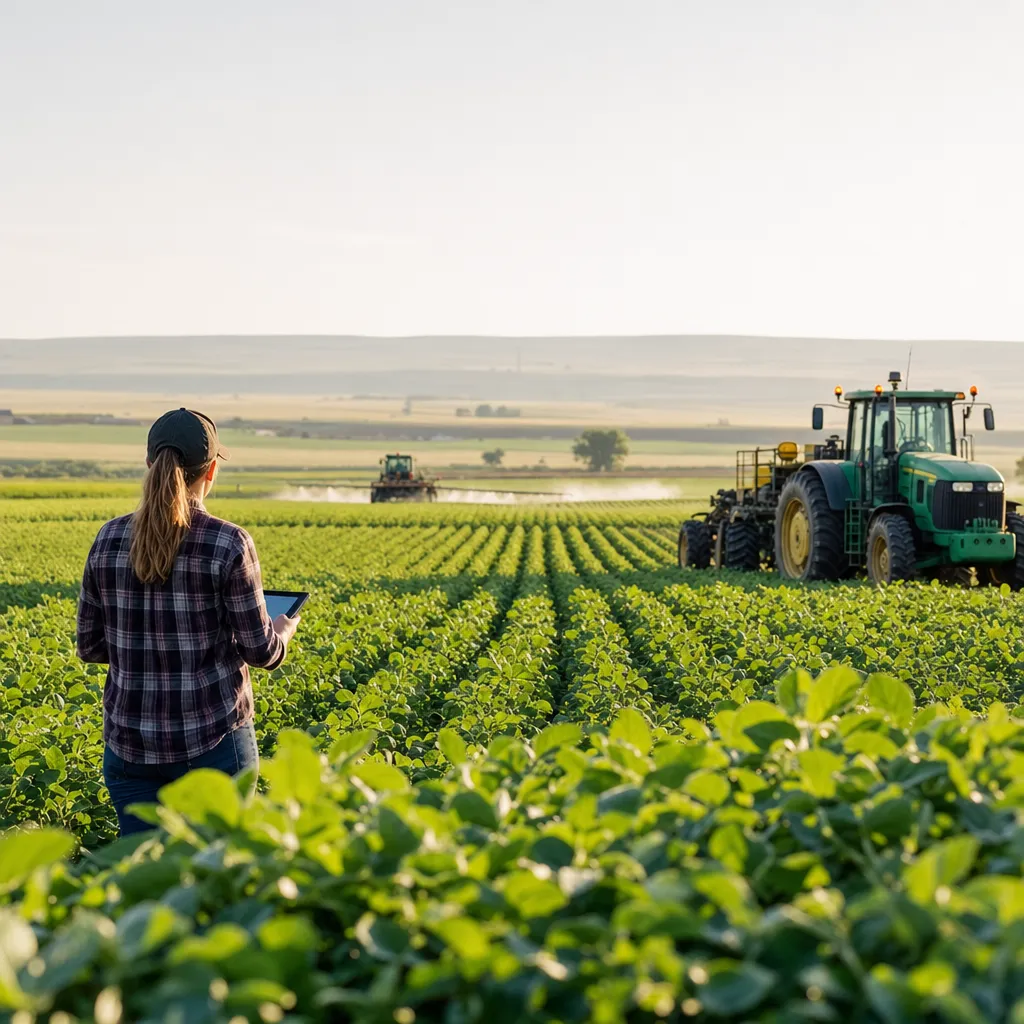
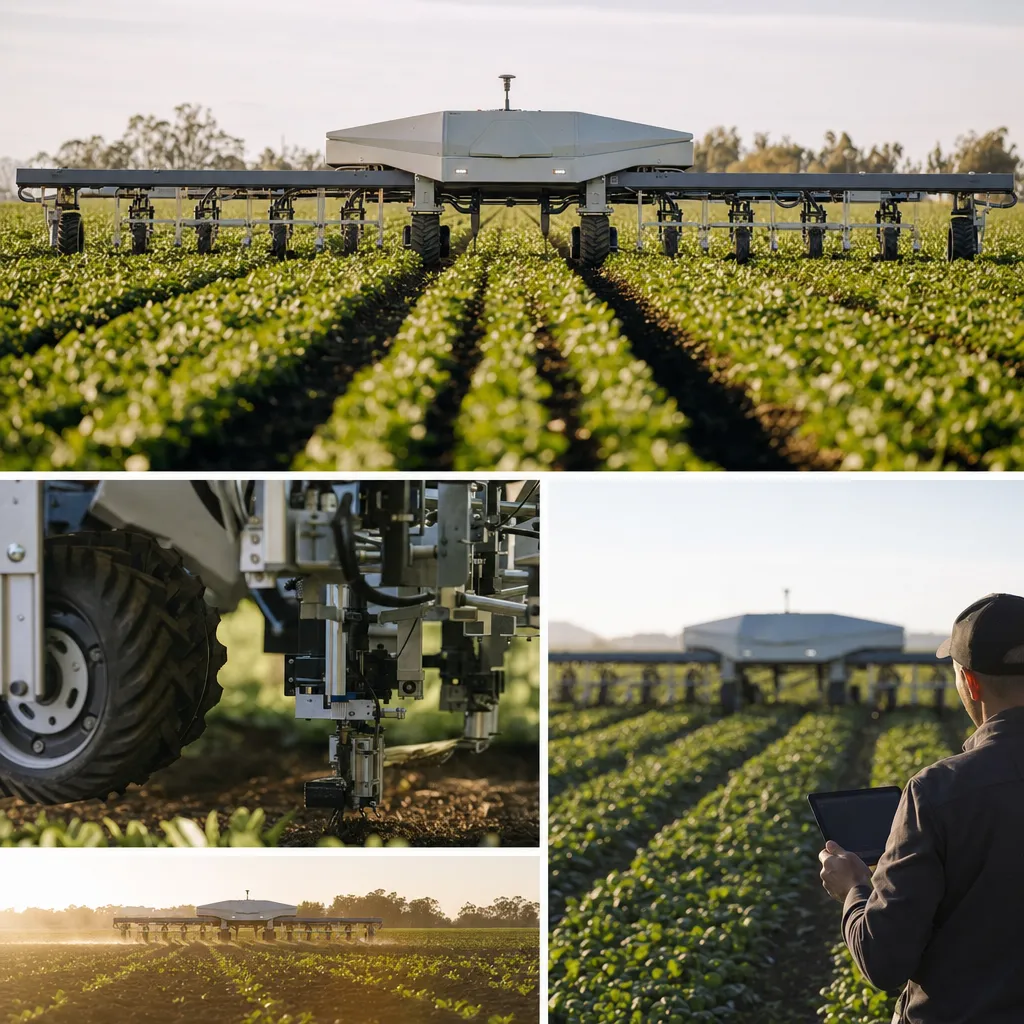
FarmQA and CNH — parent of Case IH and New Holland — announced a collaboration to connect AI-powered agronomic intelligence directly to farm equipment, so field recommendations can automatically translate into machine action.
FarmQA and CNH Collaborate to Connect Agronomic AI Directly to Farm Equipment Execution
FarmQA and CNH — the agricultural equipment giant behind Case IH and New Holland — announced a collaboration to connect FarmQA's AI-powered agronomic intelligence platform directly to CNH farm equipment, so AI field recommendations can automatically translate into machine action without a human manually relaying instructions between systems.
The partnership closes what has been a persistent gap in precision agriculture: the step between advisory AI that diagnoses a field condition and prescribes a response, and the equipment that actually carries out the response. If it delivers on its design, the integration moves precision agriculture closer to genuine closed-loop operation — where AI both identifies a problem and directs the machinery that solves it.
What the Integration Does
According to FarmQA and CNH, the collaboration links FarmQA's agronomic intelligence platform to CNH's AFS (Advanced Farming Systems) technology stack, which connects to precision-compatible Case IH and New Holland equipment including tractors, planters, and application implements.
In practical terms: a FarmQA AI analysis of field data — drawing on soil conditions, crop stage, pest pressure, yield forecasts, and environmental variables — can generate application prescriptions that are sent directly to compatible equipment as variable-rate application maps or planting prescriptions. The operator validates the recommendation; the equipment executes it without the farmer manually re-entering parameters into separate equipment software.
The integration is not fully autonomous. Human validation remains in the loop. But it eliminates the transcription step — where a farmer receives a recommendation from an advisory system, then manually enters those parameters into equipment controls — which is where errors and delays have historically been introduced.
Why the Advisory-to-Execution Gap Matters
Precision agriculture has accumulated layers of data and AI advisory capability over the past decade. Soil sampling networks, satellite imagery, yield monitors, and weather APIs feed AI systems that can characterize field conditions with high resolution and generate specific agronomic recommendations. The problem is that most of these recommendations live in advisory software — apps, dashboards, PDF prescription maps — that require a human to translate them into equipment settings.
Get this in your inbox.
Daily AI intelligence. Free. No spam.
That translation step creates friction. It takes time. It introduces error when parameters are entered manually or transferred between systems that don't natively communicate. And it limits the speed at which recommendations can respond to changing field conditions during an active planting or application pass, where the window for optimal action may be measured in hours.
For high-frequency decisions — variable-rate seeding adjustments, in-season fertilizer applications, targeted pest management — the lag between AI recommendation and equipment action has been a practical barrier to realizing the full value of precision agriculture investment.
How This Builds on FarmQA's Recent Expansion
The CNH collaboration follows a separate FarmQA partnership with Planet Labs, which integrates Planet's satellite imagery into FarmQA's platform for field monitoring and yield forecasting. That deal addressed the data layer — giving FarmQA access to high-resolution satellite imagery at field scale to improve its AI models. The CNH collaboration addresses the execution layer — giving those models a direct pathway to farm equipment action.
Together, the two deals sketch the architecture of a closed-loop precision agriculture stack: satellite data collection, AI field analysis, and direct equipment execution. Building that stack across different vendor relationships is a distinctive approach compared to vertically integrated models like John Deere's, which develops its own data, AI, and equipment layers within a single company. FarmQA's approach is designed to work across the fragmented equipment portfolios that most large commercial farms actually operate.
What This Means for Farmers and the Industry
For farmers using CNH equipment alongside FarmQA's platform, the integration reduces the manual work of translating AI recommendations into machine settings. For large commercial operations running multiple pieces of equipment across thousands of acres, that efficiency compounds meaningfully across a full growing season.
For the broader ag-tech sector, the CNH-FarmQA model suggests that data-to-execution integration will increasingly happen through partnerships between AI advisory platforms and equipment OEMs, rather than requiring farmers to adopt fully integrated stacks from a single vendor. That partnership model is more compatible with the equipment heterogeneity of large commercial farms.
For equipment OEMs, the ability to integrate with leading AI advisory platforms is becoming a purchasing criterion. Farmers who rely on a specific AI advisory tool will favor equipment that natively supports that tool's prescriptions — making platform partnerships a competitive factor in equipment sales, not just a technology feature.
What to Watch
Which CNH equipment models and crop types will initially support the FarmQA integration, and whether the two companies publish performance data from early commercial deployments. The question of whether this integration model extends to other AI advisory platforms integrating with CNH equipment — or remains exclusive — will determine how broadly the partnership reshapes precision agriculture's advisory-to-execution workflow.
By Hector Herrera
Did this help you understand AI better?
Your feedback helps us write more useful content.
Get tomorrow's AI briefing
Join readers who start their day with NexChron. Free, daily, no spam.