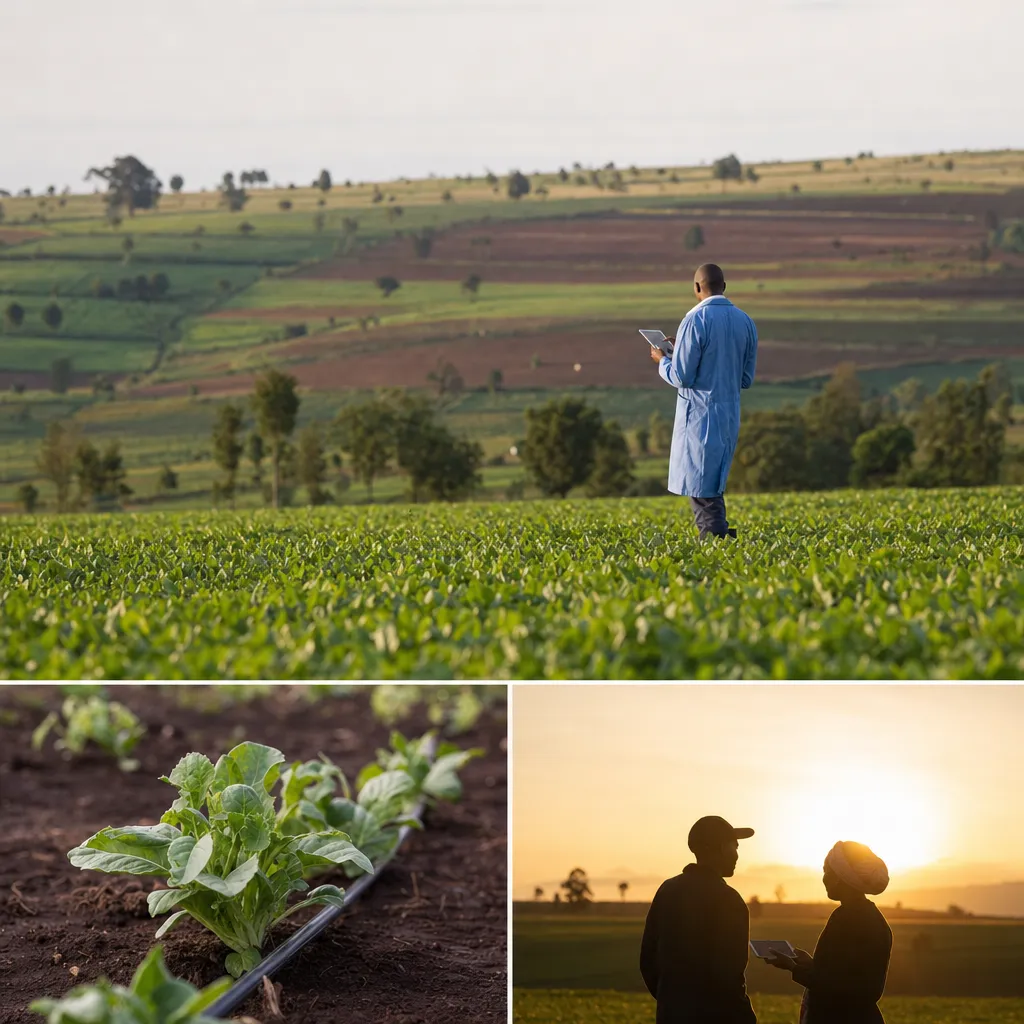
Kenya-based Farmerlifeline Technologies won the third Smart Africa–FAO Innovate Africa Challenge, securing a $50,000 grant for its solar-powered AI crop monitoring system for smallholder farmers.
Kenya-based Farmerlifeline Technologies has won the third Smart Africa–FAO Innovate Africa Challenge, securing a $50,000 implementation grant that will fund expansion of its solar-powered AI crop monitoring system across Kenyan fields. The win signals growing institutional attention to AI-driven early warning systems as a scalable solution to food security risks facing smallholder farmers across sub-Saharan Africa.
Background
The Innovate Africa Challenge is run jointly by Smart Africa — a continental digital transformation initiative with 40 member states — and the Food and Agriculture Organization of the United Nations. The 2026 edition focused specifically on AI tools applicable at the smallholder level: solutions that farmers without specialist training, reliable internet, or grid power could realistically deploy in the field. Farmerlifeline beat 11 finalists from Ghana, Kenya, Malawi, Rwanda, and Uganda to take the top prize.
What Farmerlifeline Built
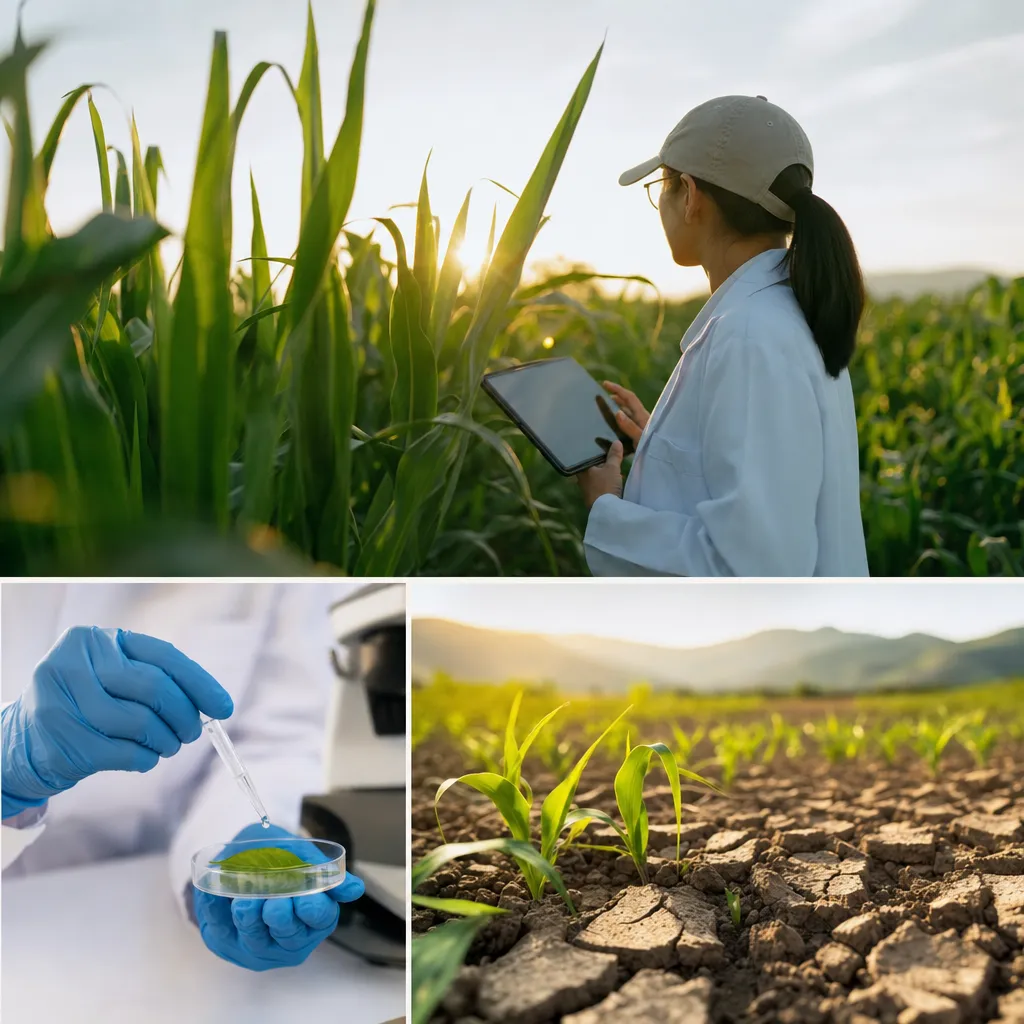
Farmerlifeline's platform centers on solar-powered AI cameras installed directly in crop fields. The cameras run computer vision models continuously, scanning for pests, diseases, and crop stress indicators — moisture deficits, yellowing, fungal lesions — at the earliest detectable stages.
The critical design choice is timing. By the time a pest infestation or fungal infection is visible to a walking farmer, yield loss is already locked in. Farmerlifeline's system is designed to catch damage signals before they cross the economically significant threshold, giving farmers and their agronomic support networks time to intervene.
Key features:
Get this in your inbox.
Daily AI intelligence. Free. No spam.
- Solar-powered operation — no dependency on grid electricity or fuel
- On-device AI inference — models run on the camera hardware, reducing connectivity requirements
- Early detection focus — targets pest and disease identification before visible damage appears
- Smallholder scale — designed for farms without dedicated agronomists or precision agriculture infrastructure
Why This Matters
Smallholder farmers — those managing fewer than two hectares — produce roughly 70% of the food consumed in sub-Saharan Africa, yet they face the continent's most acute access gaps in agricultural services. Regular field scouting by trained agronomists is expensive and logistically impractical across fragmented landholdings in rural areas. Without early warning, farmers typically act on pest or disease events only after crop damage is visible — meaning significant yield loss is already locked in before any response begins.
AI-powered continuous monitoring addresses that gap without requiring a human expert to visit each field. The solar-powered design sidesteps grid reliability issues that have historically limited IoT agriculture tools in rural East Africa. And the $50,000 implementation grant — modest by Silicon Valley standards — is sized specifically for field expansion in markets where deployment cost per hectare is the binding constraint.
Competition Context
The Smart Africa–FAO challenge has become one of the more credible signals of which African agtech solutions have passed rigorous multi-country evaluation. Previous challenge winners have attracted follow-on investment from development finance institutions including the International Finance Corporation and the African Development Bank. For Farmerlifeline, the win provides both capital and the kind of institutional validation that opens doors to public sector procurement and donor-funded expansion programs.
The 2026 field — 12 finalists from five countries — also reflects the breadth of AI agricultural innovation now emerging across the continent. Ghana, Malawi, Rwanda, and Uganda each fielded competitive entrants, suggesting the innovation is not confined to Kenya's relatively mature tech ecosystem.
What to Watch
Whether the $50,000 grant generates measurable farm-level outcomes will determine whether Farmerlifeline can attract follow-on investment at development-finance scale. Watch for announcements from IFC, the African Development Bank, or the Gates Foundation's agricultural program in the first half of 2027 — winners of this challenge have historically been fast-tracked for evaluation by those institutions. Also watch for replication attempts: a solar-powered on-device AI crop camera that actually works in rural East Africa is exactly the kind of reference design that other African agtech startups will attempt to adapt and localize.
Source: TechAfrica News
Did this help you understand AI better?
Your feedback helps us write more useful content.
Get tomorrow's AI briefing
Join readers who start their day with NexChron. Free, daily, no spam.