AI-powered precision agriculture platforms are no longer experimental — they're actively managing 70 million hectares of cropland across 30 countries, confirmed by $15 billion in AgTech investment in 2025.
AI Is Managing 70 Million Hectares of Farmland Across 30 Countries. The Pilot Phase Is Over.
By Hector Herrera | June 5, 2026 | Agriculture
AI-powered precision agriculture platforms are no longer experimental. They're actively managing more than 70 million hectares of cropland across 30 countries, according to a World Economic Forum analysis — coordinating IoT soil sensors, drone imagery, satellite data, and edge analytics into real-time farm operating systems that run continuously. The $15 billion invested in AgTech globally in 2025 was not venture speculation. It was the industry confirming that the technology works at commercial scale and the returns justify the investment.
Food systems face three simultaneous pressures: climate volatility increasing crop uncertainty, global demand continuing to rise, and labor shortages in agricultural regions on every continent. AI that demonstrably reduces input waste, improves yield prediction, and cuts labor dependency isn't an agricultural convenience. It's infrastructure.
Context
Precision agriculture — using sensors, data, and targeted inputs rather than blanket application across fields — has been technically possible for over a decade. The limiting factors were data integration, processing cost, and the practical challenge of deploying connected technology across farms in regions with inconsistent internet connectivity.
Those barriers have eroded materially. Edge computing (processing data locally on farm equipment rather than routing it through remote cloud servers) has reduced latency and connectivity dependency for real-time decisions. The cost of soil sensors, weather stations, and drone platforms has dropped significantly. AI models trained on decades of crop yield data can now generate agronomic recommendations — when to irrigate, how much fertilizer to apply, when to harvest — that outperform experienced human agronomists on yield prediction for specific crop-soil-climate combinations.
The result is a technology that crossed the commercial threshold somewhere in the past 18 months, and the 70 million hectare figure is the measurement of where it now stands.
What 70 Million Hectares Means in Practice
The WEF's figure covers platforms where AI is actively making operational recommendations that farm operators are following — not platforms installed but inactive, and not pilots in controlled research settings. It spans staple crops (corn, wheat, soybeans, rice) and specialty crops across North America, Europe, South America, East Africa, and Asia-Pacific.
Key operational capabilities documented across major deployed platforms:
Get this in your inbox.
Daily AI intelligence. Free. No spam.
Autonomous field equipment. AI-guided tractors equipped with GPS and computer vision perform soil preparation, planting, and spraying with centimeter-level precision, following paths optimized to minimize soil compaction and overlap. Labor reduction in commercial trials: 20-40% for fieldwork operations — a range that varies by crop type and farm configuration but represents a structurally significant shift in labor requirements.
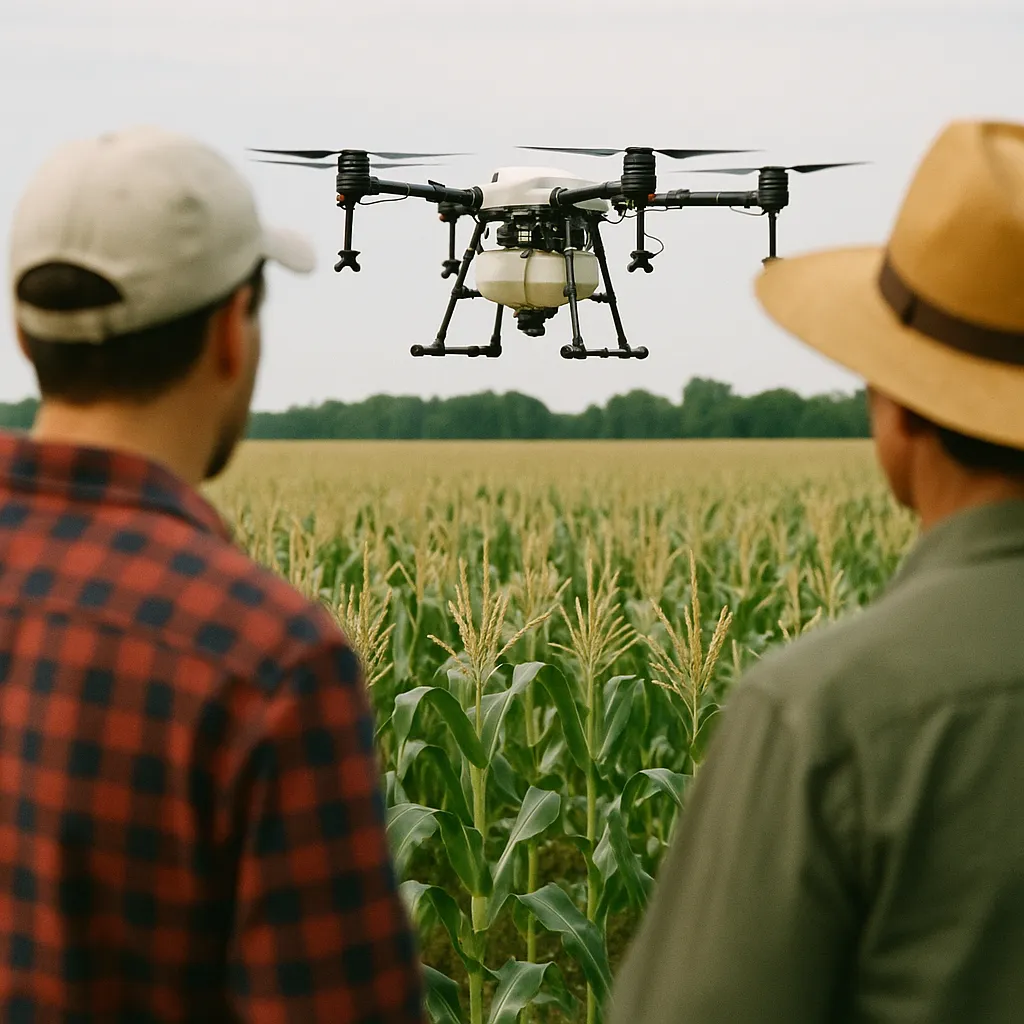
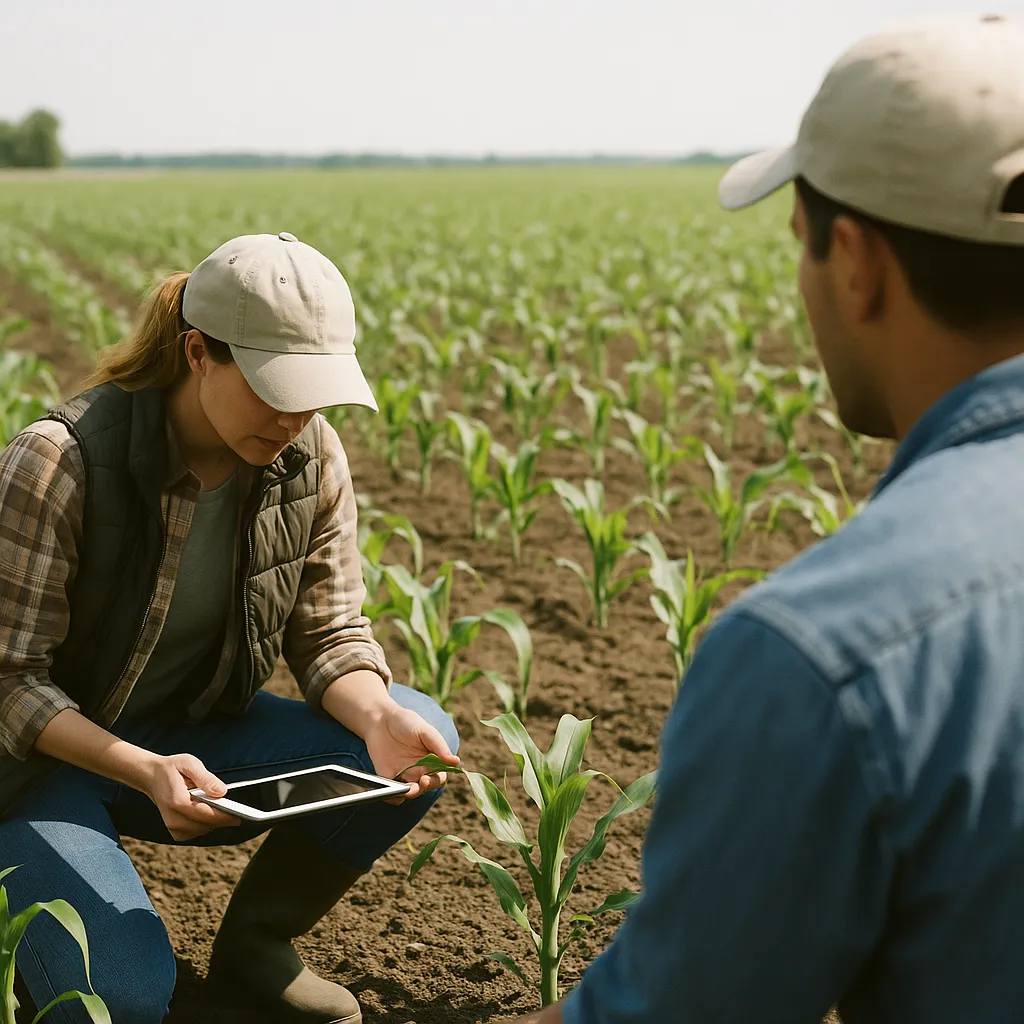
Satellite and drone integration. Multispectral imagery from satellite passes and scheduled drone flights feeds AI models that detect early-stage crop stress — nutrient deficiency, fungal infection, water stress — before it's visible to the human eye. Early detection enables targeted intervention rather than blanket preventive treatment, reducing input costs while preserving yield.
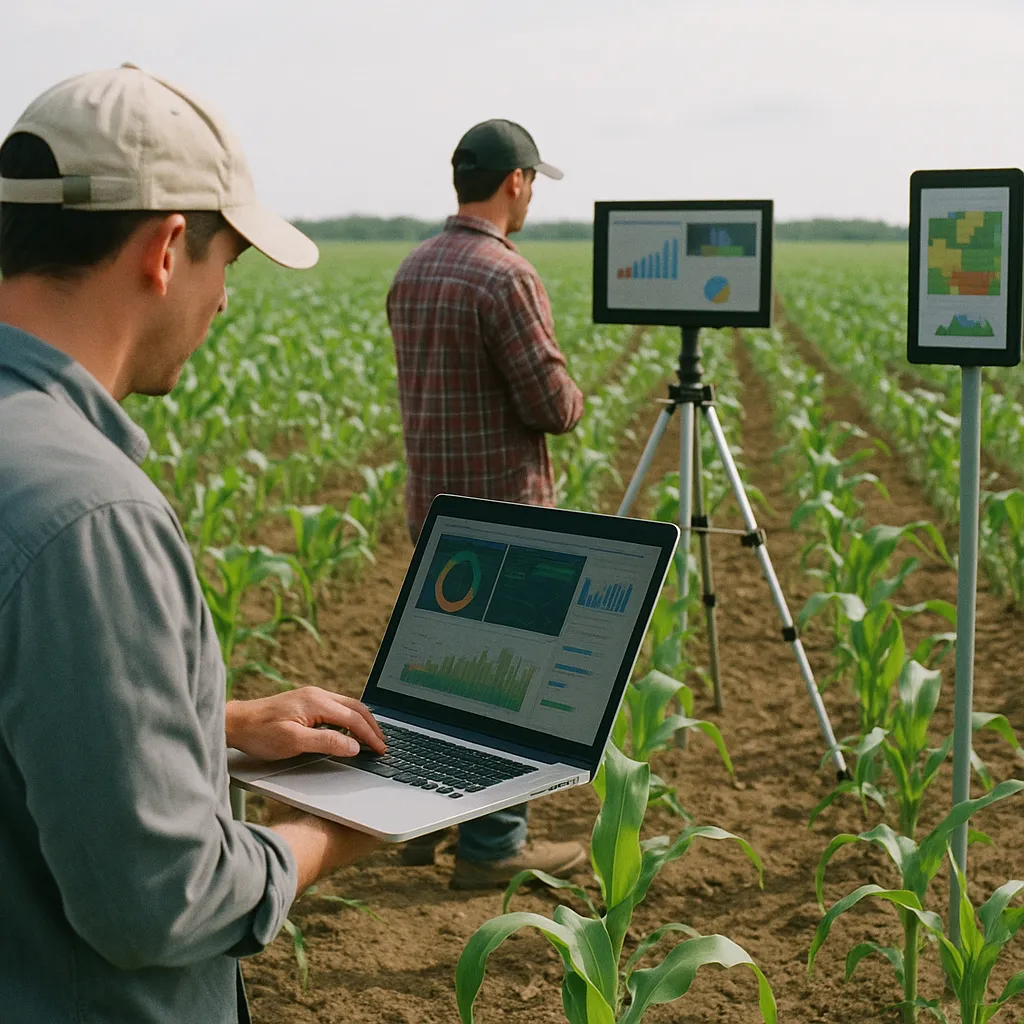
Predictive yield modeling. By integrating historical yield data, current-season growth indicators, and medium-range weather forecasts, AI platforms now provide yield estimates with sufficient accuracy to change input purchasing, storage planning, and forward contract decisions at the farm level. That accuracy is commercially valuable in ways that advisory recommendations alone are not.
Dynamic irrigation scheduling. Soil moisture sensors combined with AI scheduling have reduced water application by 20-30% in irrigated crop trials without yield reduction — a critical capability in water-stressed agricultural regions in the American West, Australia, India, and the Middle East.
Why Billion Went Into AgTech in 2025
Investment at that scale is driven by evidence, not optimism. The ROI case for precision agriculture AI has been established in enough commercial deployments that institutional investors and corporate acquirers are competing to fund the market-leading platforms.
The return mechanism is direct: input reduction (fertilizer, water, pesticides) and yield improvement both flow directly to farm economics. An operation managing AI-optimized inputs at commercial scale can reduce fertilizer costs by 15-25% while holding or improving yields. At commodity scale, those margins change the business fundamentally.
The consolidation dynamic is predictable: platforms with the largest agronomic datasets build the most accurate models. More accurate models attract the largest farm operators. Larger operators generate more data. The competitive moat compounds. The WEF analysis notes that current market leaders — firms with proprietary datasets spanning millions of acres across multiple growing seasons — are extending their advantages faster than new entrants can close the gap.
What This Means for Global Food Systems
The implications extend beyond individual farm economics. AI-managed precision agriculture, deployed at sufficient scale, changes how food systems respond to shocks.
A drought that previously caused regional crop failure can be partially mitigated by AI-optimized water use across millions of affected hectares. A disease outbreak detectable by AI imagery in its early stages can be contained before it spreads across a region. A supply chain disruption in fertilizer markets can be offset by AI systems that optimize variable-rate application based on actual crop need rather than standard protocols. The system-level resilience of AI-integrated agriculture is higher than the sum of individual farm benefits.
The access gap is the equity problem the sector hasn't solved. The farms with the most to gain from precision agriculture AI — smallholder operations in Sub-Saharan Africa, South Asia, and Southeast Asia — are also the least likely to have the connectivity, device access, and capital to deploy it. The WEF analysis flags this explicitly. The 70 million hectares figure is heavily concentrated in large commercial operations in wealthy agricultural markets. That means AI is compounding existing agricultural productivity disparities rather than equalizing them.
What to Watch
Several major AgTech platforms are building offline-capable, low-bandwidth versions of their AI systems specifically for smallholder markets in emerging economies — a category sometimes called "precision agriculture lite." Whether those efforts close the access gap or simply extend AI tools to a slightly larger tier of commercially-viable small operations will determine whether precision agriculture AI becomes a tool for global food security or primarily an efficiency gain for producers who already have the most.
The near-term signal to watch: Whether government procurement programs in food-insecure regions (particularly in East Africa and South Asia) adopt AI-based crop management tools at scale in the 2026-2027 planting seasons. That would be the clearest indicator that the technology is transitioning from commercial agriculture into food security infrastructure.
Did this help you understand AI better?
Your feedback helps us write more useful content.
Get tomorrow's AI briefing
Join readers who start their day with NexChron. Free, daily, no spam.