More than $3 billion has flowed into AI-powered precision agriculture for crop micronutrients. John Deere covers 5 million acres. Syngenta manages 70 million hectares. Smallholder farmers are being left behind.
$3.15 Billion Flows Into AI-Powered Crop Micronutrients as Precision Agriculture Scales
More than $3 billion has flowed into AI-powered precision agriculture focused on crop micronutrients alone — and the technology is already operational at scale on tens of millions of acres worldwide. The equity gap it is creating between large commercial operations and smallholder farmers is widening just as fast.
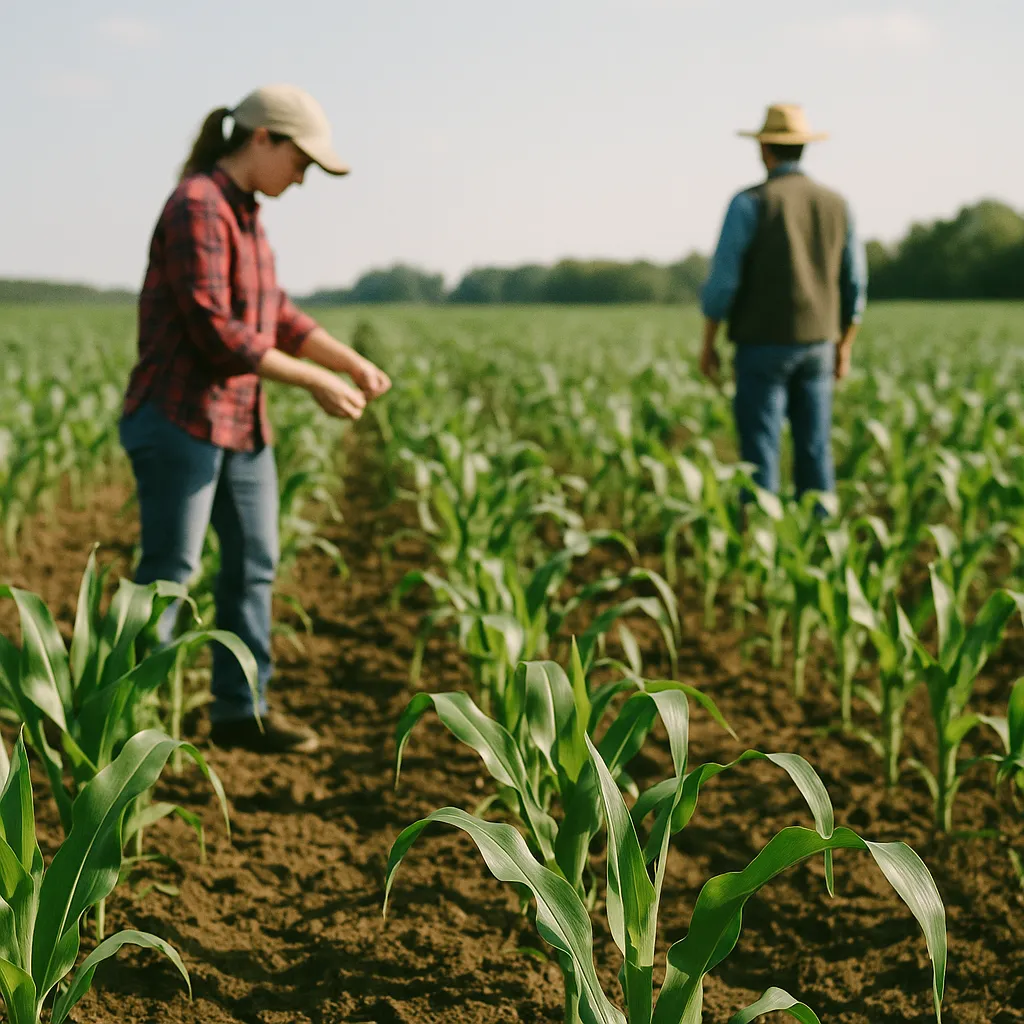
A market analysis finds the AI-powered crop micronutrient segment has attracted $3.15 billion in investment, driven by systems that detect soil and plant deficiencies at the individual-plant level. Rather than applying fertilizers and micronutrients uniformly across entire fields — the standard approach — AI vision systems now identify which specific plants are deficient and apply precisely what is needed, where it is needed, when it is needed.
How Precision Micronutrient Technology Works
Micronutrients — zinc, boron, manganese, iron, and related trace elements — are essential to plant health in small quantities but often absent or unevenly distributed across agricultural soil. Over-application causes environmental damage through runoff contamination. Under-application suppresses yields without generating obvious diagnostic signals until the damage is measurable. Traditional field-level application handles neither problem well.
AI-powered precision systems address this through three integrated layers:
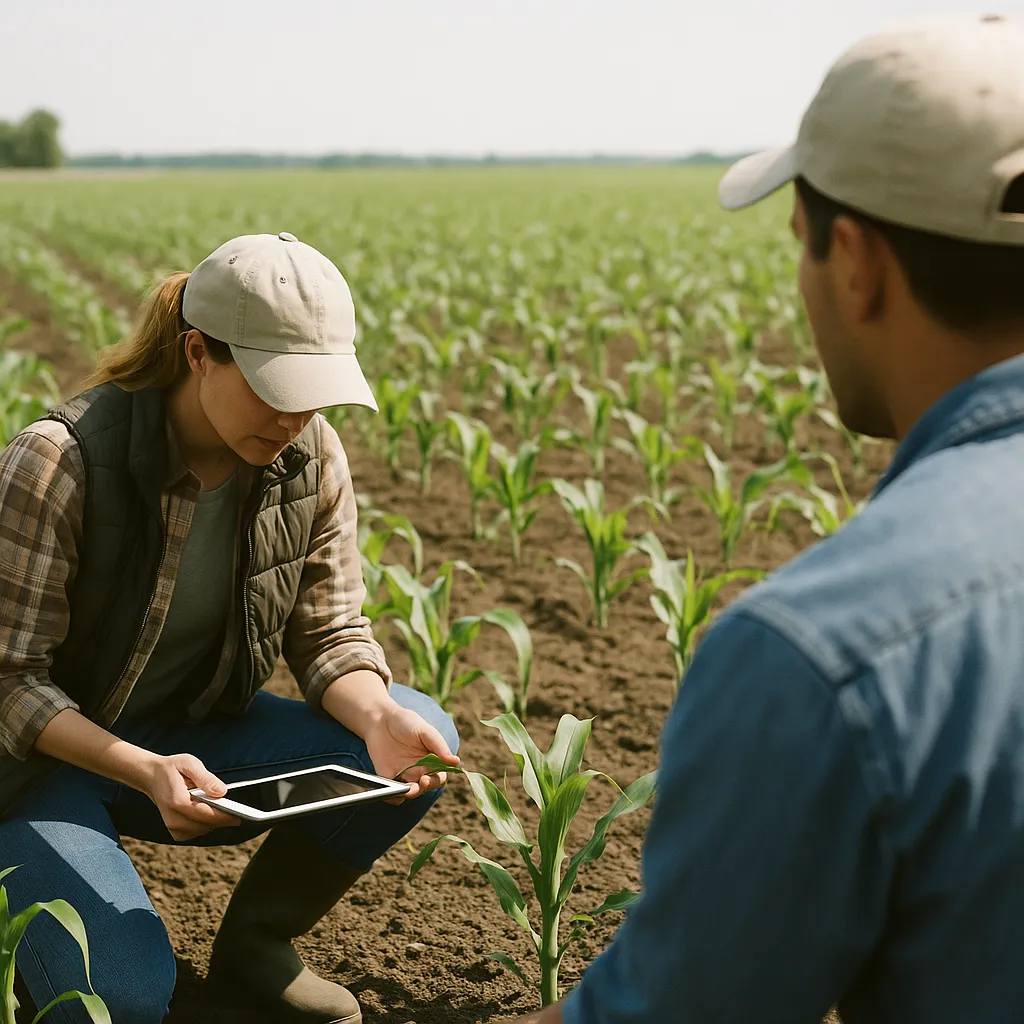
Vision and sensing. Camera arrays and multispectral sensors scan crops throughout growing cycles, detecting visible and near-infrared markers of nutrient deficiency — changes in leaf color, texture, chlorophyll density, and growth rate — at a resolution that enables individual-plant diagnosis across commercial-scale fields.
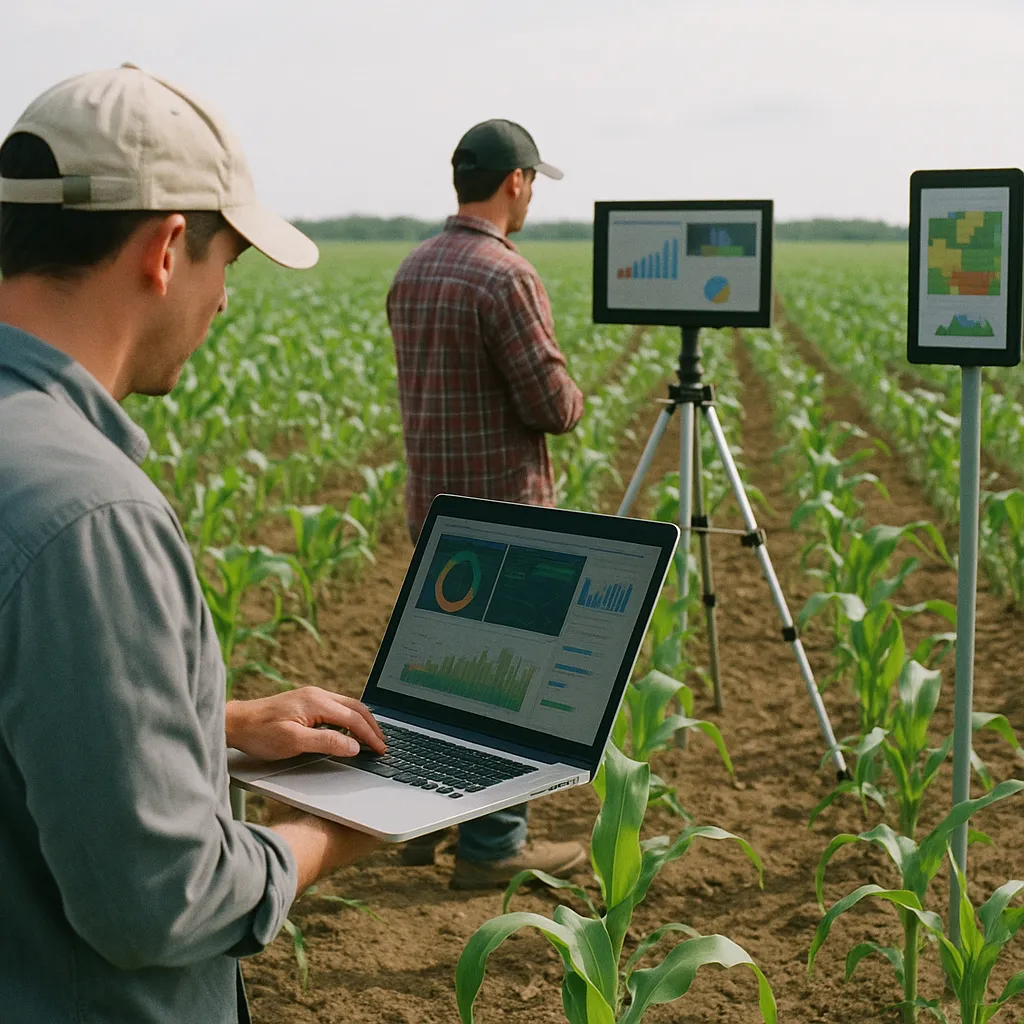
Predictive modeling. Machine learning models correlate real-time sensor data with historical soil samples, satellite imagery, and weather feeds to predict where deficiencies will emerge before they become visible. Pre-emptive treatment prevents yield loss rather than reacting to it.
Precision application. AI-guided sprayer systems apply micronutrient inputs at specific locations and concentrations, reducing total input volume while improving effective coverage. The environmental calculation changes: less product, better distribution, lower runoff per unit of crop output.
Where the Scale Is
Two deployments illustrate how far this technology has advanced from the pilot stage.
Get this in your inbox.
Daily AI intelligence. Free. No spam.
John Deere's See and Spray technology now covers 5 million North American acres. The system uses computer vision to distinguish between crops and weeds at high processing speeds, directing herbicides or targeted inputs only where needed. John Deere has reported herbicide use reductions of up to 77% in active deployments — a figure that fundamentally changes the input cost economics for large commercial operators.
Syngenta's Cropwise platform manages agronomic data across 70 million hectares in 30 countries, integrating soil health monitoring, pest and disease modeling, and precision nutrient recommendations. At that scale, Cropwise is one of the largest AI deployments in any industry, operating across diverse soil types, climates, and regulatory environments. The platform provides a unified data layer that connects field sensors, satellite feeds, and equipment telemetry into actionable agronomic guidance.
Both platforms depend on data pipelines that take years to build and significant capital to operate. That investment horizon creates durable moats — but also limits how quickly the technology can spread to operators who can't make multi-year platform commitments.
The Equity Problem
The aggregate investment figures mask a structural inequity. Most of the gains are concentrating in large-scale operations — farms of 1,000 acres or more — that have the capital to purchase or lease precision agriculture equipment, pay for ongoing data subscriptions, and employ agronomists capable of interpreting AI-generated recommendations in context.
Smallholder farmers face prohibitive upfront costs. AI vision systems require compatible field equipment, reliable connectivity infrastructure, and software subscriptions. In many markets across Sub-Saharan Africa, South Asia, and Latin America, those requirements are simply out of reach for a 5- or 10-acre operation.
The equity gap matters beyond fairness. Smallholders — who account for roughly 70% of global food production but operate on far smaller land bases — often use more input per unit of output than large-scale operations, contributing disproportionately to agricultural runoff and soil degradation. Extending precision tools to smaller farms would deliver environmental gains the current $3.15 billion investment wave is not reaching.
The consolidation dynamic is also self-reinforcing. Large operators using AI-guided micronutrient application see yield improvements and input cost reductions that compound over seasons. Those gains fund further technology investment. The gap between precision-equipped and traditional operators widens each growing cycle.
What to Watch
The Farm Bill provisions currently under Congressional debate include AI technology subsidy language — but most proposed support is directed at mid-to-large commercial operations. Watch whether any final legislation creates cooperative purchasing programs or tiered subsidy structures that extend access to smaller and beginning farmers.
Syngenta's Chinese state ownership — the company was acquired by ChemChina, a state-owned enterprise — raises an unresolved data security question for U.S. and EU farmers using Cropwise. Several governments are reviewing whether production data flowing through platforms with Chinese state ties creates national security exposure. That question is active and unresolved.
The deeper technology question is whether AI precision platforms can achieve meaningful efficacy at smaller scale — whether agricultural cooperatives, agri-service providers, or equipment-as-a-service programs can bridge the economics gap without requiring individual smallholder ownership of full-scale precision systems. The investment is flowing. The distribution problem remains unsolved.
Source: GlobeNewsWire
Did this help you understand AI better?
Your feedback helps us write more useful content.
Get tomorrow's AI briefing
Join readers who start their day with NexChron. Free, daily, no spam.