White-collar knowledge workers now carry the highest AI displacement risk in the U.S. economy — and women represent 86% of the most exposed occupations, per a Washington Post analysis.
White-Collar Workers Now Lead AI Displacement Risk as New Analysis Maps Job Exposure
By Hector Herrera | May 1, 2026 | Work
White-collar knowledge workers — not the factory workers displaced by prior automation waves — now carry the highest AI job exposure risk in the U.S. economy, according to a Washington Post interactive analysis mapping AI vulnerability across the occupational landscape. The finding inverts the conventional picture of who automation threatens and points toward a near-term labor market disruption concentrated at the desk, not the factory floor.
The Analysis
The Washington Post interactive analysis maps AI exposure by occupation based on the cognitive tasks AI can now perform reliably. The picture it produces is striking in what it reverses.
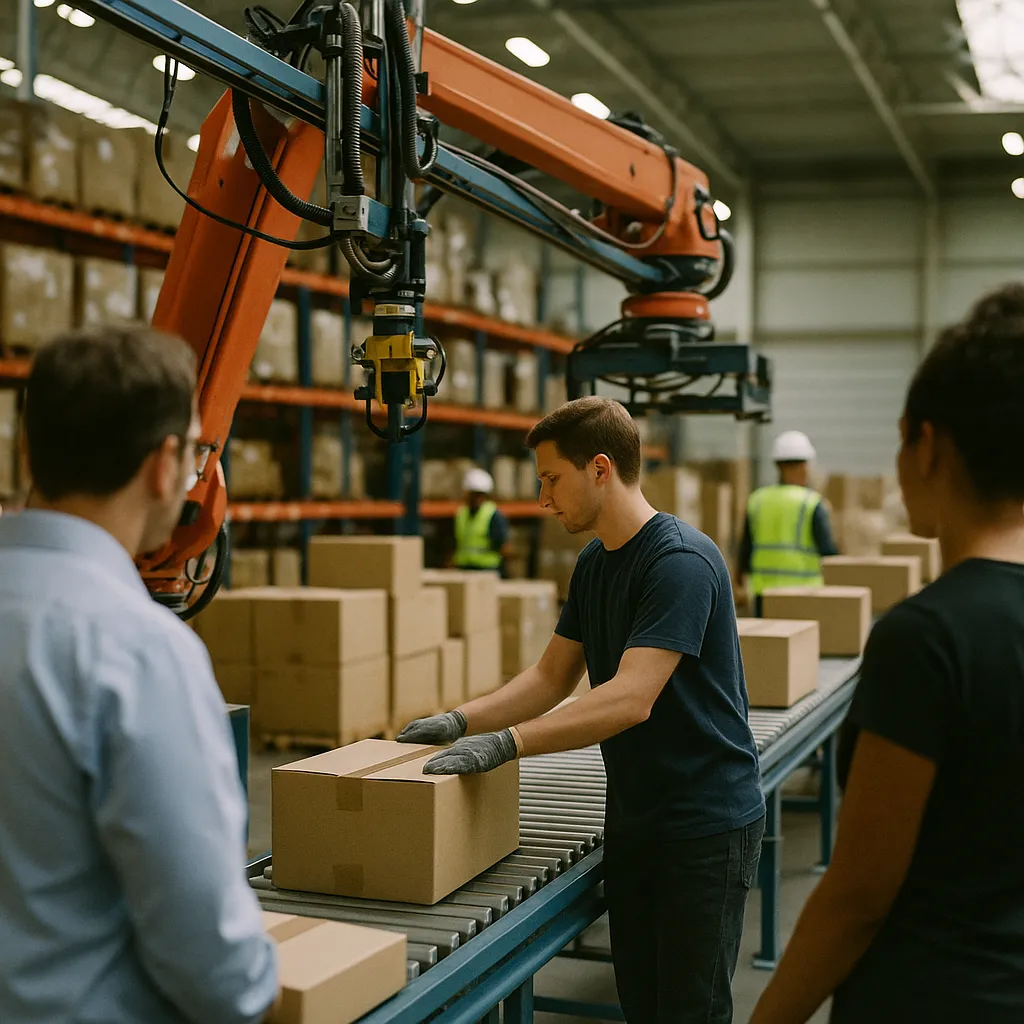
Prior automation waves — industrial robotics, computerized manufacturing, logistics automation — disproportionately displaced physical labor. The workers most exposed were those performing repetitive physical tasks: assembly line workers, machine operators, warehouse pickers. Policy conversations about automation and workforce retraining were built largely around that population.
AI's exposure map looks entirely different. The occupations with the highest AI vulnerability are those whose core work involves information processing, document production, pattern recognition, and structured decision-making. Paralegals, financial analysts, administrative coordinators, data entry specialists, and categories of junior knowledge work all appear in the high-exposure tier.
The Numbers
AI has already reduced U.S. monthly payroll growth by approximately 16,000 jobs over the past year, according to the analysis, and has nudged the unemployment rate up by 0.1 percentage point. These are modest numbers in the context of the full U.S. labor market — but they represent a directional signal at the early stage of a structural transition that could accelerate significantly.
The demographic concentration is more striking. Women represent approximately 86% of the workers in the most AI-exposed occupations. That is not accidental. It reflects decades of labor market sorting that concentrated women in exactly the administrative, coordination, and information-processing roles where AI capability is advancing most rapidly. The near-term costs of this automation wave are not evenly distributed.
Get this in your inbox.
Daily AI intelligence. Free. No spam.
What Makes a Job AI-Exposed
The analysis applies a framework that distinguishes high-exposure jobs from lower-exposure jobs based on several characteristics:
- Task structure: Jobs built around well-defined tasks with clear inputs and outputs are more exposed than those requiring open-ended judgment and contextual discretion.
- Document intensity: Roles that primarily involve producing, processing, or organizing documents are highly exposed to current language model capabilities.
- Decision formalization: Jobs where decisions follow established rules, precedents, or structured criteria are more automatable than those requiring contextual human judgment.
- Physical presence: Jobs requiring physical presence in unpredictable environments remain substantially less AI-exposed, despite advances in robotics.
Many white-collar roles involve a mix — some tasks that are highly automatable and some that are not. The near-term impact is most likely to manifest as job compression (fewer workers needed for the same output volume) and role restructuring rather than outright elimination, at least initially. But the compression is real.
The Policy Gap
Prior automation policy was built around a manufacturing displacement model: workers lost factory jobs, retraining programs pointed toward service sector employment, and community colleges offered credentials in healthcare and skilled trades. That model maps poorly onto white-collar displacement.
Retraining a displaced paralegal or financial analyst requires different interventions than retraining a displaced assembly line worker. The roles they might move into sit behind higher education requirements and steeper credential barriers. And if the displacement is concentrated among women, the policy response must account for the caregiving constraints and wage gaps that already shape women's labor market participation.
Congress has not passed federal AI workforce legislation. The policy conversation remains largely at the research and advocacy stage, with no near-term legislative path visible.
What This Means for Employers
For companies, the analysis is a signal to accelerate honest internal assessments of which roles are genuinely AI-augmented — workers doing more with AI assistance — versus which are likely to see headcount reduction over a two-to-three year horizon. The reputational and morale costs of sudden large-scale layoffs are substantially higher than the cost of transparent, planned workforce transitions.
Several large employers in finance, legal services, and administrative functions have begun restructuring knowledge work roles around AI-augmented workflows, reducing headcount gradually through attrition rather than announced reduction waves. That approach is less disruptive — but it requires planning that starts now.
For workers in high-exposure occupations, the analysis points toward two durable paths: building skills in AI-adjacent areas (workflow design, AI oversight, prompt engineering) or moving toward roles where human judgment, physical presence, and relational skills are the core of the value delivered.
What to Watch
Monthly jobs reports are the near-term indicator. If the current AI-attributable payroll reduction — roughly 16,000 jobs per month — accelerates through 2026, pressure on Congress to act on workforce policy will intensify. Watch also for how major employers in finance, legal services, and administrative functions disclose AI-driven workforce changes in quarterly earnings commentary. Those disclosures are becoming a real-time proxy for the pace of white-collar automation and are increasingly being scrutinized by labor advocates and lawmakers alike.
Did this help you understand AI better?
Your feedback helps us write more useful content.
Get tomorrow's AI briefing
Join readers who start their day with NexChron. Free, daily, no spam.