Unemployment for workers aged 22-27 has risen to 5.4% as AI cuts early-career knowledge work—while Ford, AT&T, and others ramp up hiring for skilled trades.
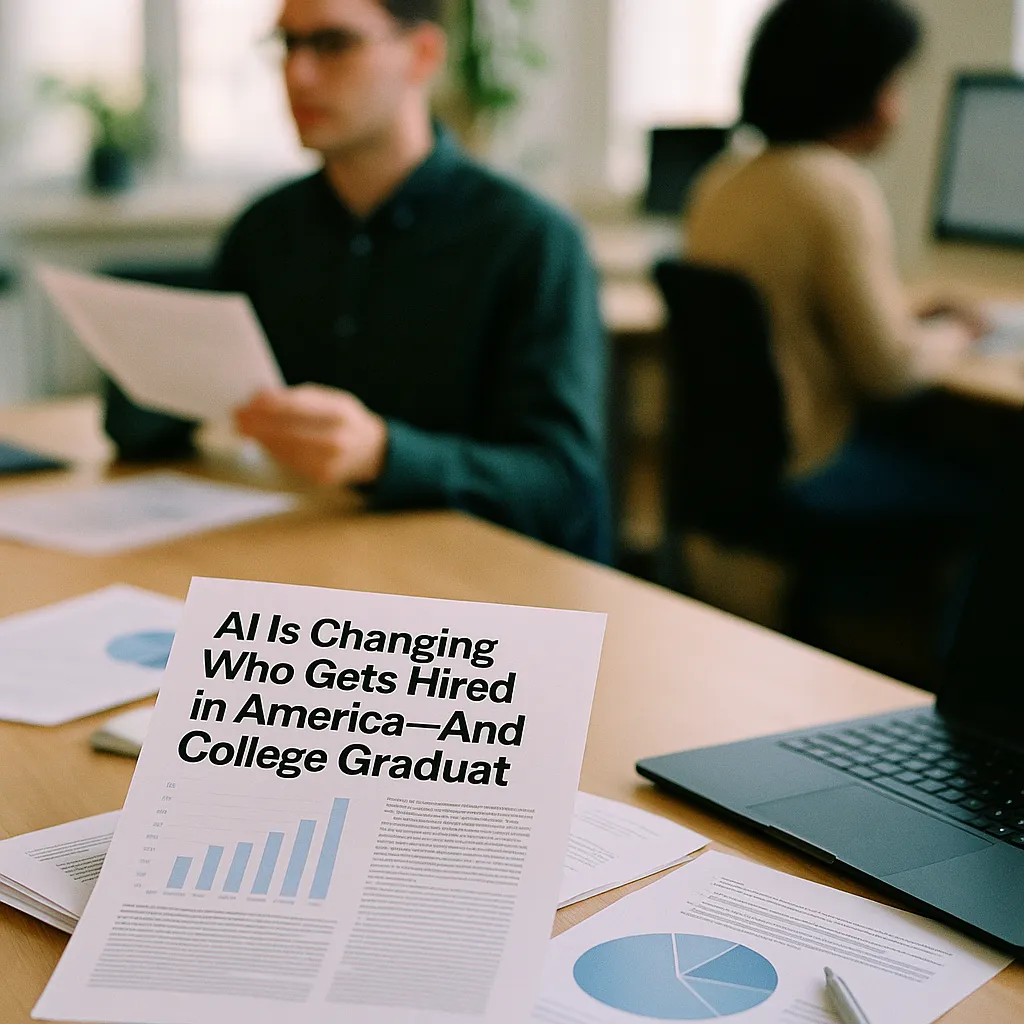
AI Is Changing Who Gets Hired in America—And College Graduates Are Losing Ground
By Hector Herrera | May 22, 2026
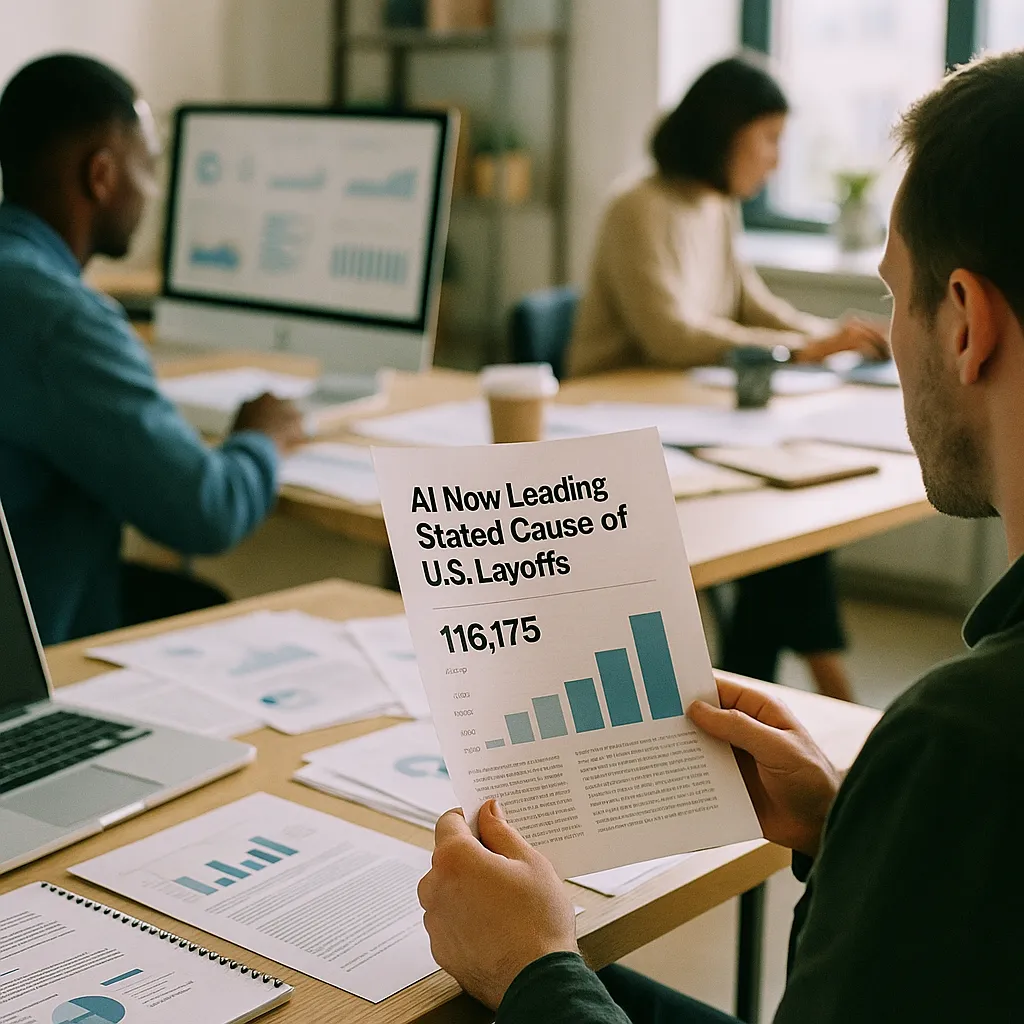
Unemployment for workers aged 22 to 27 has risen to 5.4%—well above historical averages for that cohort—as AI-driven automation eliminates the entry-level knowledge work roles that a four-year degree was supposed to unlock. At the same time, companies including Ford and AT&T are ramping up hiring for skilled trades that AI cannot yet automate at scale. A May 2026 CNBC analysis documents the bifurcation in concrete numbers: the U.S. labor market is structurally rewarding different skills than it did five years ago, and the education system has not caught up.
Why it matters: The entry-level job is where workers build skills, credentials, and professional networks. If AI is compressing or eliminating that first rung of the career ladder, the consequences will compound across decades—not just the first year out of school.
Who Is Getting Hit
According to CNBC, the damage is concentrated in roles with high AI exposure:
- 5.4% unemployment for the 22-27 age cohort, compared to a pre-AI-acceleration historical average closer to 4%
- 16% slower employment growth for early-career workers in high-exposure roles—software development, marketing, HR, data analysis—compared to peers in low-exposure occupations
- College graduates are disproportionately concentrated in AI-exposed fields, because white-collar knowledge work was precisely what four-year degree attainment was marketed to deliver
The irony is direct: the jobs that colleges trained students for are the jobs that AI tools are replacing first.
This is not evenly distributed across all college graduates. Early-career workers in engineering, nursing, skilled clinical roles, and certain STEM fields are faring better. The hardest-hit cohort is graduates in business, communications, marketing, and general technology roles—fields where AI tools have most rapidly reduced the junior headcount companies need.
The Trades Are Hiring
The other side of the ledger: skilled trade roles are experiencing strong and accelerating demand, with wages rising to reflect the shortage.
- Ford is expanding technician and manufacturing headcount tied to EV production lines and maintenance facilities
- AT&T is building out field technician capacity for fiber network installation and 5G infrastructure deployment
- Construction, electrical, plumbing, HVAC, and industrial maintenance are all reporting labor shortages with growing wage premiums
Skilled trades typically require 2-4 years of vocational training or apprenticeship rather than a four-year degree. In 2026, the wage premium for a licensed electrician or HVAC technician is increasingly competitive with entry-level software or marketing roles—and in many markets, exceeds them.
Get this in your inbox.
Daily AI intelligence. Free. No spam.
The critical difference from an AI-exposure standpoint: trade work requires physical presence, manual dexterity, contextual judgment in variable environments, and real-world problem-solving that current AI systems cannot replicate at commercial scale. An AI can draft marketing copy in seconds. It cannot install a 200-amp electrical panel in an aging commercial building.
What Is Driving the Gap
Three forces are converging to create this bifurcation:
AI code generation has dramatically reduced the entry-level software engineering headcount companies need. Tools from GitHub Copilot, Anthropic, and OpenAI allow senior engineers to handle work that previously required several junior developers. The ratio of senior-to-junior hires has shifted accordingly.
AI content and marketing tools have compressed demand for early-career copywriters, social media coordinators, and junior analysts. Tasks that took a junior team a week—drafting email campaigns, generating reports, creating ad copy variants—now take one experienced person a day with AI assistance.
HR and administrative automation has reduced entry-level roles in recruiting, data entry, and operations coordination that once served as career entry points in large enterprises. These roles are among the most thoroughly automated by AI workflow tools.
The cumulative result is a bifurcated market: workers who can direct, evaluate, and manage AI tools—typically mid-career and senior professionals—are seeing rising demand. Workers who were hired to do the tasks AI now handles are competing for fewer positions in shrinking entry-level pools.
What to Watch
For workers: The CNBC data suggests that vocational skills training may offer better near-term labor market outcomes than several traditional four-year degree paths—particularly in fields with high AI exposure. Workers entering AI-exposed fields should invest in developing skills that complement AI rather than compete with it: system design, AI output evaluation, client relationship management, and domain expertise that contextualizes AI results.
For employers: Companies systematically cutting early-career pipelines risk creating a mid-career talent shortage in 5-10 years, when those workers would have accumulated the experience to move into senior and leadership roles. The organizations that invest now in AI-augmented apprenticeships and structured early-career development may have a significant talent advantage a decade from now.
For universities: The mismatch between what colleges are producing and what the labor market is demanding is sharpening in real time. Watch for federal and state workforce training funding to accelerate its shift toward AI literacy, trades credentials, and hybrid programs that combine domain expertise with applied AI skills. Universities that do not restructure curricula in high-exposure fields are preparing students for a labor market that is already changing around them.
For policymakers: The structural labor market shift documented here is not a cyclical downturn. It is a persistent reallocation of which skills command a wage premium. Policy responses that treat it as temporary—extended unemployment benefits, retraining for the same exposed roles—will be inadequate. Durable responses require rethinking how vocational education is funded, credentialed, and connected to employer pipelines.
Source: CNBC
Did this help you understand AI better?
Your feedback helps us write more useful content.
Get tomorrow's AI briefing
Join readers who start their day with NexChron. Free, daily, no spam.