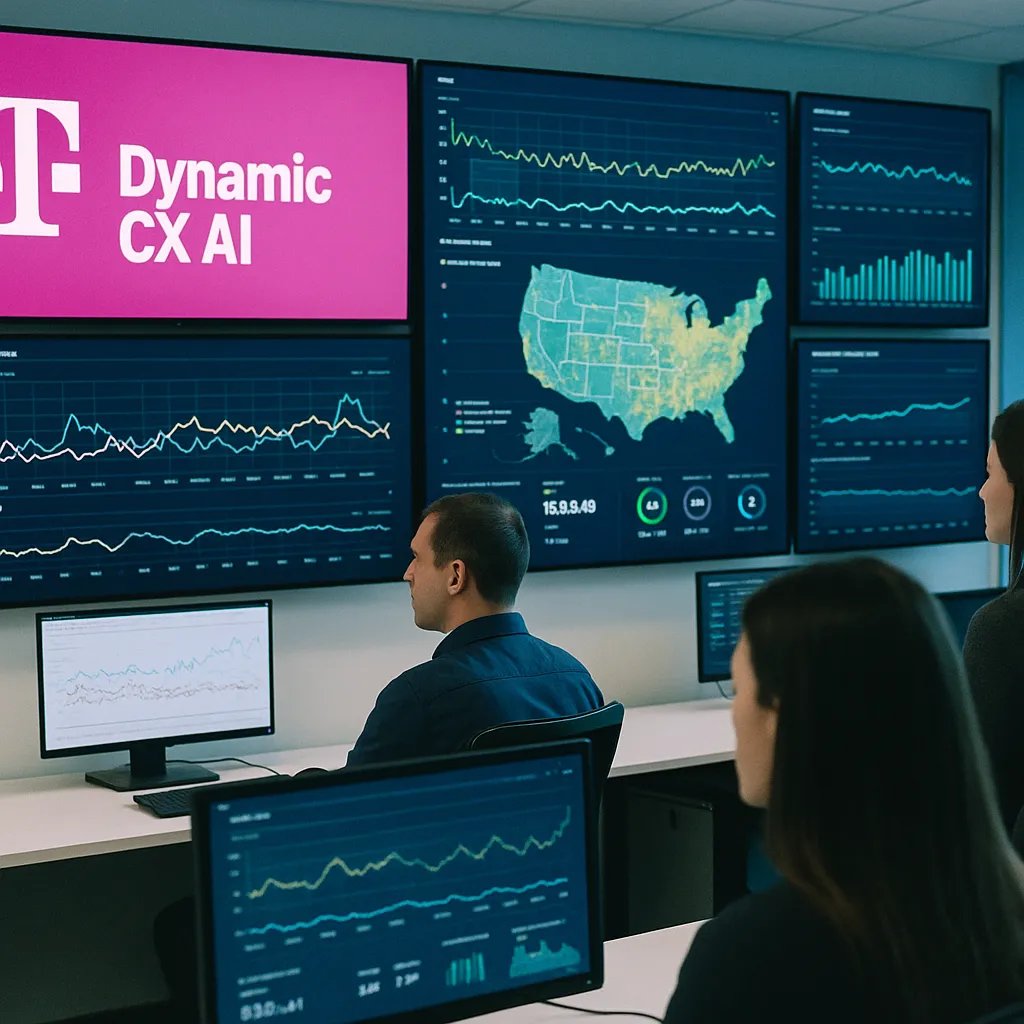
For the first time, network automation has overtaken customer service as telecoms' top AI investment priority — a structural shift from chatbots to the infrastructure layer itself.
Eighty-nine percent of global telecom operators plan to increase AI spending over the next 12 months — and for the first time, network automation, not customer service, is their top investment priority. A new NVIDIA survey of telecom executives signals a structural shift in how carriers are deploying AI: it's moving from chatbots in the contact center into the infrastructure layer of the world's communications networks.
The Distinction That Matters
Telecoms have deployed AI in customer-facing roles for years — routing calls, predicting churn, handling billing questions via chatbot. That deployment is now treated as table stakes across the industry, not a competitive differentiator.
The shift to network automation is different in kind, not just degree. Network AI operates on radio access networks (RAN), core infrastructure, and edge systems — the physical and logical layers that determine how data moves, where it routes, and what happens when equipment fails. Decisions happen in milliseconds and affect millions of connections simultaneously.
What telecoms say they're investing in:
- RAN optimization — Radio access network management that dynamically adjusts how mobile devices connect to towers based on real-time demand, interference patterns, and coverage
- Core infrastructure management — Self-healing and self-optimizing packet routing that responds to congestion and failures without human intervention
- Edge operations — AI inference at distributed edge nodes to reduce latency for real-time applications, from video to industrial IoT
- Predictive maintenance — Identifying equipment likely to fail before it does, reducing outages and emergency repair costs
Why Network Automation Became the Priority
Three forces converged to push network automation ahead of customer experience in the budget priority stack:
5G complexity. 5G networks are fundamentally more complicated than 4G — more spectrum bands, more antenna configurations, more interdependencies between software-defined components. The configuration space is too large for manual optimization. AI can tune these systems at a speed and granularity that human engineers can't.
Energy costs. Mobile networks consume significant power. AI-optimized traffic routing and dynamic sleep modes for lightly loaded equipment reduce energy consumption. The business case strengthened during the energy price spikes of 2024-2025 and hasn't weakened since.
Get this in your inbox.
Daily AI intelligence. Free. No spam.
Competition from hyperscalers. Amazon, Google, and Microsoft are each offering enterprise networking services that compete directly with telcos' enterprise connectivity business. The sustainable advantage for carriers is network quality that hyperscalers can't replicate — and AI-optimized networks are the primary tool for maintaining that edge.
NVIDIA's Stake in This Survey
The NVIDIA survey comes with an obvious commercial interest caveat: NVIDIA sells the GPU infrastructure and networking hardware that telecoms buy when they invest in AI. A finding that 89% of telecoms are increasing AI budgets is good news for NVIDIA's data center and networking divisions.
That doesn't make the finding wrong. Multiple independent telecom industry analyses from Ericsson, Nokia, and consulting firms consistently show network automation rising in priority. But vendor-commissioned surveys tend to frame findings optimistically, and the 89% figure should be read with that context in mind.
The more useful signal is directional: across every available data source, the trend is the same. Customer service AI is mature. Network AI is where the next wave of investment is going.
What It Means for Enterprise Customers
For businesses buying telecom services, AI-optimized networks translate to different outcomes depending on what you need:
- Reliability buyers — hospitals, logistics companies, financial institutions — benefit from predictive maintenance and self-healing networks that catch failures before they become outages
- Latency-sensitive buyers — real-time applications, autonomous systems, manufacturing floor connectivity — benefit from edge AI that routes traffic intelligently and reduces processing delays
- Bandwidth-heavy buyers — media companies, cloud storage providers, large enterprise campuses — benefit from dynamic capacity allocation that prevents congestion during peak demand
The practical impact will materialize over 2-3 years. Network AI infrastructure requires capital expenditure, integration work, and significant operational change — not software updates that deploy overnight.
What to Watch
The equipment contract cycle is the leading indicator. When Ericsson, Nokia, or Samsung Networks signs a large AI network management contract with a Tier 1 carrier, it signals that a specific implementation approach has crossed from pilot to production confidence. Watch for contract announcements over the next six months.
Also watch for SLA evolution. If telecoms start offering AI-backed uptime guarantees that exceed current industry standards — 99.999% availability with AI-monitored response commitments, for example — it indicates the technology is working well enough to bet on commercially. That's when the customer benefit becomes contractual rather than theoretical.
By Hector Herrera | April 20, 2026
Did this help you understand AI better?
Your feedback helps us write more useful content.
Get tomorrow's AI briefing
Join readers who start their day with NexChron. Free, daily, no spam.