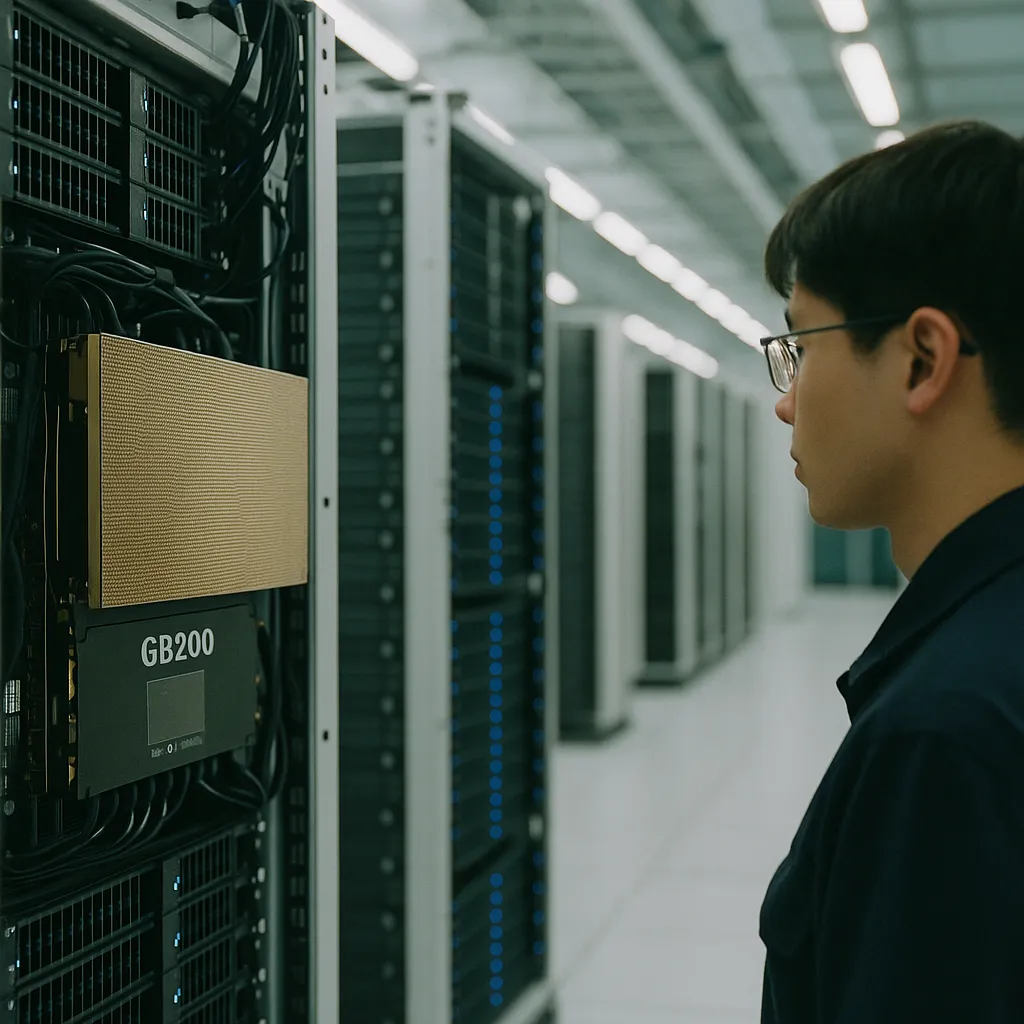
Major operators including Orange, SK Telecom, and Optus are rebuilding fiber, data centers, and radio access networks around AI-native architectures — with Deutsche Telekom reporting 65% lower energy use in initial 5G tests.
Telecom Operators Are Rebuilding Entire Network Stacks Around AI-Native Architecture
By Hector Herrera | October 4, 2026
The telecom industry doesn't rebuild infrastructure quickly. Capital cycles run in decades, not years, and operators are notoriously conservative about replacing systems that are working. Which is why it matters that Orange, SK Telecom, Optus, and Deutsche Telekom are not adding AI on top of their existing networks — they're rebuilding fiber routes, data center configurations, and radio access networks from the ground up around AI-native architectures.
Deutsche Telekom put a number to it: up to 65% lower energy consumption in initial live 5G core tests using its Full Stack Energy Efficiency AI approach. If that figure holds at commercial scale, it doesn't just change the economics of running a network — it changes the economics of AI infrastructure broadly.
The Difference Between AI-Assisted and AI-Native
Most telecom networks today are AI-assisted. Engineers design and configure the network; AI tools optimize specific parameters, predict failures, and recommend adjustments. Humans set the rules; AI helps execute and refine them. This is valuable, but it's incremental.
An AI-native network architecture works differently. The AI doesn't optimize on top of human-designed rules — it manages the network's fundamental operations directly. Radio resource allocation, traffic routing, energy management, interference coordination, and fault response are all handled by AI systems that learn continuously from live network conditions rather than operating within fixed parameters.
The distinction matters in practice. A conventional 5G radio access network (RAN) manages spectrum allocation using rules set by network engineers. An AI-native RAN (AI-RAN) allocates spectrum dynamically, millisecond by millisecond, based on real-time traffic patterns across the entire coverage area. The result is higher throughput with less interference — but only if the underlying infrastructure is built to support continuous AI inference at network edge.
That's why operators are not just swapping out software. They're rebuilding the infrastructure that AI-native operation requires: edge compute nodes co-located with radio equipment, fiber routing optimized for low-latency inference rather than just bandwidth, and data center architectures designed for continuous AI workloads rather than batch processing.
What the Operators Are Actually Doing
Orange (France, serving 30+ countries) is integrating AI-RAN architecture into its next-generation network rollout, with AI-managed radio resource management replacing rules-based systems in new deployment areas.
Get this in your inbox.
Daily AI intelligence. Free. No spam.
SK Telecom (South Korea) has been one of the most aggressive AI-native adopters globally. The company's network AI has moved from pilot to production across significant portions of its Korean network, with international deployments through joint ventures in Asia and the Middle East following the same architecture.
Optus (Australia) is rebuilding its data center and backhaul architecture to support AI inference workloads at the edge — a prerequisite for AI-native RAN that is often overlooked in coverage of network AI.
Deutsche Telekom's Full Stack Energy Efficiency AI covers the entire network stack — radio, transport, and core — rather than optimizing individual layers in isolation. The 65% energy efficiency figure from initial live tests comes from this whole-stack approach, where AI coordinates energy management across all layers simultaneously rather than optimizing each layer independently.
Why the Energy Numbers Matter
Telecom networks consume enormous amounts of electricity. In Germany alone, Deutsche Telekom's network infrastructure consumed an estimated 2.5 TWh annually in recent years. A 65% reduction in that consumption — if representative of full-network deployment — would represent roughly 1.6 TWh of annual savings from a single operator in a single country.
At that scale, network energy efficiency improvements are not just a cost story — they're an emissions story. Telecom infrastructure accounts for approximately 1.5–2% of global electricity consumption. AI-native efficiency gains across the industry would produce measurable reductions in grid demand, relevant to both operators' net-zero commitments and the broader energy conversation around AI infrastructure growth.
The irony here is real: AI systems require significant compute and thus significant energy to run. The claim that AI-native networks use less energy depends on the AI's efficiency gains being larger than the AI's own operational energy cost. Deutsche Telekom's 65% figure suggests that equation resolves positively — at least in initial testing.
The Vendor Implications
Nokia and Ericsson, the two dominant western network equipment vendors, are both racing to deliver AI-native hardware and software. Both have announced AI-RAN products; both are investing heavily in the edge compute capabilities that AI-native operation requires. Ericsson's Cognitive Software portfolio and Nokia's Network as Code platform are their respective responses to the operator demand these rebuilds represent.
The risk for both vendors is that AI-native architecture creates new entry points for non-traditional players. NVIDIA, whose GPUs power AI inference, has been actively partnering with telecom operators on AI-RAN deployments. If the AI inference hardware in a radio tower becomes as important as the radio hardware itself, NVIDIA's position in the supply chain changes dramatically.
Huawei, which supplies network equipment across much of Asia, Africa, and parts of Europe, has its own AI-native RAN architecture under active deployment. The competitive dynamics in AI-native telecom infrastructure will partly reflect the same US-China tech separation visible in other sectors.
What to Watch
Whether Deutsche Telekom's 65% energy efficiency figure replicates at full-network scale and across other operators is the critical data point. Initial tests in controlled environments don't always match production-scale results; the coming 12 to 18 months of live deployment data will determine whether AI-native architecture delivers its claimed economics broadly or only under specific conditions.
The first operator to complete a national AI-native deployment — not just pilot sections but the full network — will establish the benchmark that drives the rest of the industry's timeline. SK Telecom is currently the closest to that milestone.
Hector Herrera is the founder of NexChron and builds AI systems at Hex AI Systems.
Did this help you understand AI better?
Your feedback helps us write more useful content.
Get tomorrow's AI briefing
Join readers who start their day with NexChron. Free, daily, no spam.