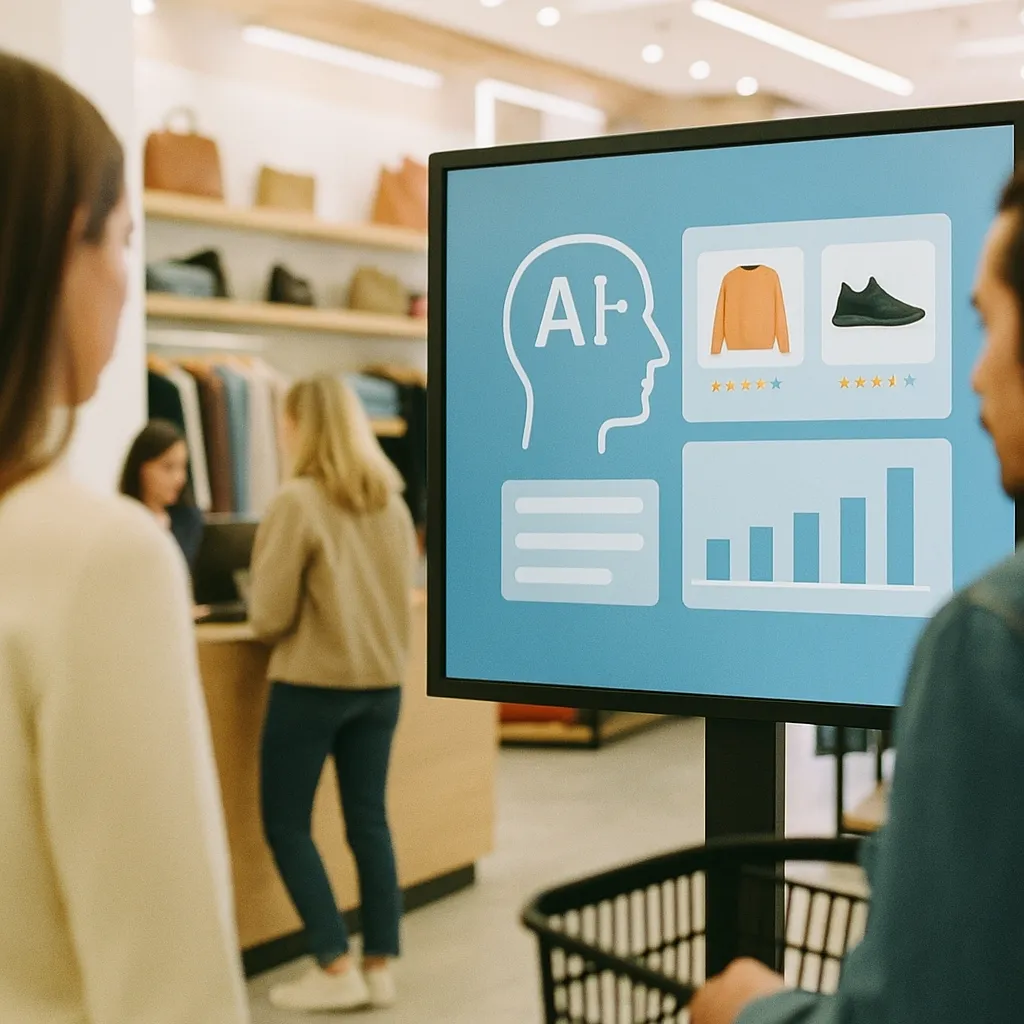
A landmark ICSC and McKinsey report finds AI bifurcating physical retail into two survival models, with up to $1 trillion in US consumer spending projected to flow through agentic AI commerce by 2030.
McKinsey and ICSC: AI Is Splitting Retail in Two — and Most Stores Are on the Wrong Side
By Hector Herrera | April 30, 2026
A landmark joint report from ICSC and McKinsey, released April 27, finds that AI is not gradually improving physical retail — it is bifurcating it into two distinct survival models. Retailers who don't make a deliberate choice between them are implicitly choosing neither, and that is a losing position as agentic AI reshapes how Americans shop.
The research, covered by the Las Vegas Sun, represents one of the most comprehensive assessments yet of how AI agent technology will redirect consumer spending away from physical stores — and what retailers must do to remain relevant.
The Trillion Reallocation
The headline number in the report is significant: up to $1 trillion in US B2C retail revenue could flow through agentic AI commerce by 2030. Agentic AI refers to AI systems that act autonomously on a user's behalf — browsing, comparing, purchasing, and even returning goods without the consumer manually executing each step.
That shift is being pulled by consumers, not just pushed by technology vendors. The report finds that nearly 70% of consumers already want AI agents to handle routine shopping on their behalf. That figure includes grocery replenishment, household staples, and apparel basics — categories that form the backbone of most physical retail foot traffic.
This is the core disruption: when routine purchasing moves to AI agents, the trip to the store stops being necessary for a massive share of the transactions that currently drive retail economics.
Two Models, One Choice
The McKinsey/ICSC framework doesn't predict the death of physical retail. It predicts that physical retail survives in exactly two configurations, and that the companies failing to pick one will be competed out of both.
Get this in your inbox.
Daily AI intelligence. Free. No spam.
Model 1: Convenience-optimized stores — essentially AI-assisted fulfillment points. These stores win by guaranteeing inventory accuracy in real time, reducing checkout friction to near-zero, and exposing structured product data that AI agents can reliably query. The key insight: if an AI agent sends a consumer to a store with an empty shelf, that retailer loses the relationship, not just the transaction. Inventory integrity becomes a strategic prerequisite.
Model 2: Discovery-led formats — stores where the physical presence itself is the value proposition. These locations compete on human experience, sensory engagement, and AI-personalized service that surfaces relevant products before shoppers ask. The staff model shifts: associates who know how to work alongside AI recommendations — surfacing context, offering expertise, resolving edge cases — will be more valuable than those focused on transaction execution.
The report is direct about retailers who try to operate in the middle: they are designing for a consumer behavior that AI is in the process of eliminating.
What Retailers Must Do Now
The report doesn't leave the strategic options abstract. For each model, concrete operational changes are required:
Convenience stores need to:
- Achieve real-time inventory accuracy across every SKU — not end-of-day counts, but live data that AI agents can trust
- Eliminate checkout friction through autonomous checkout or AI-assisted express lanes
- Build or adopt product data standards that AI shopping agents can query at scale
Discovery stores need to:
- Design physical layouts for dwell time and sensory engagement, not throughput
- Deploy AI personalization systems that surface relevant products based on individual customer profiles before they ask
- Invest in staff training focused on high-judgment interactions: fitting, customization, discovery conversations that AI can inform but cannot replace
The Agentic Commerce Stack Is Already Being Built
Physical retail has navigated e-commerce disruption before by leaning into what a screen can't replicate: immediacy, tactile experience, and social context. But agentic AI changes the calculus for a specific class of purchase — the routine, low-consideration transaction that drives the majority of retail visits.
Google, Amazon, and a growing stack of startups have already deployed AI shopping agents capable of executing purchases across multiple retailers. As these systems become default features of consumer AI assistants, the assumption that consumers will continue to make discretionary trips for commodity goods needs to be tested, not assumed.
The retailers moving now to build AI-agent-accessible product data, real-time inventory infrastructure, and discovery-optimized floor plans are creating durable advantages. The retailers waiting for consumer behavior to shift before responding will find the economics have already moved.
What to Watch
The first major signal to watch: whether large retail real estate investment trusts (REITs) start incorporating AI-readiness metrics into lease negotiations and tenant evaluations. If landlords begin to distinguish between tenants building for AI-empowered shoppers and those that aren't, it will confirm that the bifurcation the ICSC/McKinsey report describes has been internalized by the capital markets that fund physical retail.
The second signal: the first major national retailer to announce a structured API for AI shopping agents — essentially a machine-readable product catalog designed for autonomous purchasing — will set the industry template. Everyone else will have a defined standard to match or fall behind.
Did this help you understand AI better?
Your feedback helps us write more useful content.
Get tomorrow's AI briefing
Join readers who start their day with NexChron. Free, daily, no spam.