A Retail Brew report documents what AI actually looks like in physical stores in 2026 — less about robots, more about workflow-embedded tools that multiply existing worker effectiveness.
Inside the Real AI Retail Deployment: How the Technology Is Actually Showing Up in Stores Today
By Hector Herrera | April 28, 2026 | Retail
AI in physical retail in 2026 looks less like robots stocking shelves and more like a store associate pulling up real-time inventory on a handheld app — and that gap between the narrative and the reality matters for anyone trying to understand where this technology is actually going. The hype and the panic are both wrong about what's happening in stores right now.
A Retail Brew report published April 22 offers a ground-level inventory of what AI actually looks like inside physical stores today. The picture it documents is one of workflow-embedded, human-augmenting tools — not the autonomous retail of science fiction, and not the job-eliminating automation of labor advocates' worst fears. Something more specific and more interesting than either.
What's Actually in Stores
Associate apps with inventory intelligence. One of the most common AI deployments isn't customer-facing at all. Store associates at a growing number of retailers can query inventory across locations in real time — whether a size is in the back, at a nearby store, or available for same-day ship-from-store. This isn't technically novel, but AI has made it fast and natural-language accessible enough that associates actually use it.
Shrink detection systems. AI-powered computer vision that monitors shelves and high-value fixtures for theft is in broader deployment than most consumers realize. These systems flag suspected shrink events to staff rather than automatically intervening — they're decision-support tools, not enforcement mechanisms. The better implementations distinguish between deliberate theft and shoppers who put items down in the wrong place.
AI-generated product descriptions. Behind the scenes, product content — descriptions, attributes, tags, size guides — is increasingly generated and maintained by AI. This matters less to the consumer experience and more to the operational efficiency of catalog management, especially for retailers with tens of thousands of SKUs.
Get this in your inbox.
Daily AI intelligence. Free. No spam.
Demand forecasting and replenishment. AI models predicting what sells when, and triggering replenishment orders automatically, have been around for years in grocery. What's newer is the same capability reaching mid-market and specialty retailers that previously ran on spreadsheets and buyer intuition.
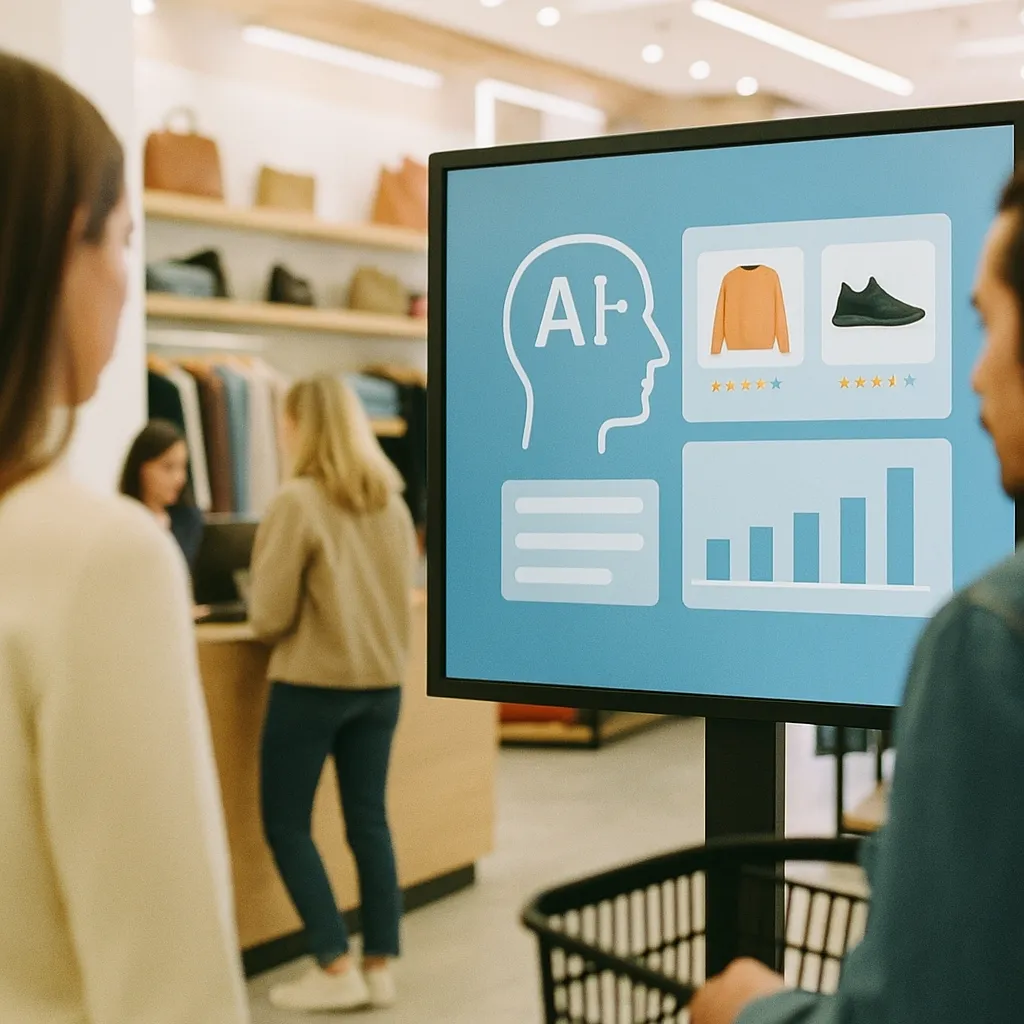
Personalized in-store recommendations. Some retailers are using purchase history and browsing data to surface personalized suggestions through their apps when a customer walks into a store — essentially bringing e-commerce recommendation logic into the physical environment. Adoption here is uneven and the customer experience is inconsistent.
What's Not There Yet
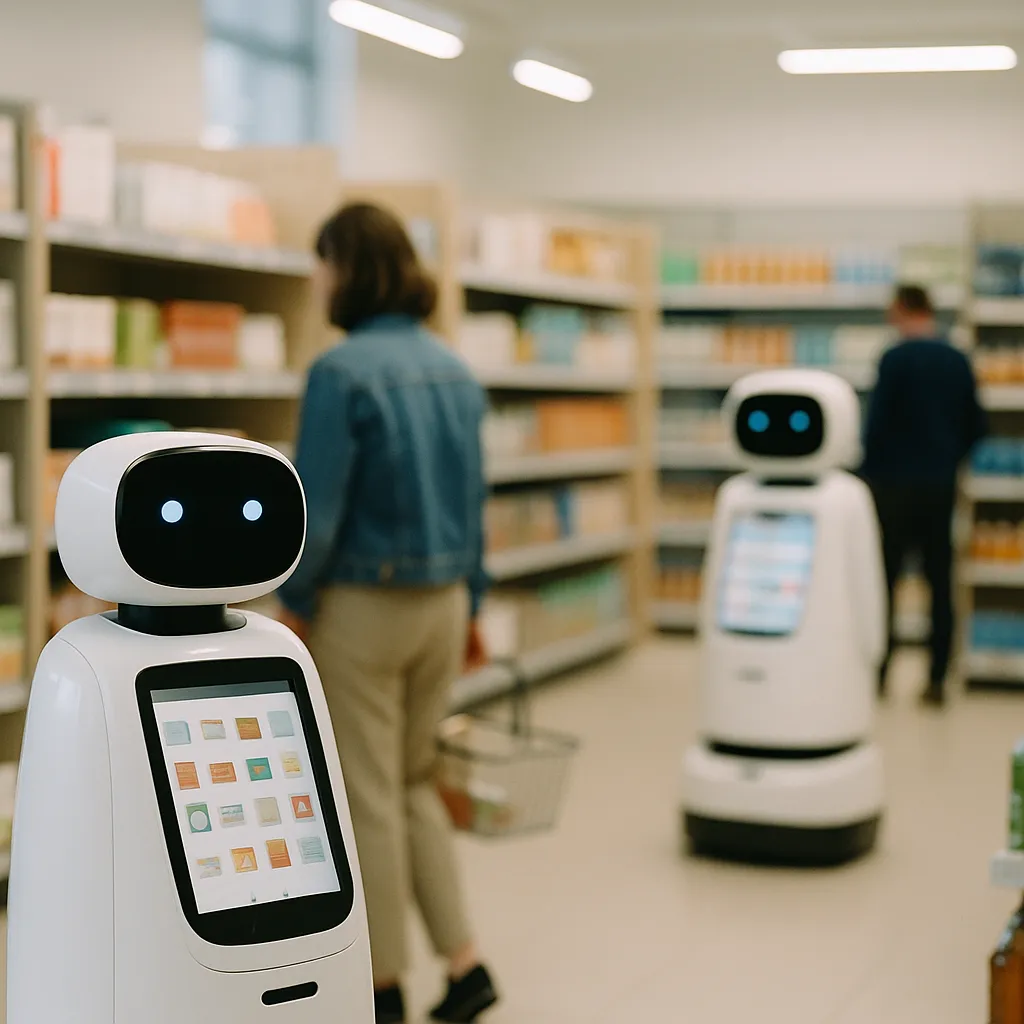
The Retail Brew report is useful partly for what it doesn't document. Fully autonomous checkout — despite years of Amazon Go-style announcements — remains limited in scale and is actively being scaled back at some retailers where the economics didn't work. Humanoid robots stocking shelves or assisting customers are in pilots, not deployment. Fully autonomous replenishment without human oversight is still largely aspirational outside highly controlled distribution center environments.
The gap between what gets announced at retail conferences and what actually ends up in the average store is still substantial.
The Workforce Reality
The more accurate narrative on retail AI and jobs is: AI is multiplying what existing workers can do, not replacing them at significant scale — at least not yet in store operations. A single associate with an AI inventory tool can answer more questions, serve more customers, and reduce out-of-stock complaints without any change in headcount. That's augmentation, and for retailers facing labor cost pressure, it's extremely attractive.
That doesn't mean there are no labor impacts. Back-office and catalog roles — the people who write product descriptions, manage inventory spreadsheets, and run replenishment reports manually — have seen scope reductions as AI handles more of that work. The displacement is real; it's just not the visible, front-of-store displacement that makes headlines.
What This Means for Retailers
If you're evaluating AI investments for physical retail, the Retail Brew picture suggests a few things:
- Start with associate tools, not customer-facing automation. The ROI on AI that helps your employees do their jobs better is clearer and the deployment is faster than autonomous customer-facing systems.
- Shrink detection has a real business case. At current retail shrink rates, even modest detection improvements translate to measurable margin recovery.
- Don't buy the hype on autonomous checkout at scale. The economics are harder than they look, and customer experience issues have caused some high-profile retreats.
- Catalog AI is a quick win. AI-generated product content won't make headlines, but if you're manually managing thousands of SKUs, the operational leverage is substantial.
What to Watch
The next meaningful threshold in retail AI isn't humanoid robots — it's personalized pricing and real-time promotion logic at the shelf level. A few retailers are testing digital shelf labels that can adjust prices dynamically based on inventory levels, time of day, and competitive signals. If that scales, it changes how consumers think about in-store pricing in fundamental ways. Expect the first significant consumer protection backlash around that capability within 18 months.
Did this help you understand AI better?
Your feedback helps us write more useful content.
Get tomorrow's AI briefing
Join readers who start their day with NexChron. Free, daily, no spam.