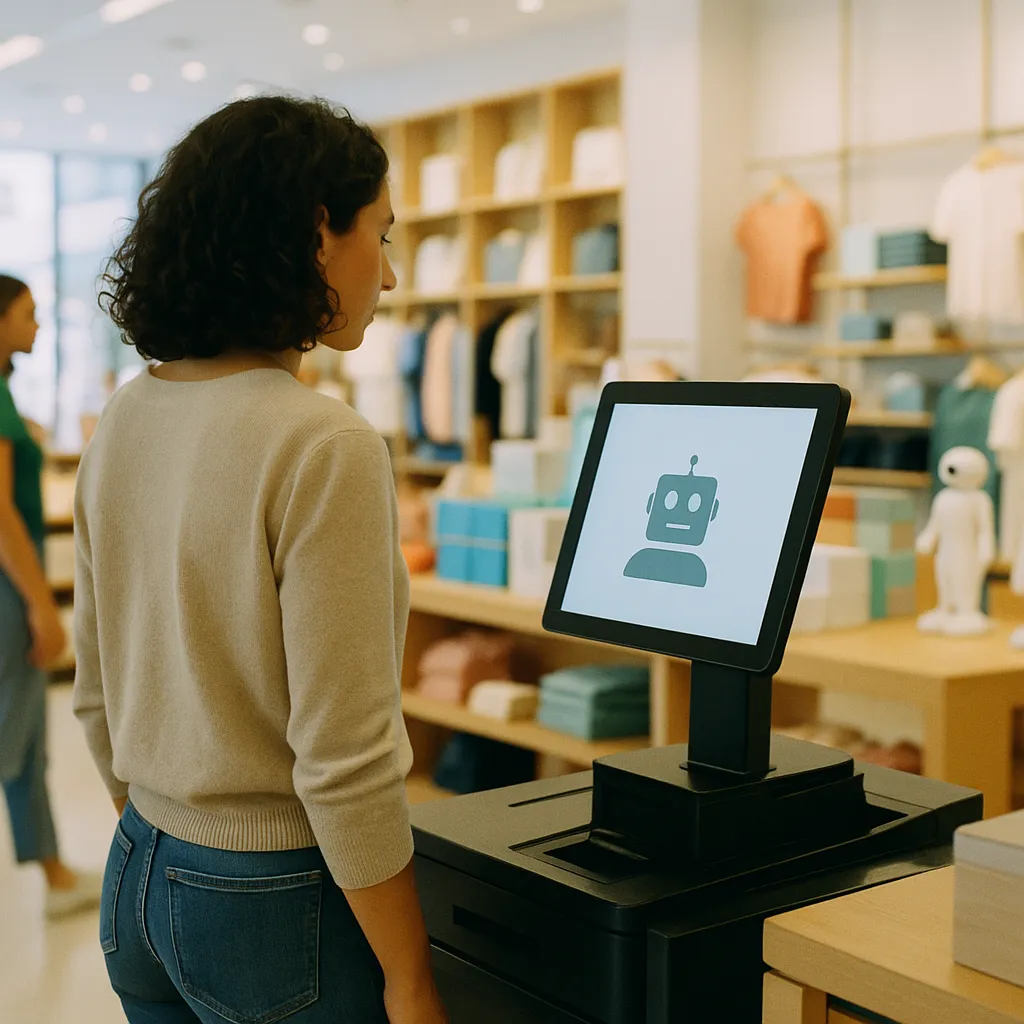
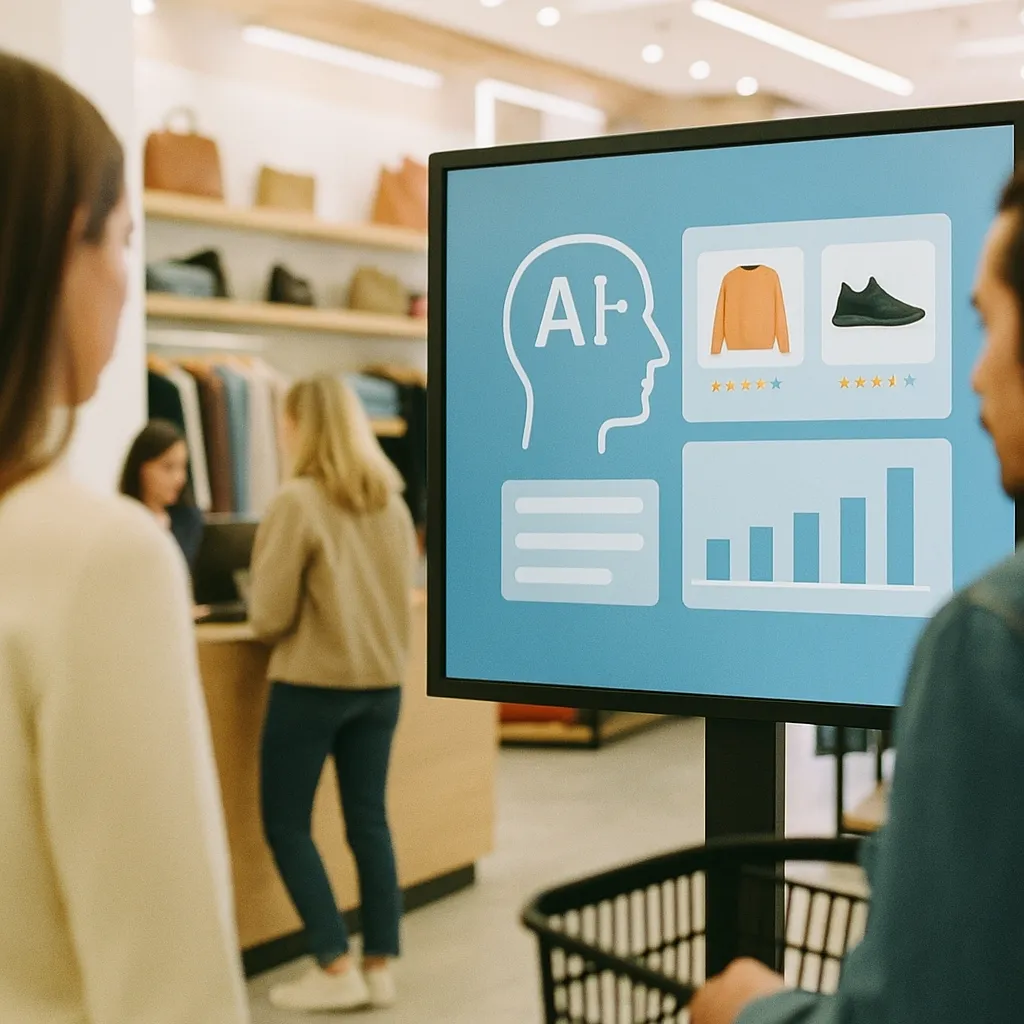
An AI decision layer controlled by Amazon, Walmart, and Google is increasingly determining what consumers buy before they step into a store—putting $1 trillion in annual commerce at stake.
AI Is Deciding What You Buy Before You Walk Into the Store. $1 Trillion Is at Stake.
By Hector Herrera | May 1, 2026 | Retail
Physical retail is being redefined not by what happens inside stores, but by what AI decides before shoppers arrive. An AI-driven decision layer — controlling what consumers discover, compare, and add to their consideration set — is increasingly determining purchasing behavior upstream of the store itself. Axios reports that Amazon and Walmart are in a direct race to own this layer, with analysts putting the total commerce at stake at $1 trillion annually.
The store is not disappearing. But it is being repositioned. If AI mediates the customer relationship better than the store does, the store becomes a fulfillment point — not the discovery and decision experience retailers built their entire operating model around.
The Decision Layer, Explained
An AI decision layer, in retail terms, is the combination of systems that shapes what a consumer considers buying before they make a purchase. It includes:
- AI-powered search results that surface products based on inferred intent rather than exact keyword matching
- Personalized recommendation engines that learn individual purchasing patterns and proactively suggest products
- Agentic shopping assistants that answer comparison questions, retrieve reviews, and narrow choices on a consumer's behalf
- AI checkout integration that enables frictionless purchase completion within the AI conversation itself
Until recently, physical retailers owned this layer by default. You walked into a store, you saw what was stocked, merchandised, and promoted. The store controlled the discovery experience. Online retailers disrupted this by moving discovery to search and recommendation algorithms. AI is extending that disruption into voice assistants, conversational interfaces, and soon, augmented reality overlays.
The retailer that owns the AI layer owns the consideration set. If a consumer asks their AI assistant "what's the best laundry detergent for sensitive skin," and the assistant recommends a specific product, that recommendation determines the outcome more than any in-store display ever could.
Amazon vs. Walmart
According to Axios, both companies are making aggressive moves to own the AI decision layer:
Amazon has integrated AI Mode deeply into its shopping experience, using its vast purchase history data — accumulated over decades and across hundreds of millions of customers — to train personalization models that competitors cannot easily replicate. Alexa's evolution into a more capable conversational AI assistant is part of the same strategy: make Amazon the default AI shopping interface before consumers develop the habit of querying somewhere else.
Get this in your inbox.
Daily AI intelligence. Free. No spam.
Walmart is moving on two fronts simultaneously. Its acquisition of Vizio gave it television viewing data that it is layering into retail media targeting. More significantly, Walmart+ and its in-store and pickup infrastructure give it physical fulfillment capability that pure digital players cannot match. Walmart's bet is that the AI decision layer will need to connect seamlessly to physical fulfillment — and it is better positioned than Amazon for that connection in many geographies.
Google announced a Universal Commerce Protocol designed to let any retailer plug their inventory and checkout into Google's AI Mode search results. This is Google attempting to remain the dominant discovery surface even as consumers increasingly ask AI assistants shopping questions rather than typing search queries. Whether Google can maintain its role as the starting point for purchase intent is the central tension in the $1 trillion fight.
What This Means for Brands
The search and display advertising model is under threat. Retail media — brands paying for prominent placement in Amazon search results, Walmart search results, and Google Shopping — is currently a massive revenue stream. As AI assistants increasingly bypass search results entirely and make recommendations based on trained preferences, the traditional paid placement model may not translate cleanly to AI-mediated commerce.
Brand identity matters less; AI training data matters more. If a product is well-represented in the training data that shapes AI recommendations — thorough product descriptions, comprehensive review data, verified specifications — it surfaces. Products with thin digital presence, regardless of brand strength, may be systematically underrepresented in AI-generated consideration sets.
Small and mid-market brands face structural disadvantage. Large brands with dedicated digital operations teams and retail media budgets can invest in optimizing their presence for AI discovery. Independent brands and smaller manufacturers cannot. The concentration of AI-mediated commerce among established players could accelerate faster than concentration in traditional retail did.
The Physical Store's New Role
None of this means physical stores are going away. The data consistently shows that a significant portion of consumers — particularly for certain categories like furniture, apparel, and grocery — want a physical experience before purchasing. What is changing is the role of that experience.
The store increasingly functions as:
- Fulfillment infrastructure for orders placed through AI interfaces
- Returns and service centers for products purchased online
- Experience venues for categories where physical interaction remains essential
- Brand environment where the emotional dimension of a brand is communicated
This is a genuine operational transformation. A store built around the assumption that customers arrive undecided and need to be influenced through merchandising must redesign for customers who arrive having already made a decision through an AI interface and simply need to pick up, return, or physically confirm a purchase.
What to Watch
The Universal Commerce Protocol that Google announced is the technical specification worth tracking. If it achieves wide adoption, it means the AI decision layer becomes a shared infrastructure — lowering the barrier for smaller retailers to participate. If it achieves limited adoption, Google becomes a gatekeeper, and the commerce concentration question becomes politically salient.
Also watch for the first major antitrust scrutiny of AI decision layer practices. If Amazon's AI recommendations systematically favor Amazon's private label brands over third-party sellers — and there is evidence suggesting this already occurs in traditional search — the regulatory response in the AI-mediated commerce context will be significant.
The $1 trillion figure is not the end state. It is where the market stands as the AI layer is being built. The question is who builds it, who governs it, and whether the rules ensure that smaller retailers and brands can compete within it.
Hector Herrera covers AI in retail and commerce for NexChron.
Did this help you understand AI better?
Your feedback helps us write more useful content.
Get tomorrow's AI briefing
Join readers who start their day with NexChron. Free, daily, no spam.