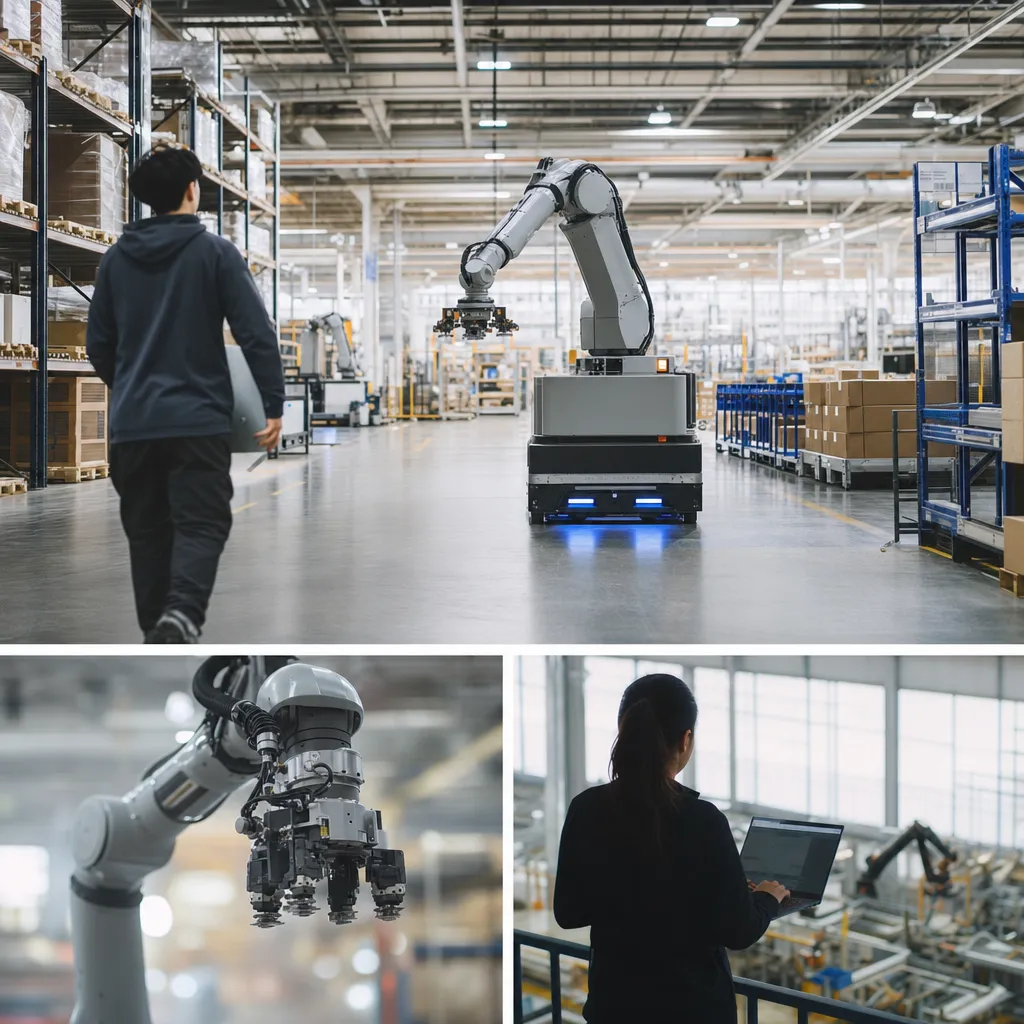
Construction and real estate tech companies have raised $1.6 billion in AI-focused funding in 2026, more than four times the $389 million recorded in all of 2025, yet only 1% of real estate executives report fully integrating AI across their organizations.
AI-focused construction and real estate technology startups have raised approximately $1.6 billion in funding through 2026—more than four times the $389 million recorded across all of 2025—as investors bet that software can fix an industry where productivity growth has effectively stalled for 50 years. Despite the investment surge, only 1% of real estate executives report fully integrating AI across their organizations, exposing a gap between capital deployed and value actually captured.
The Funding Landscape
According to new data from MarketScale, the $1.6 billion flowing into AI-focused construction and proptech in 2026 is concentrated in a handful of distinct categories:
Autonomous construction equipment. Bedrock Robotics' $600 million Series C—covered in depth here—is the single largest deal, funding autonomous excavators for grading and earthwork. The investment thesis: construction labor is expensive, dangerous, and increasingly scarce; autonomous equipment addresses all three problems simultaneously.
AI cost estimation and project management. Multiple startups are selling AI tools that cut construction takeoff time—the process of calculating material quantities from architectural drawings—by 60-70%. A workflow that previously required a trained estimator spending two to three days on a project can be completed in hours. For general contractors managing dozens of bids simultaneously, the efficiency gain is material.
Autonomous short-term rental operations. The rental property management category has attracted significant capital for AI systems that handle pricing, guest communication, maintenance coordination, and listing optimization autonomously. The pitch to property owners is a fully hands-off rental income stream; the pitch to investors is a scalable software layer over a fragmented $200+ billion short-term rental market.
Get this in your inbox.
Daily AI intelligence. Free. No spam.
AI-driven commercial leasing. Elise AI's $350 million funding round—led by a16z and Bessemer—targets apartment leasing, where AI agents handle prospective tenant inquiries, schedule tours, and process applications with minimal human involvement.
Why Construction, Why Now
Construction is the last major industry where productivity growth has not materialized from successive waves of digital tools. The sector adopted CAD software, project management platforms, and BIM (Building Information Modeling) without producing the efficiency gains those investments promised. Labor shortages, fragmented supply chains, and an industry structure that disaggregates risk across hundreds of subcontractors have resisted every software solution that assumed a more integrated operating model.
AI changes two things that prior tools didn't. First, it doesn't require workers to change their workflows to input data into a system—computer vision and document AI extract information from photos, PDFs, and existing drawings without requiring standardized data entry. Second, it operates at the point of decision rather than as a reporting layer after the fact, which is where construction problems and cost overruns actually originate.
The Execution Gap
The $1.6 billion flowing in does not mean the industry has absorbed AI. The 1% full-integration figure—from a separate survey of real estate executives—is not surprising to anyone who has worked in construction technology. The barriers are specific:
Fragmented ownership. A commercial construction project involves an owner, a general contractor, 20-50 subcontractors, an architect, and a lender, each with different technology stacks, different incentives, and different views on who owns the data the AI would need to function. AI tools that require centralized data perform poorly in environments where data is distributed across stakeholders who don't trust each other with it.
Thin margins and risk aversion. General contractors typically operate on 2-4% net margins. The downside of an AI tool that makes an error in a material takeoff or a scheduling recommendation is not a bad quarter—it is a project loss. The expected value of adoption has to be overwhelmingly positive before a rational construction firm takes the risk on an unproven system.
Workforce dynamics. The experienced tradespeople who understand construction well enough to validate what AI tools are recommending are the same people most threatened by AI automation. Building adoption among the workforce that has the most to lose from the technology is not a standard change management challenge.
What to Watch
Whether the $1.6 billion vintage produces outcomes that justify the follow-on rounds that will be needed. Construction technology has a history of well-funded startups that solve a narrow problem efficiently and struggle to expand to the adjacent workflows where the real value sits. The companies that raised large rounds in 2025 and 2026 will face Series C and growth-stage fundraising environments in 2027 and 2028 that will demand revenue growth commensurate with their valuations. That filter will reveal which AI construction tools have genuine enterprise adoption and which have sophisticated pilots masquerading as production deployments.
Did this help you understand AI better?
Your feedback helps us write more useful content.
Get tomorrow's AI briefing
Join readers who start their day with NexChron. Free, daily, no spam.