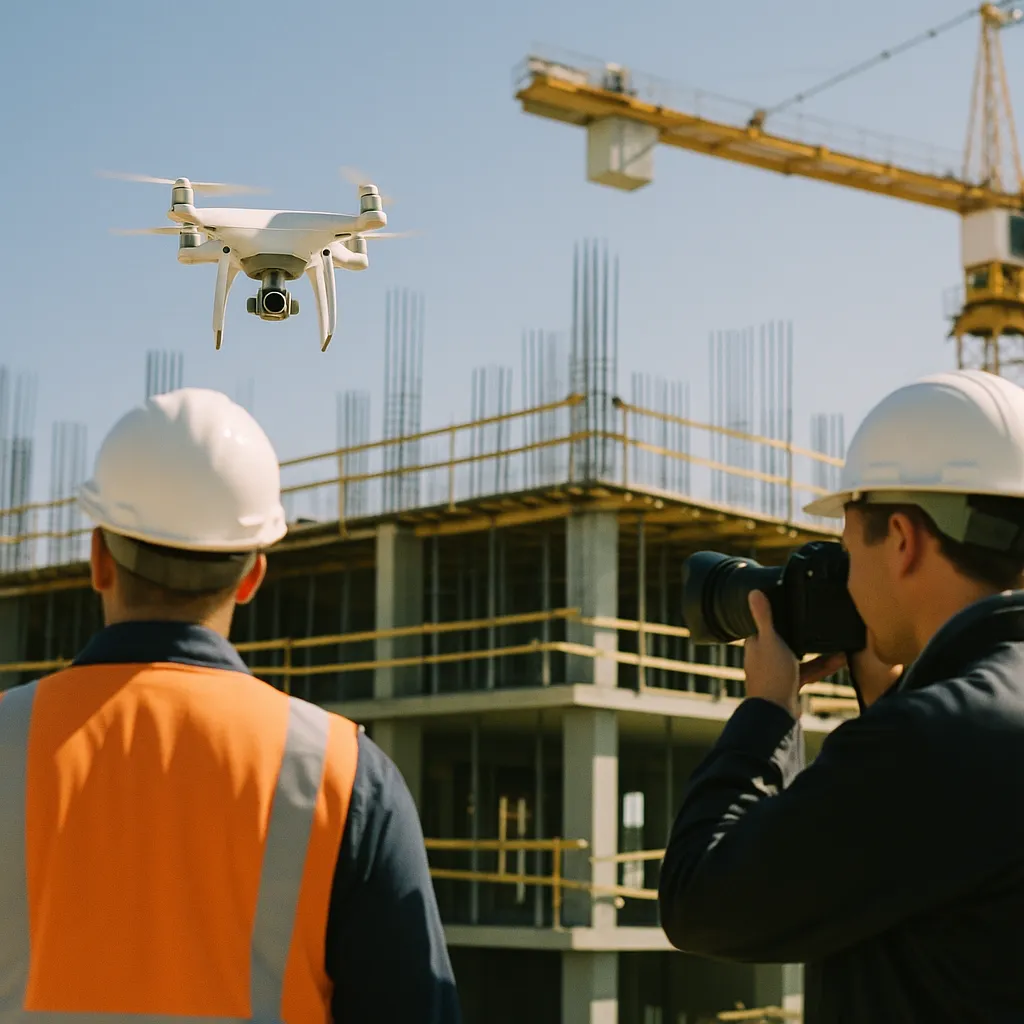
Bedrock Robotics closed a $600M Series C at a $4.1B valuation, transitioning its autonomous excavator retrofit kit from testing to paid commercial construction sites.
Bedrock Robotics Raises $600M at $4.1B Valuation as Autonomous Excavators Move to Paid Job Sites
By Hector Herrera | October 29, 2026 | Real Estate
Bedrock Robotics closed a $600 million Series C this week at a $4.1 billion post-money valuation, marking the moment autonomous construction equipment moved from pilot testing to paid commercial deployment. The company — founded by a former Waymo engineering lead — now operates retrofit autonomous excavators on active, revenue-generating job sites. According to The Real Deal, the round was led by CapitalG and Emergence Capital.
The construction industry has been one of the last major sectors to meaningfully adopt automation. Bedrock's funding at this scale signals that enough technical and commercial proof points now exist to justify institutional-scale capital.
The Problem Bedrock Is Solving
Construction has resisted robotics longer than warehouses, manufacturing floors, or logistics for a specific reason: worksites are uncontrolled. A warehouse has predictable geometry. A factory floor has defined lanes. A construction site has mud, debris, variable terrain, unpredictable human workers, and conditions that change daily.
Early attempts to build autonomous construction equipment focused on new machines — designing autonomous capability in from the ground up. This created a capital barrier: convincing a general contractor to replace functional equipment with unproven robots is a hard sell.
Bedrock took the retrofit approach. Their kit adds autonomous capability to existing excavators — the machines contractors already own and maintain — in under five hours. No new equipment purchase required. This eliminates the upfront capital objection and dramatically shortens the sales cycle.
The Round and the Numbers
- Series C size: $600 million
- Lead investors: CapitalG (Google's independent growth fund) and Emergence Capital
- Post-money valuation: $4.1 billion
- Founder background: former senior engineering lead at Waymo
- Current status: transitioned from testing to paid commercial job sites
- Next milestone: expand autonomous stack from excavation into demolition work
The CapitalG involvement is worth noting. CapitalG operates independently from Google's main investment arms, but it maintains access to Google's technical resources and has historically served as a pipeline for eventual acquisition in sectors Google wants to enter. Construction AI may be one of them.
Get this in your inbox.
Daily AI intelligence. Free. No spam.
Why Construction, Why Now
Labor shortage is structural. The Associated General Contractors of America reported a shortage of more than 500,000 skilled construction workers in 2026, up from roughly 430,000 in 2023. The trades pipeline — apprenticeship programs, vocational training — is not producing workers fast enough to replace retiring baby boomers. This is not a temporary economic cycle issue; it's a demographic constraint that autonomous equipment directly addresses.
The retrofit model lowers the switching cost. A new autonomous excavator might cost $800,000–$1.2 million. Adding Bedrock's retrofit kit to an existing $350,000 excavator costs a fraction of that. General contractors can start with one machine, demonstrate ROI, and scale.
Data network effects. Every hour of commercial operation generates training data for Bedrock's AI stack. Unlike a company still in testing, commercial deployment means the model is learning from real-world edge cases — unstable soil, unexpected underground utilities, coordination with human workers — at a pace that testing environments can't match.
What Autonomous Excavation Actually Looks Like
Bedrock's system does not remove humans from the worksite. The current commercial deployment model:
- Autonomous operation for routine, repeatable tasks: digging trenches to specified depth and alignment, clearing defined areas, loading material into trucks
- Remote supervision: a human operator monitors the machine from a control station, with the ability to take manual control at any time
- Edge case handling: the machine stops and requests human intervention for ambiguous situations (unexpected buried objects, proximity to other workers, unclear site boundaries)
This hybrid model — autonomous for the predictable, human for the ambiguous — is how most industrial AI deployments work in practice. It's also what makes regulators comfortable: human accountability is never removed, just repositioned.
The Demolition Expansion
Excavation and demolition use overlapping equipment and overlapping skill requirements. Bedrock's expansion into demolition is a logical second product because:
- Much of the perception and planning stack transfers directly
- Demolition worksites are often more constrained and predictable than new construction
- Demolition precedes construction — capturing both phases creates end-to-end site coverage for contractors
The demolition market in the US is approximately $8 billion annually. If Bedrock can apply the same retrofit model there, the addressable market roughly doubles.
What to Watch
CapitalG as acquisition signal: Watch whether Google or Alphabet moves toward a deeper integration — potentially acquiring Bedrock's technology stack for integration with Google's construction management tools or its broader industrial AI ambitions.
Unit economics disclosure: The next 12 months of commercial operation will produce real-world data on cost per hour of autonomous operation versus human-operated equivalents. If the numbers are as favorable as Bedrock's pitch suggests, expect a Series D or direct acquisition discussion by mid-2027.
Safety record: One serious incident involving an autonomous excavator on a commercial site could reset regulatory tolerance for the entire industry. Bedrock's safety record in commercial deployment will be scrutinized closely.
Hector Herrera covers AI in real estate and construction for NexChron.
Did this help you understand AI better?
Your feedback helps us write more useful content.
Get tomorrow's AI briefing
Join readers who start their day with NexChron. Free, daily, no spam.