Your daily AI intelligence for June 11, 2026.
Daily AI Briefing — June 11, 2026
By Hector Herrera
Good morning. Here's your AI intelligence for Thursday, June 11, 2026.
The Big Picture
A $1.03 billion bet, a judicial reckoning, and a city-by-city autonomy rollout — today's stories trace the same underlying current: AI is no longer theoretical. The money is in, the courts are reacting, and the systems are running in the real world. Here's what happened.
AI's Next Architecture War Just Got a Billion Dollars
Yann LeCun's AMI Labs closed a $1.03 billion seed round to build AI systems grounded in physical reality. LeCun, Meta's chief AI scientist, has been the most prominent critic of the transformer architecture powering ChatGPT and its successors. His thesis: transformers are pattern-matching machines that will never understand causality, physics, or the world the way humans do. AMI Labs is building around "world models" — AI systems that build internal simulations of how reality works and reason forward from them. Whether LeCun is right or early, the funding signals that serious investors are placing bets against the current paradigm. That's news regardless of your priors on the architecture debate.
Courtrooms, Chaos, and AI-Generated Nonsense
A Mississippi federal judge dismissed an entire case after discovering that lawyers on both sides had filed AI-generated briefs they never actually read. Four attorneys were sanctioned. Both plaintiff and defense counsel had independently used generative AI to draft filings — and both had submitted documents containing fabricated case citations that neither side caught. The judge's response was blunt: the case is over. This is the most dramatic judicial consequence yet from the pattern of AI hallucinations appearing in legal filings. Courts have now moved from warning attorneys to canceling cases outright. If you're a lawyer still treating AI-drafted filings as drafts you can skim, this ruling is a direct message.
Waymo Is Serious About 27 Cities
Waymo confirmed plans to expand from 5 to 27 U.S. cities by the end of 2026 — and is targeting one million autonomous rides per week by year-end. The expansion is backed by a sixth-generation vehicle platform designed to cut hardware costs significantly, plus commercial partnerships with Uber and Avis that extend Waymo's reach without requiring it to own every car in the fleet. A year ago, Waymo was still a proof-of-concept with a limited San Francisco footprint. Today it is running at scale and building toward a national logistics and mobility layer. The pace has surprised most analysts. Watch how the Uber partnership in particular evolves — it could be either a growth channel or a future acquisition conversation.
Get this in your inbox.
Daily AI intelligence. Free. No spam.
NVIDIA Moves Into Quantum — Without a Quantum Computer
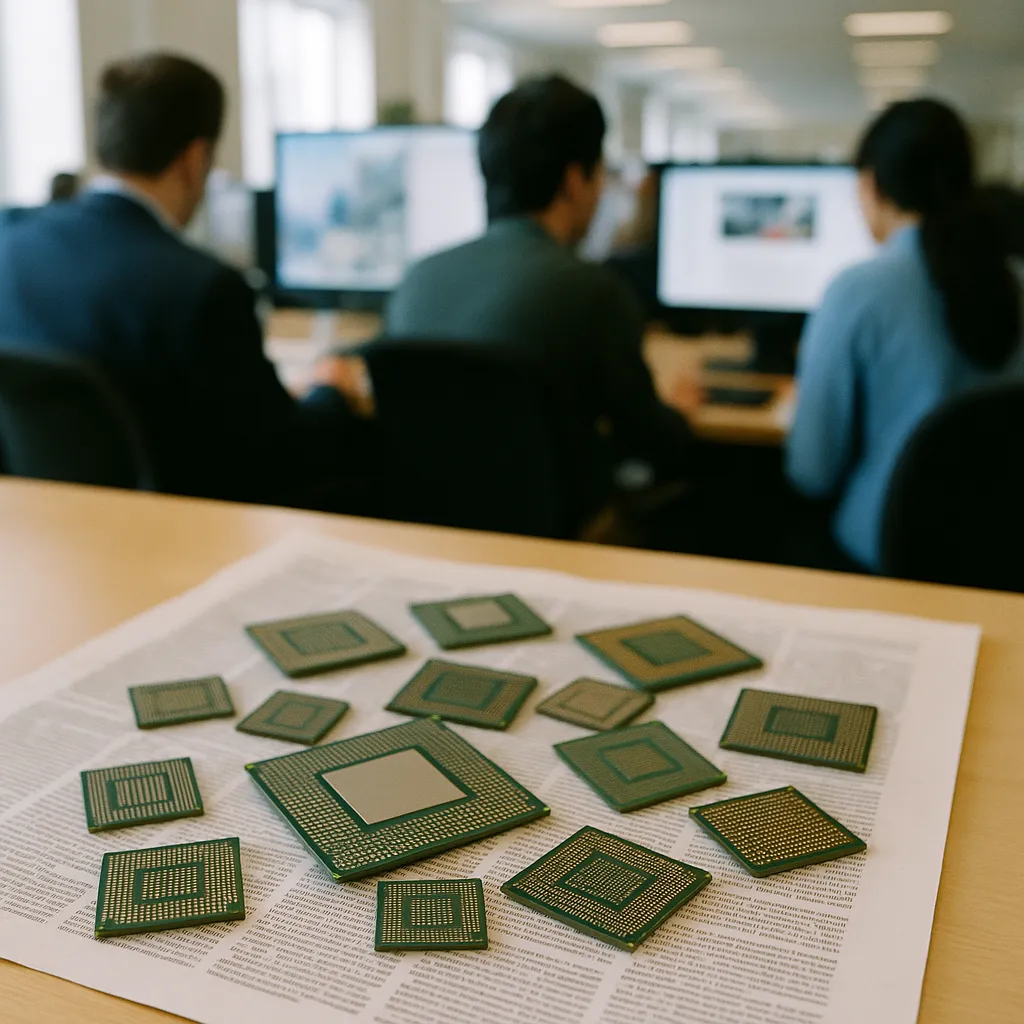
NVIDIA unveiled Ising, a family of open-source AI models built specifically for quantum computing problems — but designed to run on existing GPU hardware today. The name is a reference to the Ising model from statistical mechanics. The practical pitch: use classical AI to simulate and eventually accelerate quantum computations before physical quantum hardware is ready at scale. This is NVIDIA's third major architecture-adjacent move in 90 days, following its physical AI and telecom infrastructure announcements. The company is clearly positioning GPU infrastructure as the foundation layer for every emerging compute paradigm — quantum, robotics, and autonomous systems included. Ising is open-source, which means academic and enterprise adoption could move fast.
Finance and Real Estate: The AI Reallocation
Two stories today tell the same capital reallocation story from different angles.
Banks and fintechs are squandering their AI advantage. Financial institutions hold the richest proprietary training data of any industry — transaction histories, credit behavior, fraud signals, and real-time cash flows spanning millions of customers. Most have built AI systems that can't share data internally, can't connect customer profiles across business lines, and can't compound learning across the organization. The institutions doing it right are extracting a structural competitive edge. The majority are not. This is a governance and architecture problem, not a data problem — and it's fixable for organizations willing to confront it.
Commercial real estate is splitting in two. AI is accelerating office vacancy while simultaneously driving the largest data center construction boom in 30 years. CBRE's CEO Bob Sulentic called it a violent reallocation of capital within real estate — comparable in speed and severity to the 1990s outsourcing wave. Office buildings in major metros continue to bleed occupancy as companies run leaner, AI-assisted workforces. Meanwhile, hyperscaler and enterprise data center investment is driving record construction activity. These are not separate trends. Capital is moving from one category to the other in real time.
Culture: AI Film Arrives at Tribeca
Dreams of Violets had its world premiere at the Tribeca Film Festival on June 10, becoming the first AI-generated feature film to screen at a major festival. The film was made using a combination of generative video models, AI-composed music, and a human directorial framework. Audience and critical reaction was mixed — some found it technically stunning, others found the absence of lived human performance alienating. Either way, the questions the film raises for the industry are no longer hypothetical. Tribeca screened it. That's the line being crossed.
What to Watch Today
LeCun's AMI Labs investor list. The $1.03 billion round will eventually disclose its backers. Who's betting against transformers at that scale — and what else they're funding — will be the real signal.
Federal court guidance on AI filings. The Mississippi dismissal may accelerate calls for mandatory disclosure rules when AI is used in legal filings. Watch for judicial council statements or proposed local rules from other federal districts this week.
Waymo city expansion sequencing. The company said 27 cities by year-end but hasn't announced the full list. The order of entry — which cities, which partnerships, and whether any involve Avis fleet vehicles — will tell you a lot about their unit economics strategy.
NexChron is your daily AI intelligence. Published every morning. No paywalls.
Did this help you understand AI better?
Your feedback helps us write more useful content.
Get tomorrow's AI briefing
Join readers who start their day with NexChron. Free, daily, no spam.