AMD has completed its $8.2 billion acquisition of World Labs, with AI pioneer Fei-Fei Li joining as EVP and Chief Scientist to anchor AMD's push into spatial intelligence and embodied AI.
AMD Closes $8.2B Acquisition of World Labs, Fei-Fei Li Joins as Chief Scientist
By Hector Herrera | November 19, 2026
AMD has completed its $8.2 billion acquisition of World Labs, the spatial intelligence company co-founded by AI pioneer Fei-Fei Li, who joins AMD as executive vice president and chief scientist. The deal is AMD's largest AI research bet to date and positions the company to compete with Nvidia not just on GPU performance benchmarks but on the foundational science behind how AI systems understand physical space.
World Labs, founded in 2023, focused on building AI that can reason about three-dimensional environments — a capability central to robotics, embodied AI, autonomous vehicles, and next-generation visual computing. Li, who previously led the Stanford AI Lab and co-created the ImageNet dataset that sparked the modern deep learning era, brings research credibility that AMD has lacked as it traded punches with Nvidia on hardware specs while Nvidia built its own research ecosystem through acquisitions and internal labs.
The Deal
According to The Neuron, AMD closed the acquisition on November 18, 2026. Key terms:
Get this in your inbox.
Daily AI intelligence. Free. No spam.
- Acquisition price: $8.2 billion
- Target: World Labs (spatial intelligence research company)
- Co-founder joining AMD: Fei-Fei Li, now EVP and Chief Scientist
- Close date: November 18, 2026
The deal brings World Labs' spatial AI research portfolio — including work on 3D scene understanding, neural rendering, and physical world modeling — directly into AMD's product and research pipeline.
Why Fei-Fei Li Changes the Equation
Li is not a typical acqui-hire. Her career represents a through-line in modern AI: she built ImageNet while running Stanford's AI Lab, co-led Google Cloud AI, and founded AI4ALL to broaden the pipeline of AI researchers. At World Labs, she was building toward what the team called "world models" — AI systems that don't just process inputs but maintain internal representations of how the physical world works.
That research thread matters for AMD's roadmap in three ways:
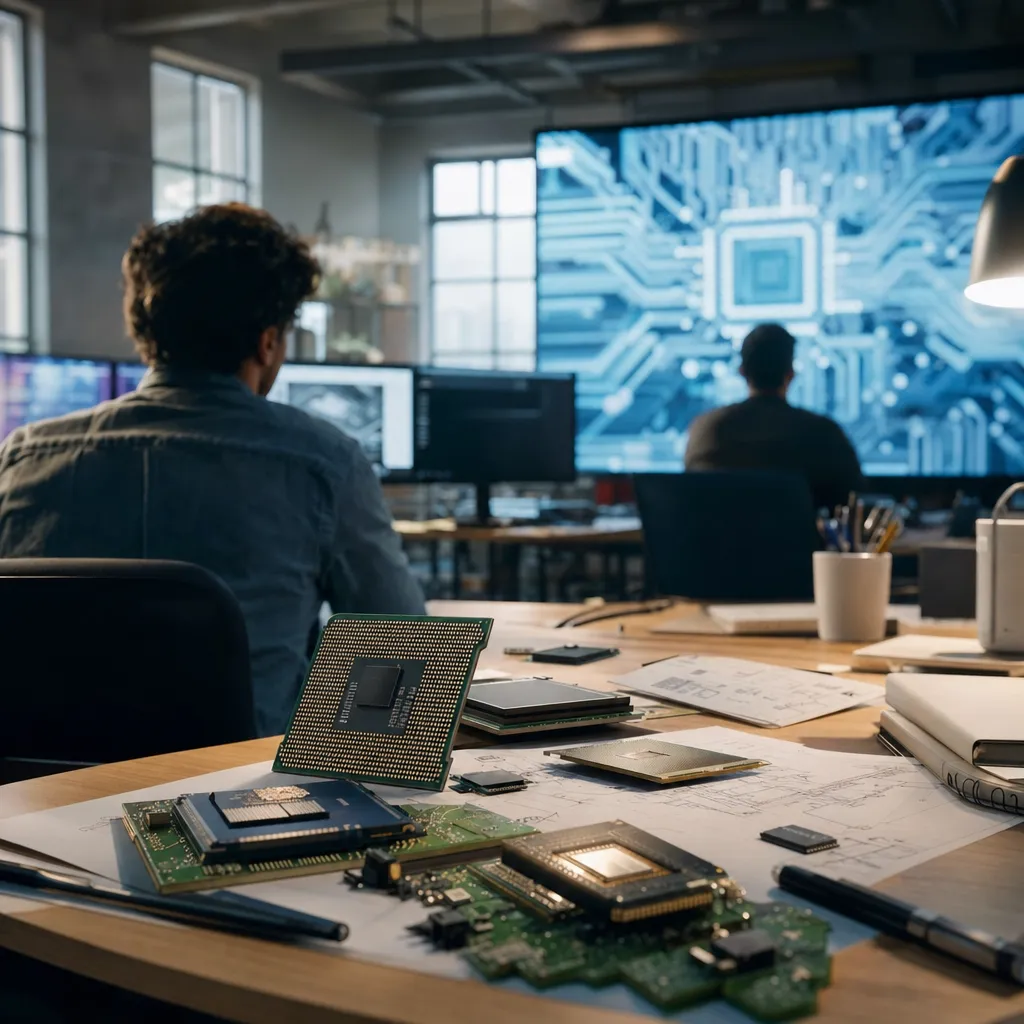
- Hardware-software co-design. Spatial AI workloads require different memory and compute patterns than transformer inference. Having Li internally means AMD can design silicon with the actual research needs in mind — the same advantage Nvidia has gained by running its own AI research.
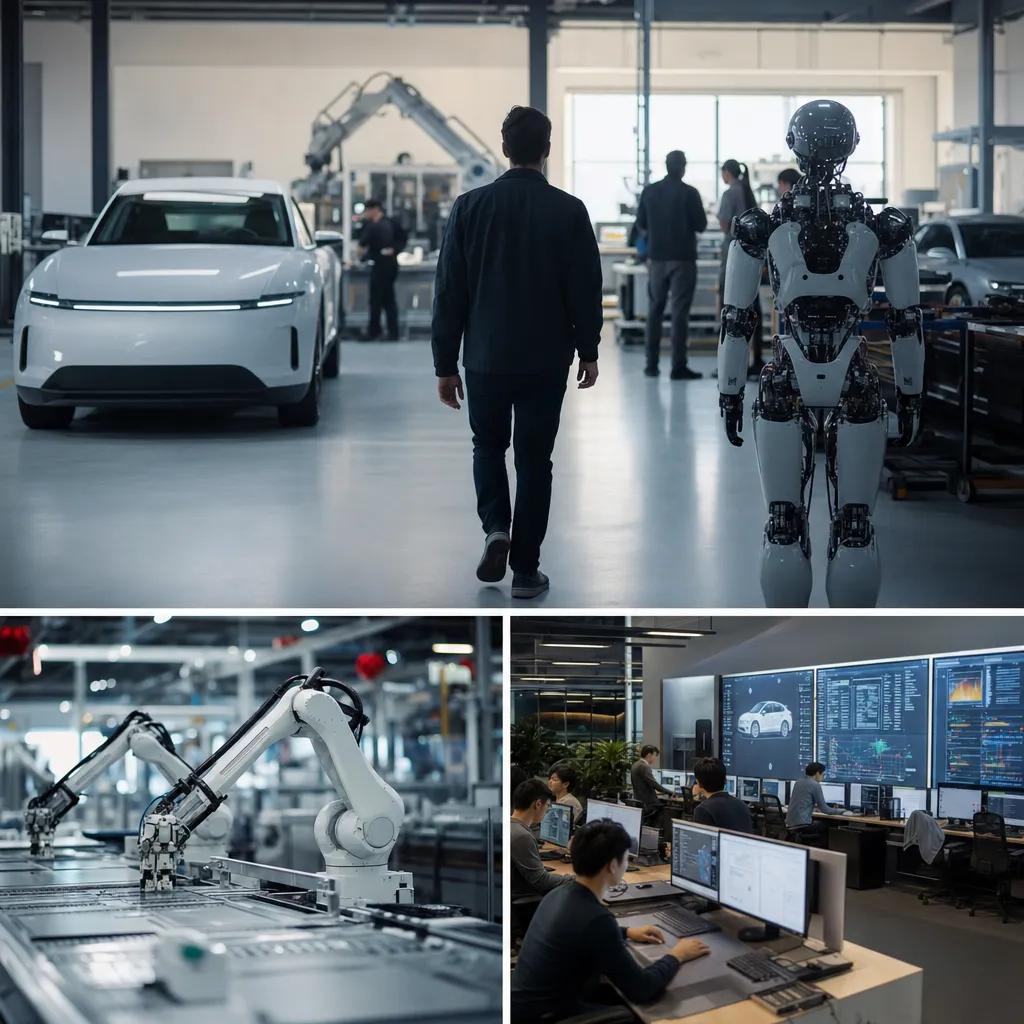
- Embodied AI credibility. Physical AI — robots, autonomous vehicles, smart manufacturing — is the next commercial frontier. AMD's chips power many of these systems. World Labs' research gives AMD a seat at the table when those customers are defining what the next generation of AI accelerators needs to do.
- Talent magnet. Li's presence signals to AI researchers that AMD is a place where serious science happens, not just chip manufacturing. That changes the recruiting calculus at a moment when top AI talent is a bottleneck for every hardware company trying to build its software layer.
Impact on the AMD vs. Nvidia Race
Nvidia's dominance in AI is partly hardware, partly software (CUDA), and increasingly research gravity — the company's AI research output influences what models are built and how they're optimized. AMD has competitive hardware in the MI400 series but has struggled to close the software gap.
The World Labs acquisition doesn't fix CUDA compatibility overnight. What it does is give AMD a research agenda that could differentiate its hardware roadmap starting with the next generation. If spatial AI and embodied AI become the dominant inference workloads of the next five years — a credible thesis — AMD is now positioned to shape those workloads rather than react to them.
What to Watch
Watch for AMD's first product announcements that reference World Labs research — likely at CES 2027 or AMD's next architecture event. Li's first public research publication under AMD's banner will signal how much independence the acquired team retains, and whether the acquisition is a trophy or a genuine R&D integration.
Did this help you understand AI better?
Your feedback helps us write more useful content.
Get tomorrow's AI briefing
Join readers who start their day with NexChron. Free, daily, no spam.