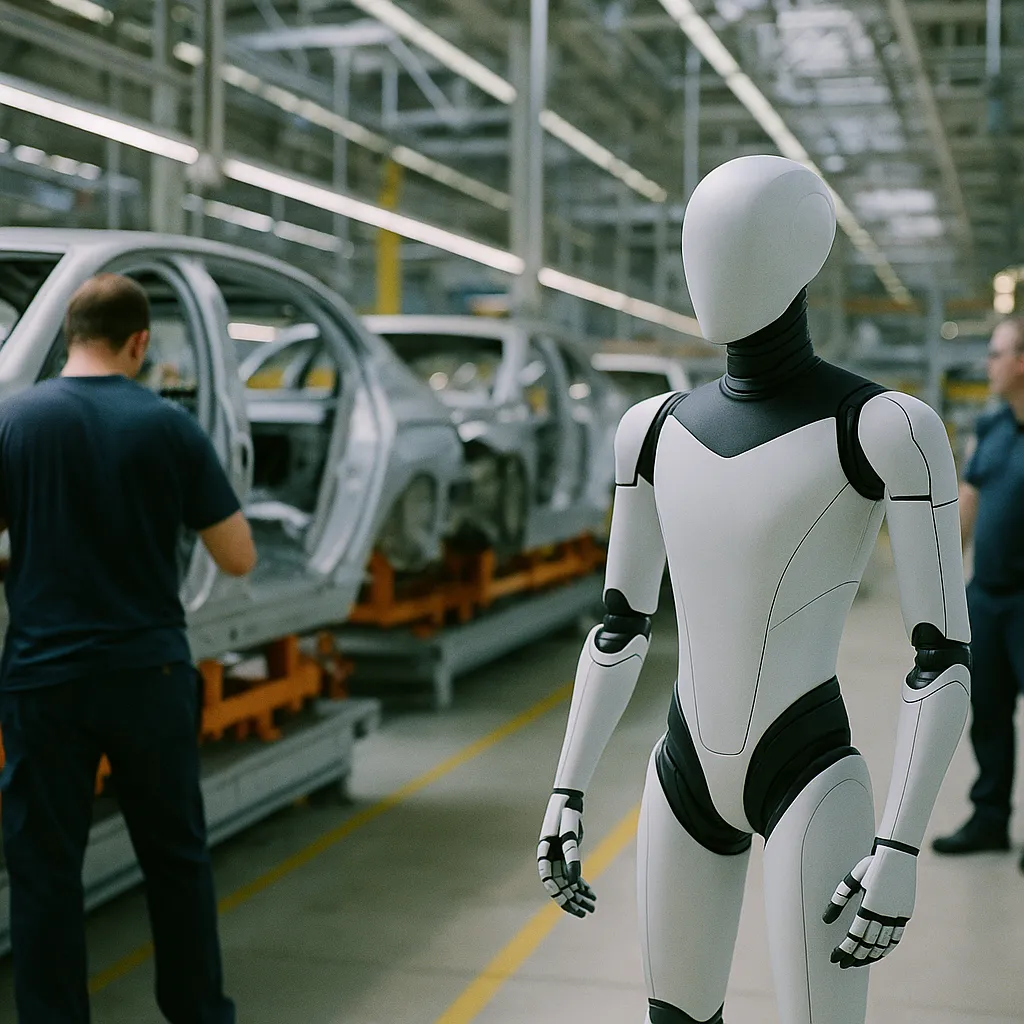
BMW has put the AEON humanoid robot to work at its Leipzig plant for material delivery — the first humanoid deployment in a BMW German production facility, marking a shift from demo to actual manufacturing integration.
BMW Deploys First Humanoid Robot on a German Production Floor at Leipzig Plant
By Hector Herrera | May 5, 2026 | Manufacturing
BMW has put a humanoid robot to work on a German production line for the first time, deploying the AEON unit at its Leipzig plant to handle repetitive material delivery tasks, according to a company announcement. The deployment marks a meaningful transition: humanoid robots moving from controlled demo environments into actual automotive manufacturing workflows.
The distinction matters because automotive production lines are the highest-stakes test environment in industrial robotics. They operate at precision tolerances measured in fractions of a millimeter, under time pressure, alongside human workers, in an environment with no room for reliability failures. A humanoid robot that can function on a BMW line — even in a limited material handling role — is no longer a prototype.
What's Deployed and Why
The AEON robot at Leipzig is handling material delivery — transporting components between storage areas and assembly stations. This is a deliberate starting point. Material delivery is:
- High-repetition — the same routes, the same loads, the same timing, every shift
- Low-precision — delivering parts doesn't require the submillimeter accuracy of welding or assembly
- Low-consequence for error — if a material delivery is late or incorrectly placed, production pauses rather than a vehicle component is damaged
- High-labor-cost — material handling in automotive plants requires significant human headcount
BMW's choice to start here is textbook deployment strategy: find the task where humanoid robot capability is most reliable, failure consequences are lowest, and labor cost reduction is clearest. Prove the concept. Then expand.
The AEON unit itself — manufactured by a humanoid robotics partner whose details BMW has disclosed in its official announcement — uses AI perception to navigate the plant floor, identify material stations, and manage payload transport without fixed tracks or preset rails. It is designed to operate in the same physical space as human workers, which is the design requirement that distinguishes humanoid robots from traditional industrial robots that work in caged-off areas.
Why Automotive Is the Right Test
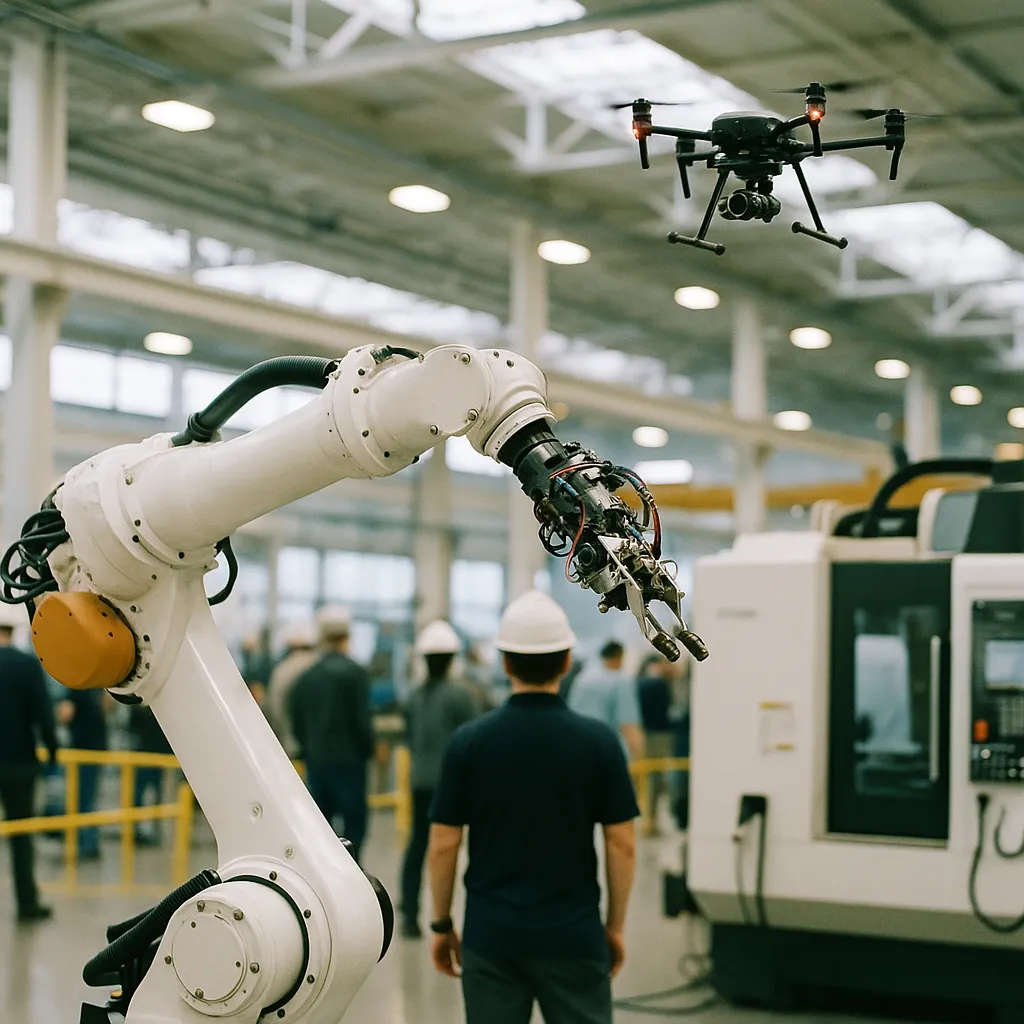
Automotive manufacturers have been integrating industrial robots for decades. BMW's Leipzig plant already operates hundreds of traditional robotic arms for welding, painting, and precision assembly. What's different about humanoid robots is the use case they unlock:
Get this in your inbox.
Daily AI intelligence. Free. No spam.
Traditional industrial robots are fixed to a position, do one task repeatedly, and require extensive retooling to change function. They are cost-effective for high-volume, fixed-task production but inflexible when product lines change or when tasks span multiple locations.
Humanoid robots can theoretically navigate general spaces, use standard tools, and be reprogrammed for different tasks without physical retooling. The promise — still mostly unrealized — is a robot that can be moved between workstations and retrained via software rather than hardware modification.
BMW's AEON deployment is specifically valuable as a data point because Leipzig produces the BMW i3, i4, and other models with multiple configurations. If a humanoid robot can adapt to that variability while handling material logistics, it demonstrates capability that fixed robots cannot replicate.
The Broader Industry Race
BMW is not alone. The automotive sector has become the primary deployment theater for humanoid robot developers:
- Tesla has been testing its Optimus robot in its own manufacturing facilities, though it has not disclosed deployment numbers at the same level of specificity as BMW
- Mercedes-Benz has conducted trials with Apptronik's Apollo humanoid robot at its German facilities
- Hyundai — through its Boston Dynamics subsidiary — has been testing Atlas in its manufacturing environments
The common thread: every major automaker is racing to figure out what humanoid robots can actually do in production conditions, not in demo videos. The first one to find a repeatable, scalable use case — not just a proof-of-concept — sets the operational blueprint others will follow.
BMW's advantage is discipline. By starting with material delivery, it's generating real operational data — reliability rates, throughput comparisons against human workers, failure modes — in a controlled expansion rather than overpromising capability and scrambling to deliver.
What the Deployment Doesn't Mean
It's worth being precise about what "deployment" means here. BMW has not announced:
- A specific number of AEON units in service
- A rollout timeline for other plants
- Displacement plans for human workers in material handling roles
- A commercial procurement relationship that makes AEON a standard part of its capital equipment plan
This is one robot, at one plant, doing one category of task. It is a significant milestone on the technology adoption curve — the same kind of milestone that early industrial robot deployments represented in the 1970s and 1980s — but the distance between first production deployment and scaled industrial adoption is measured in years and billions of dollars of additional investment.
What to Watch
Watch BMW's next annual production technology report, typically released in Q3, for any quantification of AEON's operational performance. If BMW discloses uptime percentages, throughput comparisons, or plans to expand AEON to additional stations or plants, that signals a genuine progression toward scaled deployment. If this announcement isn't followed by operational data, it's more brand positioning than production strategy. The difference between those two outcomes will tell you a lot about where humanoid manufacturing robotics actually stands in 2026.
Source: BMW Group — Humanoid Robot in Leipzig
Did this help you understand AI better?
Your feedback helps us write more useful content.
Get tomorrow's AI briefing
Join readers who start their day with NexChron. Free, daily, no spam.