Accenture Bets on Adaptive Physical AI to Transform Factory Floors
Accenture invested in General Robotics to bring general-purpose robotic intelligence to manufacturers — enabling robots to learn any task without specialized reprogramming.
Why this matters
Accenture invested in General Robotics to bring general-purpose robotic intelligence to manufacturers — enabling robots to learn any task without specialized reprogramming.
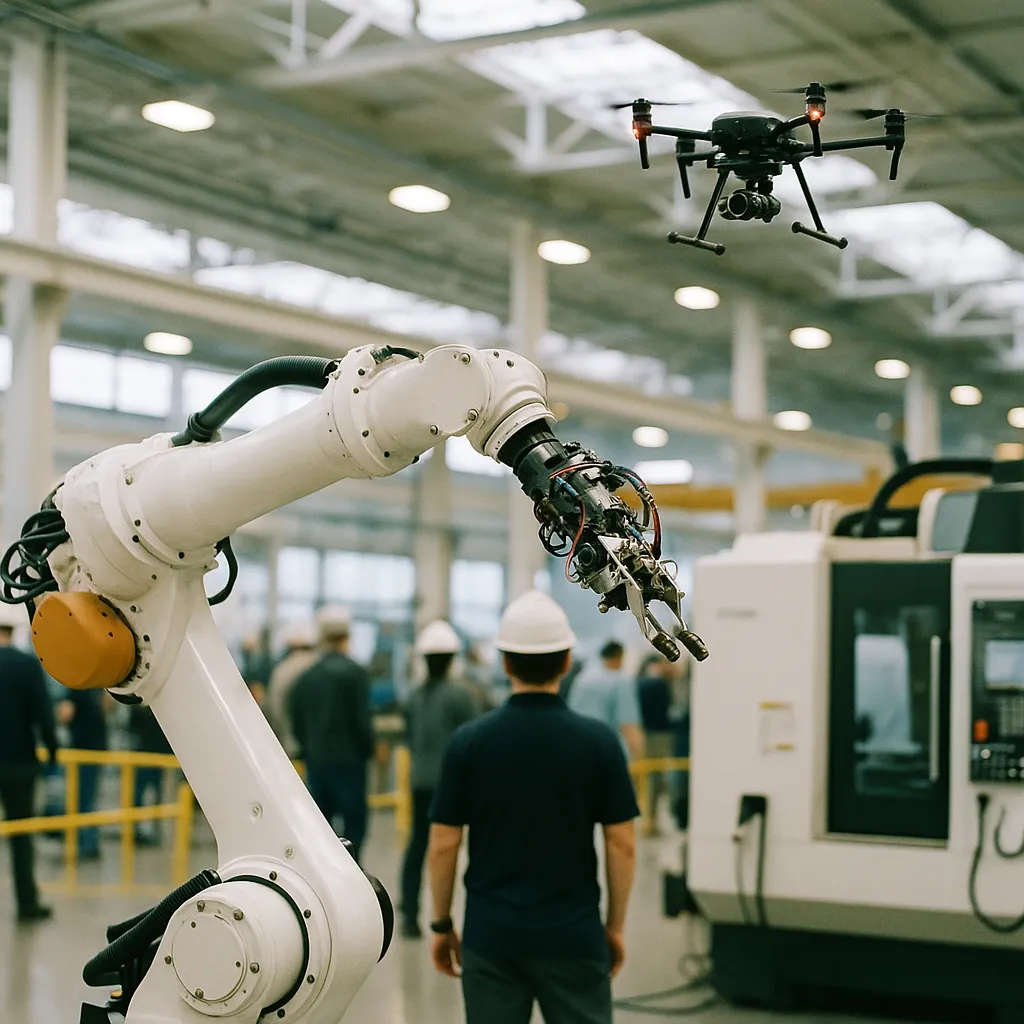
Accenture made a strategic investment in General Robotics, an AI-native company building robotic intelligence that can be rapidly deployed and continuously retrained for any manufacturing task — without specialized programming for each new job. The partnership targets asset-intensive manufacturers and logistics operators who have hit the ceiling of traditional fixed-task automation and need something fundamentally more flexible.
Traditional industrial robots are excellent at doing one thing, repeatedly, forever. They're programmed for a specific motion, in a specific configuration, handling a specific part. Change the part, change the line layout, or add a new task, and you need to reprogram — a process that can take weeks and requires specialized robotics engineers.
General Robotics built what the industry calls general-purpose robotic intelligence: AI that lets a robot learn new tasks quickly, adapt to changes in its physical environment, and improve over time through experience rather than manual reprogramming. The company's system is designed to be hardware-agnostic, meaning it can run on robotic arms from multiple manufacturers rather than requiring proprietary hardware.
According to Accenture's announcement, the investment is framed around helping manufacturers move from "fixed-task automation to truly adaptive physical AI systems."
Get this in your inbox.
Daily AI intelligence. Free. No spam.
Why This Investment Makes Sense Now
Three things have converged to make adaptive physical AI commercially viable in 2026:
Foundation models for robotics — large AI models trained on diverse robotic manipulation data can now generalize across tasks the way language models generalize across text, dramatically reducing the training data required for new robot skills
Cheaper sensor hardware — vision systems, force sensors, and spatial computing hardware have dropped in cost to the point where dense sensing is economically viable on a factory floor
Labor economics — manufacturing labor shortages in the U.S. and Europe have made the ROI math on adaptive automation compelling even at higher capital cost
Accenture's strategic angle is implementation. They're not building the AI — they're positioning themselves to deploy it at scale across the industrial clients they already serve. General Robotics provides the AI stack; Accenture provides the system integration, change management, and industry-specific configuration.
What This Means for Manufacturers
For manufacturers currently running fixed-task robots, the near-term implication is a viable upgrade path that doesn't require replacing existing capital equipment. Adaptive AI systems can extend the useful life and task range of existing robotic infrastructure, which changes the ROI calculation for both retrofits and new deployments.
For workers, the implications are more complex. Adaptive robots that can learn new tasks are more capable substitutes for a wider range of human labor than the specialized robots they replace. The labor economics vary significantly by sector, skill level, and geography — there is no single story here.
What to Watch
Watch for Accenture to announce specific manufacturing sector deployments — automotive and consumer packaged goods are the most likely first targets given existing client relationships. Also watch whether General Robotics's hardware-agnostic approach creates friction with established robotics hardware companies like FANUC, ABB, and KUKA, who have historically bundled software tightly with their hardware to maintain pricing power.
Hector Herrera is an AI systems architect and the founder of Hex AI Systems. He designs and runs AI systems in production and writes daily about how AI is reshaping business, government and everyday life. 20+ years building for the web. Houston, TX.